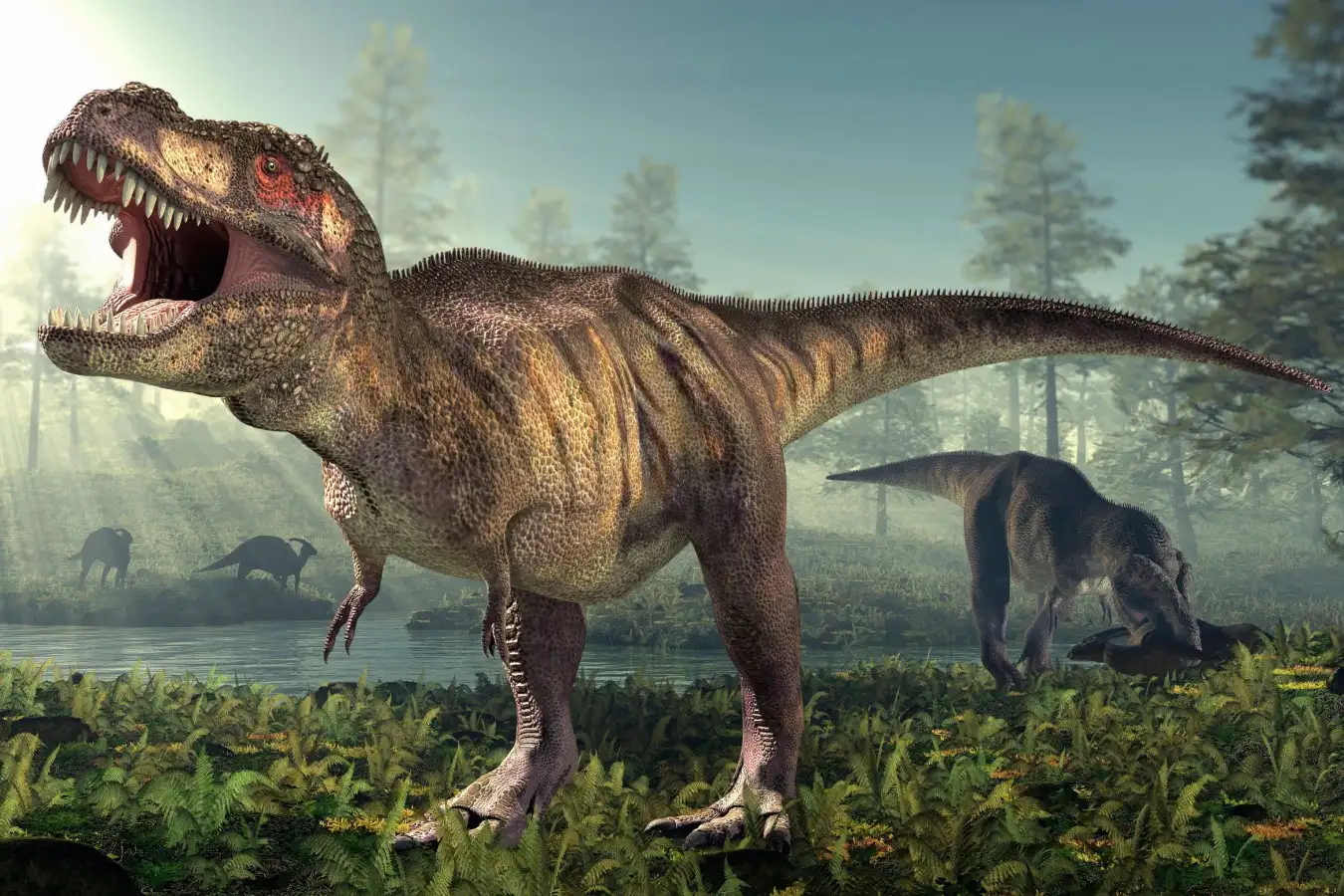
Tyrannosaurus rex was a late bloomer
Science Photo Library / Alamy
The largest-ever analysis of Tyrannosaurus rex fossils suggests the giant and fierce Cretaceous predator was a late bloomer, taking 35 to 40 years to reach maturity.
The findings also further the debate about whether there were several T. rex species instead of just one and whether smaller specimens, once thought to be juveniles, are in fact a more diminutive species called Nanotyrannus.
Based on studies done two decades ago, it had been thought that T. rex reached its maximum weight of 8 tonnes in around two decades and that the animals probably only lived until they were 30 years old.
“The last big T. rex growth studies were done in the early 2000s, based on, at most, seven specimens,” says Holly Ballard at Oklahoma State University. “This wasn’t the fault of the researchers, this is just what was available at the time.”
This time, Ballard and her colleagues were able to sample the thigh and shin bones of 17 individuals, ranging in age from juvenile to fully-grown adults, making it the largest collection of growth data ever assembled on T. rex.
The scientists studied bone tissue microstructure, including growth rings that form annually like those in a tree trunk. However, the earliest growth rings are destroyed as the bone marrow cavity gets larger, so the team needed access to as many specimens as possible with overlapping growth stages.
“That’s why our sample size and age spread is so important and what makes it different from earlier studies,” says Ballard.
The analysis reveals that T. rex grew more slowly than previously thought and that its growth rate was variable depending on environmental conditions.
However, it isn’t possible to determine the maximum age of T. rex because once the animals reached maturity, they ceased laying down growth rings. “We can say the most successful T. rex lived to about 40, but there were very few that made it to that age – only two specimens in our sample had reached adult size,” says Ballard.
Another two of the specimens grew more slowly than the others, opening the possibility that they may be other species, such as Nanotyrannus, or part of a “Tyrannosaurus complex”, says Ballard. “We propose, based on their growth differences, they are either a different species, or perhaps they are sick or injured T. rex, or perhaps dwarfed for some environmental reason.”
Lindsay Zanno at the North Carolina Museum of Natural Sciences says it is the most thorough examination of Tyrannosaurus growth yet conducted. Her study of a dinosaur fossil from Montana, published last year, concluded that the specimen was a small tyrannosaur that was fully grown at about 20 years old, tentatively named Nanotyrannus lancensis.
“It’s exciting to finally have a growth curve for Tyrannosaurus that we can feel confident in,” says Zanno. “It’s also thrilling to see yet another study validate our work on Nanotyrannus in just the past few months.”
Thomas Carr at Carthage College in Wisconsin is cautious about whether T. rex should be split into different species, but he anticipates that the study will have broad ramifications for dinosaur researchers.
“I expect that the estimates of growth curves of other dinosaurs will now have to be revisited,” says Carr. “Overall, we’ll see a shift in our understanding of dinosaur development across the board.”
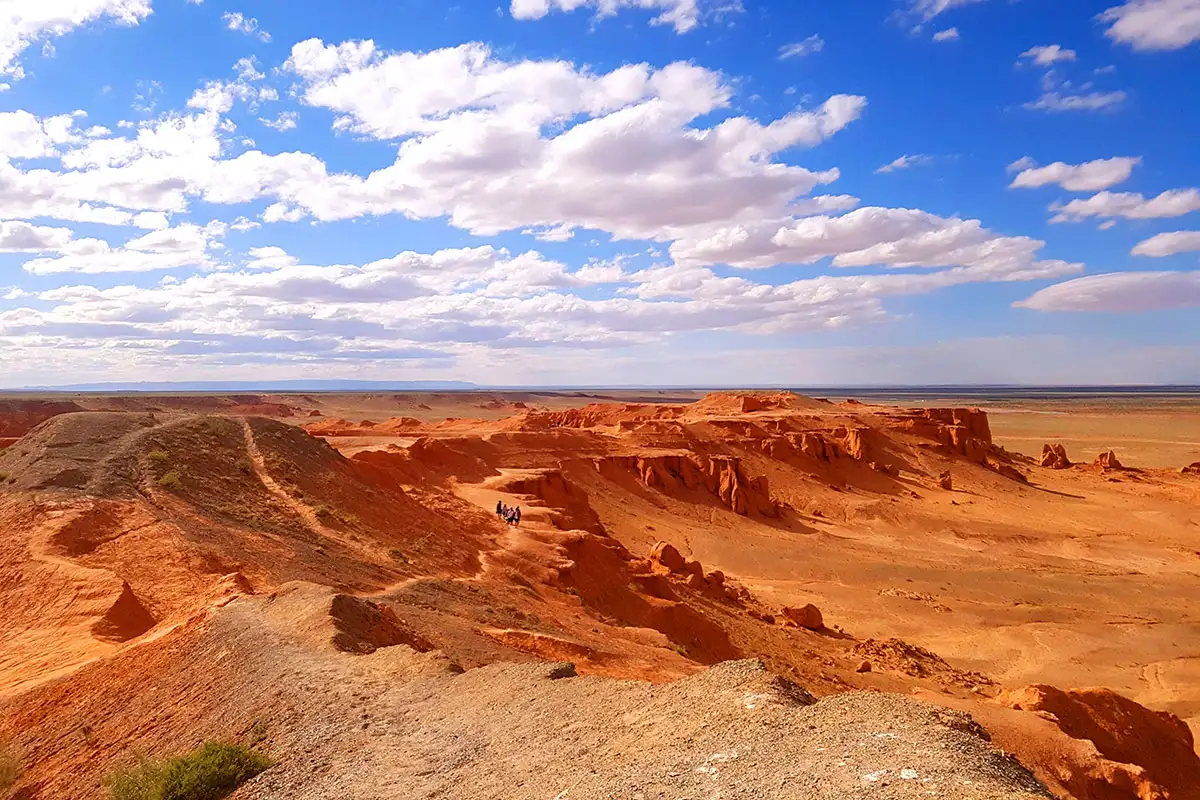
Dinosaur hunting in the Gobi desert, Mongolia
Embark on an exhilarating and one-of-a-kind expedition to uncover dinosaur remains in the vast wilderness of the Gobi desert, one of the world’s most famous palaeontological hotspots.
Topics:
Source link : https://www.newscientist.com/article/2511500-t-rex-took-40-years-to-become-fully-grown/?utm_campaign=RSS%7CNSNS&utm_source=NSNS&utm_medium=RSS&utm_content=home
Author :
Publish date : 2026-01-14 12:00:00
Copyright for syndicated content belongs to the linked Source.