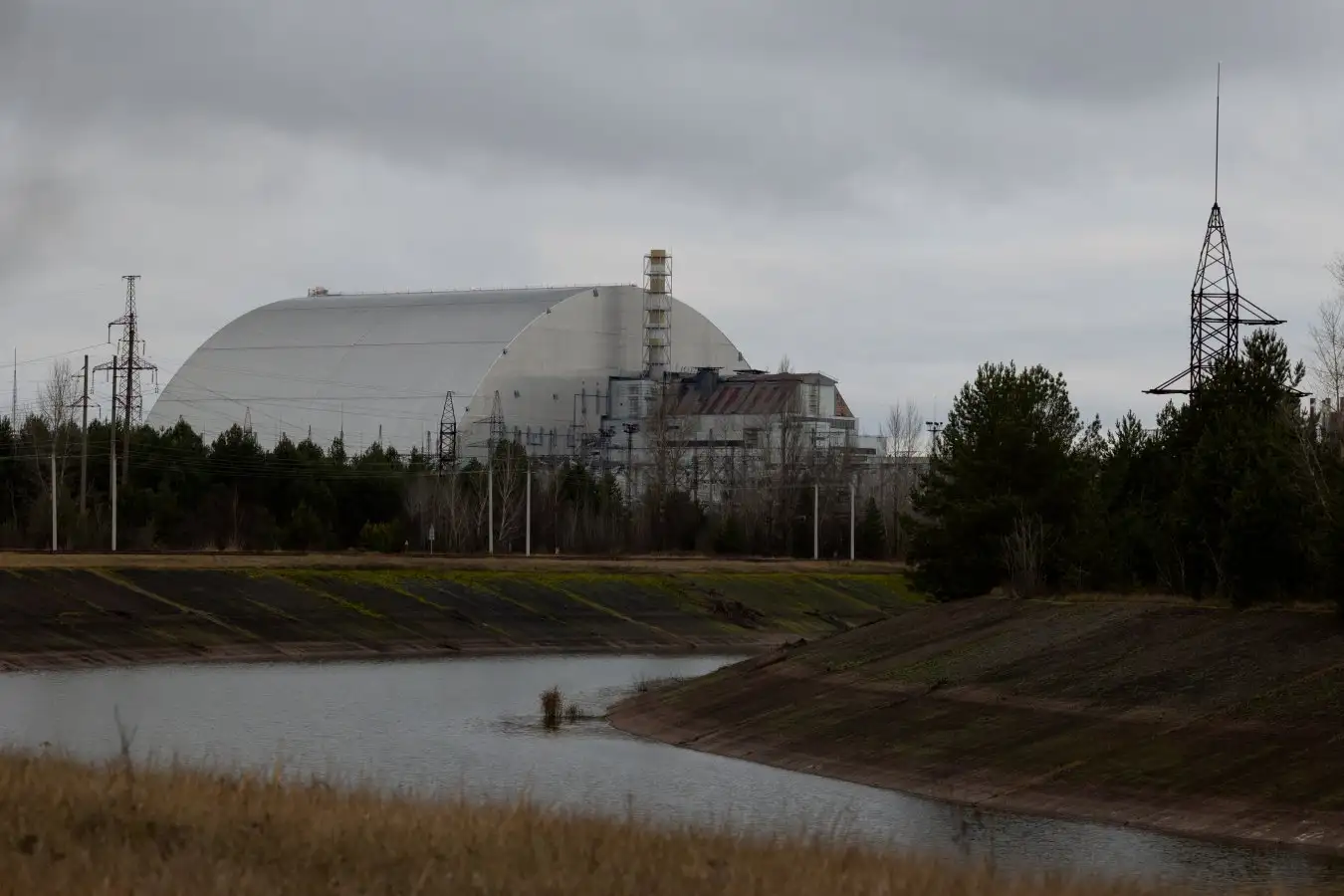
The Chernobyl Nuclear Power Plant has seen a number of attacks since the Russian invasion of Ukraine
AFP
An electrical outage at Ukraine’s Chernobyl Nuclear Power Plant has taken spent fuel cooling systems offline, leading to a potential risk of overheating and the release of dangerous levels of radiation – but due to the age of the fuel, it should be safe until power is restored.
The International Atomic Energy Agency (IAEA) reports that several Ukrainian electrical substations have been hit by Russian military strikes, causing power outages at Chernobyl. “The IAEA is actively following developments in order to assess impact on nuclear safety,” wrote IAEA director general Rafael Grossi in a post on X.
Spent nuclear fuel from reactors continues to emit radiation for years, creating heat that must be shed, or else the fuel can melt and emit a spike of dangerous radiation. The fuel from Chernobyl’s former reactors is stored in a large cooling pond that is constantly replenished with fresh, cold water to keep its temperature down.
But without an electricity supply – which the IAEA says the site now lacks – this cooling has stopped, which will allow the water temperature to rise and increase the rate of evaporation.
“When the fuel comes out of a reactor, it will be hot for a while, because there will be fission products and there will be radioactive and giving off gammas and betas and alphas – just emitting energy, which needs to be removed, otherwise it will eventually melt,” says Paul Cosgrove at the University of Cambridge.
Working in Chernobyl’s favour, however, is that its stored fuel is older and therefore has already had time to emit much of its radioactive energy and cool down. The risk now is lower than the risk was in 2022, for example, when New Scientist reported on similar power outages at Chernobyl.
“It is always a worry when a nuclear site loses power, but worry about nuclear risks is often several orders of magnitude above the risks associated with other events with similar consequences,” says Ian Farnan, also at Cambridge.
Chernobyl’s reactor 4 exploded in 1986, but reactor 2 was shut down in 1991, reactor 1 ceased generating power in 1996 and reactor 3 – the final one at the site – was decommissioned in 2000.
The exact specifications of the storage pools that contain the fuel left over from those reactors at Chernobyl are kept classified, says Cosgrove. But he is aware of an inspection by regulators in 2022, which found that the risk of spent fuel overheating in the case of a power outage was low. “This fuel has been sat in there for 20 years, so it will have decayed. More and more of that energy will be gone,” he says.
Electrical supply to Chernobyl – and indeed much of Ukraine – has been up and down since Russia’s full-scale invasion. But in recent months, Russia has increased its attacks on Ukrainian infrastructure.
The loss of power at Chernobyl is the latest in a string of Russian actions that have compromised nuclear safety, including occupying Chernobyl for several weeks and disrupting staff from maintaining it properly, taking over the Zaporizhzhia Nuclear Power Plant in a similar but long-running manner, and striking the New Safe Confinement building, which covers the ruins of Chernobyl’s reactor 4 disaster, with a drone in February last year.
Topics:
Source link : https://www.newscientist.com/article/2512468-chernobyl-cooling-systems-have-lost-power-but-meltdown-risk-is-low/?utm_campaign=RSS%7CNSNS&utm_source=NSNS&utm_medium=RSS&utm_content=home
Author :
Publish date : 2026-01-20 16:25:00
Copyright for syndicated content belongs to the linked Source.