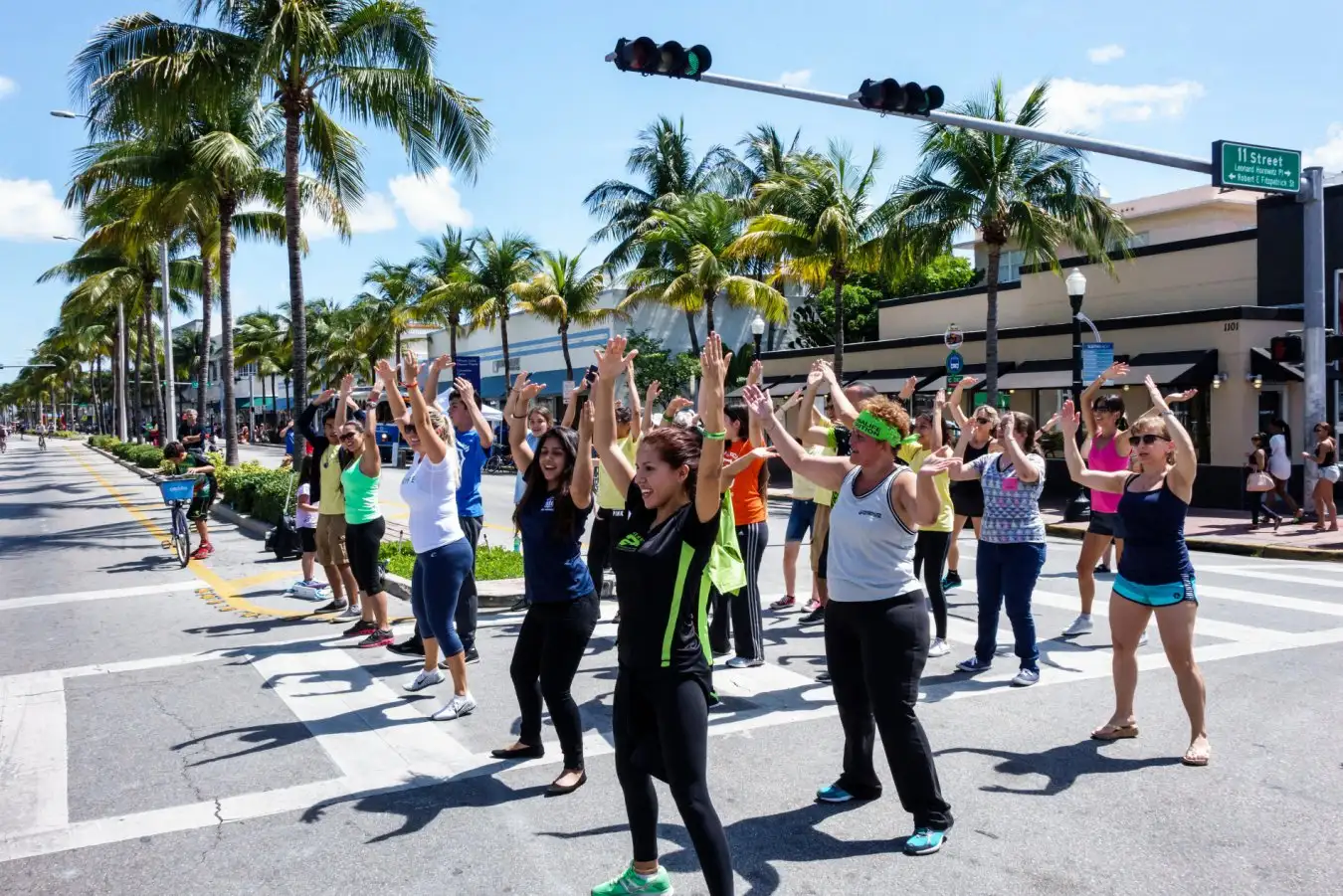
There are lots of reasons to exercise, but it may not lead to weight loss as much as we have been led to believe
Jeffrey Isaac Greenberg 5+/Alamy
Exercise is tremendously beneficial for our health in many ways, but it’s not that effective when it comes to losing weight – and now we have the best evidence yet explaining why this is.
People who start to exercise more burn extra calories. Yet they don’t lose nearly as much as weight as would be expected based on the extra calories burned. Now, an analysis of 14 trials in people has revealed that our bodies compensate by burning less energy for other things.
What’s more, this compensation effect is greater if people eat less as well as exercising more – and can completely cancel out the extra energy spent exercising. In other words, while eating less will result in weight loss, exercising while dieting may not result in any additional weight loss.
“The real killer here is that if you pair exercise with diet, your body goes, ‘fine, well, then I’m going to compensate more’,” says Herman Pontzer at Duke University in North Carolina. “It’s still good for you, just not for weight loss.”
When Pontzer studied Hadza hunter-gatherers in Tanzania, he was amazed to find that despite their physically active lives, they used no more energy overall than people who sit at a desk all day. This discovery led Pontzer to propose, in 2015, that our bodies have evolved to limit how much energy we burn, and compensate for greater physical activity by saving energy in other ways.
There are studies that back the idea, but not everyone in the field is convinced. Now, Pontzer and Eric Trexler, also at Duke University, have identified studies done for other reasons whose findings can be analysed for evidence of compensation. These studies shouldn’t be biased in relation to whether compensation occurs, says Pontzer. “They had no dog in the fight when the data were collected.”
In particular, the pair looked at 14 trials involving around 450 people altogether (the numbers are small because monitoring overall energy expenditure requires using specialised, expensive methods). On average, Pontzer and Trexler found that people’s total energy expenditure increased by just a third of what would be expected based on the increase in exercise.
For instance, Pontzer says, suppose people did enough exercise to burn an extra 200 kilocalories a day. Their total energy expenditure, in these studies, only increased by about 60 kilocalories.
But there was a lot of variation within this. For people who continued eating as normal, total energy expenditure increased, on average, by half of what would be expected. But for those who ate less at the same time as exercising more, total energy expenditure often did not go up. “They’re doing that 200 kilocalories a day of exercise, but it’s not showing up at all,” says Pontzer.
The type of exercise mattered, too. Compensation occurred only with aerobic exercises, such as running. With weightlifting or resistance training, energy use went up by more than expected. For instance, the total energy expenditure of people who expended an extra 200 kilocalories lifting weights went up by 250 kilocalories a day.
It’s hard to measure how much energy people use lifting weights, Pontzer says, so these findings need to be treated with caution. But he speculates that weightlifters might be burning extra energy to repair and build muscle.
Pontzer had previously thought the type of exercise didn’t matter. “It’s really a surprise to me,” he says. “I think it’s exciting and points to something that we hadn’t known before.” However, people who did weightlifting in these studies gained muscle and hardly lost any fat, Pontzer says. “So it’s still not a good way to lose weight.”
So, why doesn’t our total energy use go up by as much as would be expected when we do more aerobic exercise? The analysis suggests that our bodies compensate by reducing the amount of energy dedicated to all the background tasks it does. The resting metabolic rate, particularly during sleep, may fall in response to more aerobic exercise.
“We’re changing what our different organ systems are doing [after exercising],” says Pontzer. “And if we can figure out exactly what’s changing, we’re going to understand a lot more about how exercise affects our body [and] why some people seem to benefit from exercise more than others.”
While Pontzer sees the findings as very clear evidence of compensation, others are still not convinced. Dylan Thompson at the University of Bath in the UK points to a meta-analysis concluding that aerobic respiration does not alter the resting metabolic rate.
There are also some key limitations to the studies analysed, says Javier Gonzalez, also at the University of Bath. For instance, the extra exercise people were asked to do might have replaced other forms of exercise, such as gardening. This could explain why people’s energy usage didn’t go up by as much as expected, Gonzalez says.
But Pontzer says this can be ruled out in some of the studies. Compensation has also been seen in animal research, backing the human results. Nonetheless, Thompson and Gonzalez think more rigorous studies are still needed. “We really need carefully designed randomised controlled trials in humans,” says Thompson.
Topics:
Source link : https://www.newscientist.com/article/2514600-why-exercise-isnt-much-help-if-you-are-trying-to-lose-weight/?utm_campaign=RSS%7CNSNS&utm_source=NSNS&utm_medium=RSS&utm_content=home
Author :
Publish date : 2026-02-06 16:00:00
Copyright for syndicated content belongs to the linked Source.