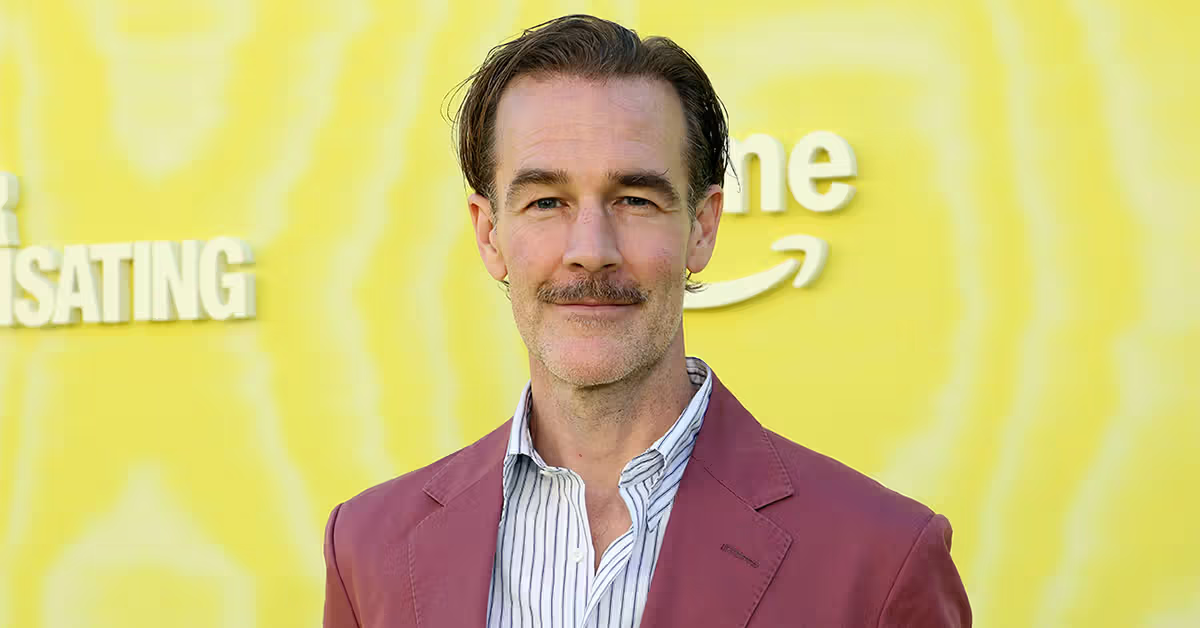
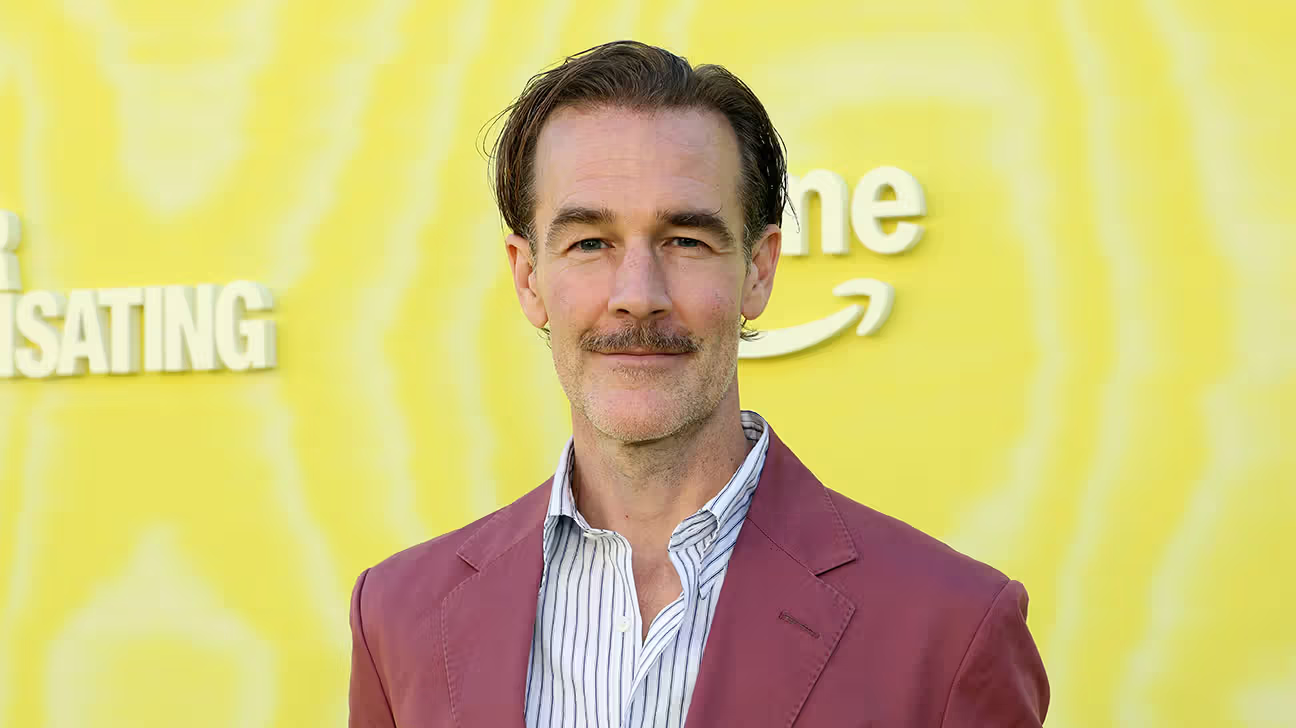
- James Van Der Beek has died at age 48 from colon cancer, shining a spotlight on rising cases in young adults.
- Colorectal cancer is the leading cause of cancer-related death among adults under age 50 in the United States.
- The alarming trend has prompted medical professionals to recommend screening for colorectal cancer starting at age 45.
James Van Der Beek, star of the hit 1990s TV series “Dawson’s Creek,” has died from colon cancer. He was 48.
The beloved actor’s untimely death highlights the stark increase in early onset colorectal cancer among people under 50.
His wife, Kimberly Van Der Beek, announced his passing on Instagram on February 11.
“Our beloved James David Van Der Beek passed peacefully this morning,” she wrote. “He met his final days with courage, faith, and grace.”
Van Der Beek first shared the news of his colon cancer diagnosis in November 2024, at which point he was battling stage 3 of the disease.
In a 2025 interview with Healthline, Van Der Beek said he went in for a cancer screening when he was 46 because he noticed minor changes in his bowel movements. “There wasn’t any red flag or something glaring,” he said.
Van Der Beek underwent a colonoscopy that revealed his later stage cancer.
“I was healthy. I was doing the cold plunge. I was in amazing cardiovascular shape, and I had stage 3 cancer, and I had no idea,” he told Healthline.
Van Der Beek said he hoped the publicity around his disease would educate younger adults about the need to be screened for colon cancer.
“I really want to impress upon people that you don’t need symptoms to get screened. If you are 45 or older or have a family history, talk to your doctor about your screening options,” he said.
Van Der Beek’s story is part of a growing trend of rising colorectal cancer cases in young adults.
The American Cancer Society (ACS)
The organization also predicts there will be nearly 50,000 new cases of rectal cancer in the United States this year. Nearly 60% of those cases are expected to be in men.
It is predicted that be 55,000 deaths due to colorectal cases in the United States this year.
That makes colorectal cancer the third-leading cause of cancer-related deaths in men and the fourth leading cause in women.
Colorectal cancer is the second most common cause of cancer deaths when numbers for men and women are combined.
The ACS reports that the death rate from colorectal cancer in older adults has declined about 1.5% a year over the past decade. However, the death rate from colorectal cancer in adults under the age of 55 has been increasing about 1% each year since the mid-2000s.
The trend prompted the U.S. Preventive Services Task Force (USPSTF) to change its recommendations for colorectal cancer screening. The organization now recommends that adults begin screening for the disease at age 45.
The ACS also
The National Cancer Institute notes that the
Despite this, nearly 40% of eligible adults are not up to date on their colonoscopies, said Meredith Pelster, MD, assistant director of the Gastrointestinal (GI) Cancer Research Program and a medical oncologist at the Sarah Cannon Research Institute (SCRI) at Tennessee Oncology.
“With screening, there are opportunities to detect cancer early or stop it before it starts. It is important for people to understand that colorectal cancer is highly treatable when detected early. Early detection paired with access to innovative therapies is changing outcomes,” Pelster told Healthline.
Christian Sommerhalder, MD, a colon and rectal surgeon at Texas Oncology, said he has witnessed the rising trend of younger colon cancer patients first-hand.
“I am seeing this in my own practice. Just in the last two months, I’ve had four patients under the age of 40 with colonic malignancy,” Sommerhalder told Healthline.
There are a number of theories as to why colorectal cancer is rising in younger adults. Among the factors:
- excess body weight
- high body fat at an early age
- diabetes
- alcohol use
- low levels of physical activity
Sommerhalder says diet is also a major factor.
“I think colorectal cancer is somewhat of an outlier due to the direct impact of diet,” Sommerhalder said. “I think it is also associated with the microbiota that is in the colon itself (the bacteria in the colon), which is altered by the dietary intake.”
Sommerhalder said that awareness among younger adults is another key.
Sommerhalder noted that awareness and lifestyle habits should start at a young age.
“Emphasize healthy lifestyles from childhood — limiting sugar-sweetened beverages and processed foods, maintaining a healthy weight, staying physically active, and avoiding tobacco and excessive alcohol,” he said.
“We cannot screen our way out of this problem alone,” he said. “While lowering the screening age to 45 is important, the steepest increases are occurring in those under 40. We need a multi-pronged approach. Just decreasing the screening further and further is not a long-term or sustainable solution.”
Source link : https://www.healthline.com/health-news/james-van-der-beek-colon-cancer-death
Author :
Publish date : 2026-02-12 05:50:07
Copyright for syndicated content belongs to the linked Source.