An ultrasound-based treatment for prostate cancer showed better safety and operative metrics versus robotic radical prostatectomy in an early analysis of a first-ever randomized trial.
After 6 months of follow-up, twice as many patients treated with MRI-guided transurethral ultrasound ablation (TULSA) met the composite primary safety endpoint of pad-free urinary continence and preserved erectile function (International Index of Erectile Function [IIEF] score ≥2). Urinary continence accounted for most of the difference (~85% vs <50%). About half of patients in both groups could achieve erections satisfactory for sexual intercourse. Perioperative outcomes (blood loss, hospitalization, recovery time, pain) generally favored TULSA.
Data on oncologic outcomes will be available in 2 years, said Laurence Klotz, MD, of the University of Toronto, at the European Association of Urology congress in London.
“In essentially every parameter, TULSA outperformed prostatectomy in terms of time off work, recovery of erectile function, incontinence, and the secondary endpoints, such as blood loss and length of stay,” said Klotz. “Postprocedure pain was also better.”
During a discussion that followed the presentation, Freddie Hamdy, MBChB, MD, of the University of Oxford and Nuffield Health in England, asked about prostate-specific antigen (PSA) response to treatment, noting a typically rapid and dramatic fall in PSA level after prostatectomy.
In response, Klotz referred to the TACT pivotal trial of the TULSA system, which showed a 90% postprocedure decline in PSA. The oncologic outcome of the study will be based on a combination of MRI assessment and biopsy and, ultimately, need for salvage therapy. PSA values will not be part of that outcome assessment.
Hamdy suggested that PSA values could play a role in monitoring patients’ status after TULSA.
In response to another question, Klotz said the dropout rate in the TULSA arm was 10-15%, which was within assumptions of the trial design and did not significantly affect results. He added that patients received the treatment at no cost, which could have played a role in retention.
Derya Tilki, MD, of the Martini-Klinik Prostate Cancer Center in Hamburg, Germany, asked about the learning curve associated with TULSA.
Klotz said he is unaware of any precise data on the issue, adding that treatment time decreases steadily over time out to the first 50 cases or so.
“It’s a team-driven treatment, which benefits from input from engineers, from MRI technologists, from the urologist, and from the radiologist, so it’s kind of a composite learning curve,” he said.
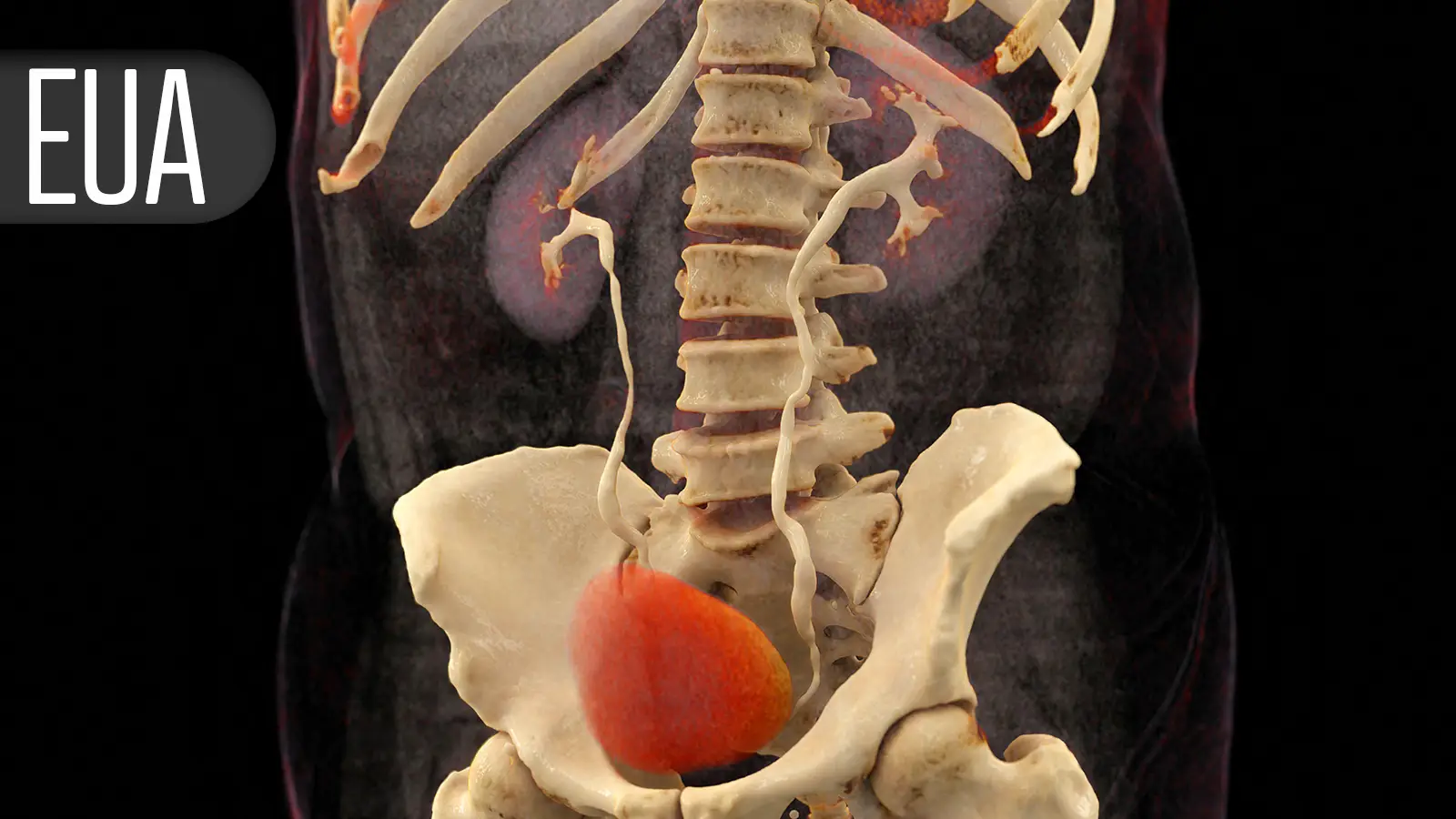
The TULSA system delivers thermal ultrasound with real-time MRI thermometry control with the goal of ablating prostate tissue without adversely affecting genitourinary function. The treatment offers the potential to achieve total or near-total ablation of the prostate.
Klotz reported initial findings from the CAPTAIN study, the first multicenter randomized trial comparing ablative therapy and radical prostatectomy for intermediate-risk prostate cancer (cT1 or cT2). Prior trials either failed to recruit an adequate number of patients or did not directly compare functional and oncologic outcomes as primary endpoints, he said.
Investigators at 18 sites in the U.S. and Canada enrolled patients with International Society of Urological Pathology (ISUP) grade 2 or 3 prostate cancer, PSA level ≤20 ng/mL, target radius ≤3 cm, and no extra-prostatic disease, calcifications >3 mm in the target volume, or implants causing MRI artifacts.
Patients were randomized to TULSA or local standard-of-care prostatectomy. The safety endpoints were pad-free continence and erectile function at 1 year. The trial has a composite efficacy endpoint of freedom from treatment failure at 3 years. Treatment failure comprises delivery of any additional intervention for prostate cancer, development of metastatic disease, or prostate cancer-specific death.
Data analysis included 211 patients who had a mean age of 63-65, baseline PSA of 6.5-7.2 ng/mL, and prostate volume of 35-41 g. Three-fourths of the patients had ISUP 2 disease and almost 80% had cT1 disease. About 80% of the patients met the dual safety outcome of pad-free incontinence and IIEF ≥2.
Operative results showed that TULSA achieved a median ablation volume of 78%, including whole-gland ablation in 68% of cases. In the prostatectomy arm, 95% of cases were nerve sparing and 77% of patients underwent pelvic lymph node dissection.
Perioperative outcomes favored TULSA, including postprocedure blood loss (0 vs 150 mL, P<0.0001) and length of stay (0.3 vs 1.1 days, P<0.0001). Patients in the TULSA arm had less pain during the first week after treatment. Patient-reported overall health at 30 days also favored TULSA (P<0.05). Mean time to recovery was 10 days with TULSA and 19 days with prostatectomy (P<0.05). Klotz reported that 6.3% of prostatectomy patients required hospitalization versus 0.7% of the TULSA group (P<0.05), and 1.6% of the prostatectomy group required intensive care unit admission versus none of the TULSA patients.
At 6 months, half of the patients in the TULSA arm met the composite primary endpoint versus 24% of the prostatectomy group (risk ratio 2.1, P<0.05).
“These are early results, and one would expect both of these parameters to improve over time with both treatments,” said Klotz.
Source link : https://www.medpagetoday.com/meetingcoverage/eau/120405
Author :
Publish date : 2026-03-20 14:34:00
Copyright for syndicated content belongs to the linked Source.