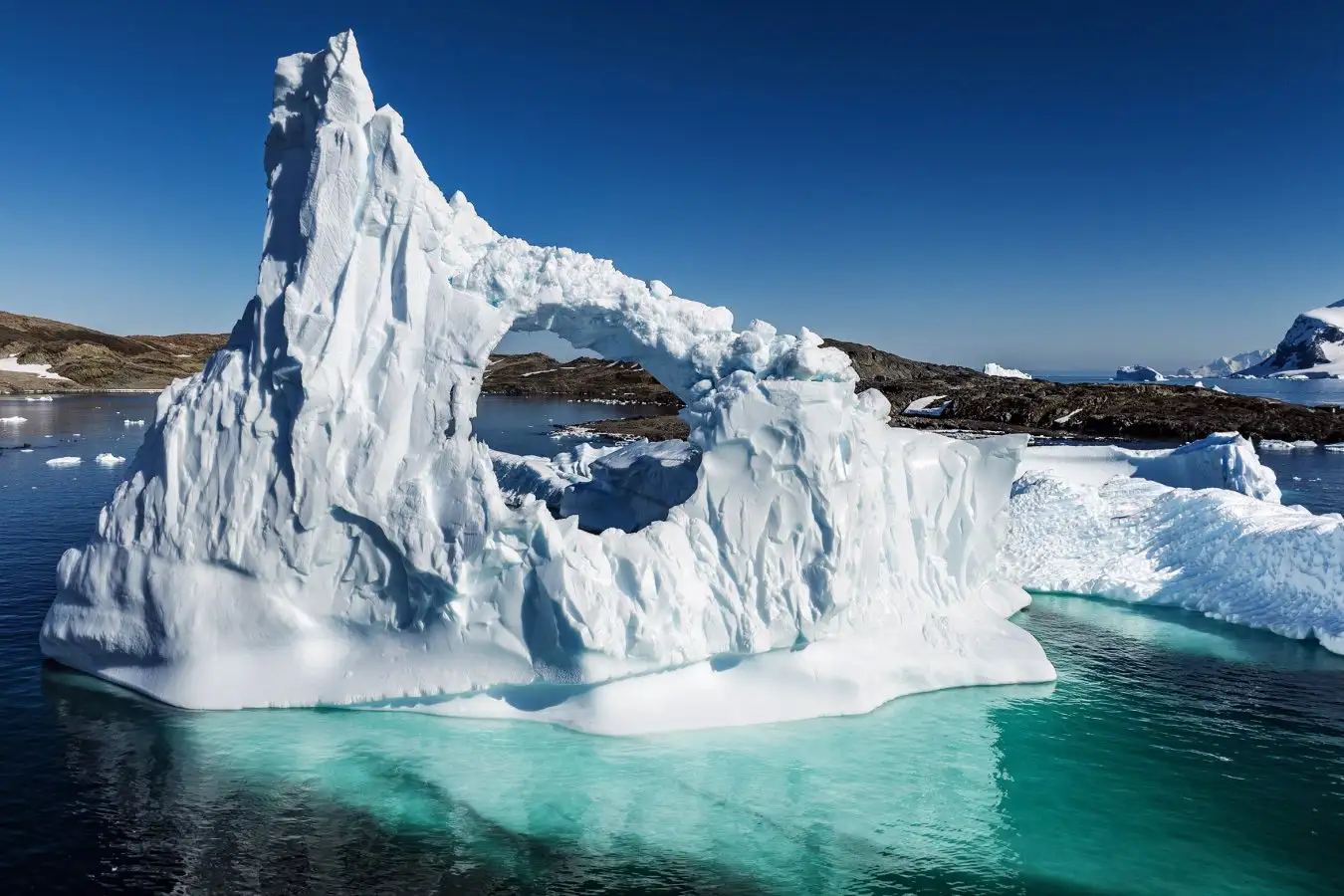
Antarctic sea ice extent has reached record lows in recent years
Sebnem Coskun/Anadolu Agency via Getty Images
Scientists have been debating why Antarctic sea ice, which once seemed impervious to climate change, has shrunk dramatically in the past decade. Now research suggests stronger winds have churned up warming water from the deep ocean, breaking through upper water layers that were protecting the ice from melt.
While Arctic sea ice has declined about 40 per cent over four decades, until recently the sea ice around Antarctica was slightly expanding, confounding most climate models. Then after 2015 ice extent fell from a record high to several record lows, losing an area the size of Greenland.
Some research has suggested the sea ice may be melting largely due to air temperatures, which have been so high in recent years that Antarctic researchers have posed for photos in swimwear. Two new studies make the case that ocean warming played a bigger role in this “regime shift”.
“Plenty of people will say… that it was atmospheric warming which melted the sea ice from above,” says Simon Josey at the National Oceanography Centre in Southampton, UK, who wasn’t involved in the research. “Now these scientists have done the thorough analysis and have got a plausible chain of events, which says that the ocean is the key player in that 2016 melt. Nobody’s put that argument together before.”
As part of global ocean circulation, a mass of warm, salty water called circumpolar deep water flows southward from the tropics and circles Antarctica at depths below 200 metres. But it’s increasingly coming to the surface where it can melt sea ice, two decades of temperature and salinity measurements from several hundred drifting buoys suggest.
Antarctica is surrounded by a belt of strong winds and storms in the latitudes of the “roaring forties”, “furious fifties” and “screaming sixties”. Climate change has shifted this storm track southward, bringing more precipitation into the sea ice zone, according to a study by Earle Wilson at Stanford University and his colleagues. Initially, the precipitation created a layer of fresh surface water that better insulated the bottom of the sea ice from warm deep water, allowing it to expand to its 2014 record extent.
But the southward-shifted storm track also delivers stronger winds that blow surface water and ice forward. Due to the spinning of the Earth, water moves 90 degrees to the left of the wind direction, generating spirals like the Weddell Sea gyre. As surface water is flung to the edges, deep water wells up from below to fill the void at the centre.
Between 2014 and 2016, this wind-driven upwelling began to win the “tug-of-war” against the protective layer of increased precipitation, and the sea ice began to melt away in the Weddell Sea. When the researchers plugged the observed changes in temperature and salinity into a simple computer model, it projected sea ice would expand and then contract, as it did in the real world.
“Most signs point to a persistent and sustained decline in sea ice, because even with the precipitation potentially suppressing the deep ocean heat… the heat is still there,” Wilson says. “All it would take is a sudden reversal of conditions for that heat to come back up.”
That reversal began with a string of wind storms, according to the second study by Theo Spira at the Alfred Wegener Institute in Bremerhaven, Germany, and his colleagues.
Even before the additional precipitation of recent years, the warm circumpolar deep water had been kept away from the surface layer by winter water, a layer of cold, salty water created when sea ice forms in winter, rejecting salt ions from its new crystalline structure.
But the deep water has been getting hotter due to global warming. Because water expands when it’s warmer, the deep water has been taking up more space, thinning the winter water. In 2015 and 2016, stronger-than-average winds brought up more deep water across the winter water barrier. The layering hasn’t recovered since.
The finding suggests that even if the strong winds were a natural fluctuation, the stage had been set by global warming.
“It’s the wind that pushes [sea ice] over into these rapid declines, but it’s the ocean that really keeps it low,” Spira says. “There’s definitely evidence that we’re in a new regime.”
While sea ice melt doesn’t raise sea levels, it could harm species that spend part of their lives on this ice, like krill or penguins. And if sea ice recedes near key ice shelves where its salt rejection helps form dense Antarctic bottom water, it could impact global ocean currents, including the Atlantic Meridional Overturning Circulation that keeps Europe warm.
“If you were to reduce sea ice production in those regions… you’ll have less bottom water and potentially a slowdown of the meridional overturning circulation,” Wilson says, although he notes that freshwater from glacier melt has a larger effect on bottom water.
Topics:
Source link : https://www.newscientist.com/article/2520281-warmer-ocean-is-driving-the-antarctic-sea-ice-regime-shift/?utm_campaign=RSS%7CNSNS&utm_source=NSNS&utm_medium=RSS&utm_content=home
Author :
Publish date : 2026-03-23 19:00:00
Copyright for syndicated content belongs to the linked Source.