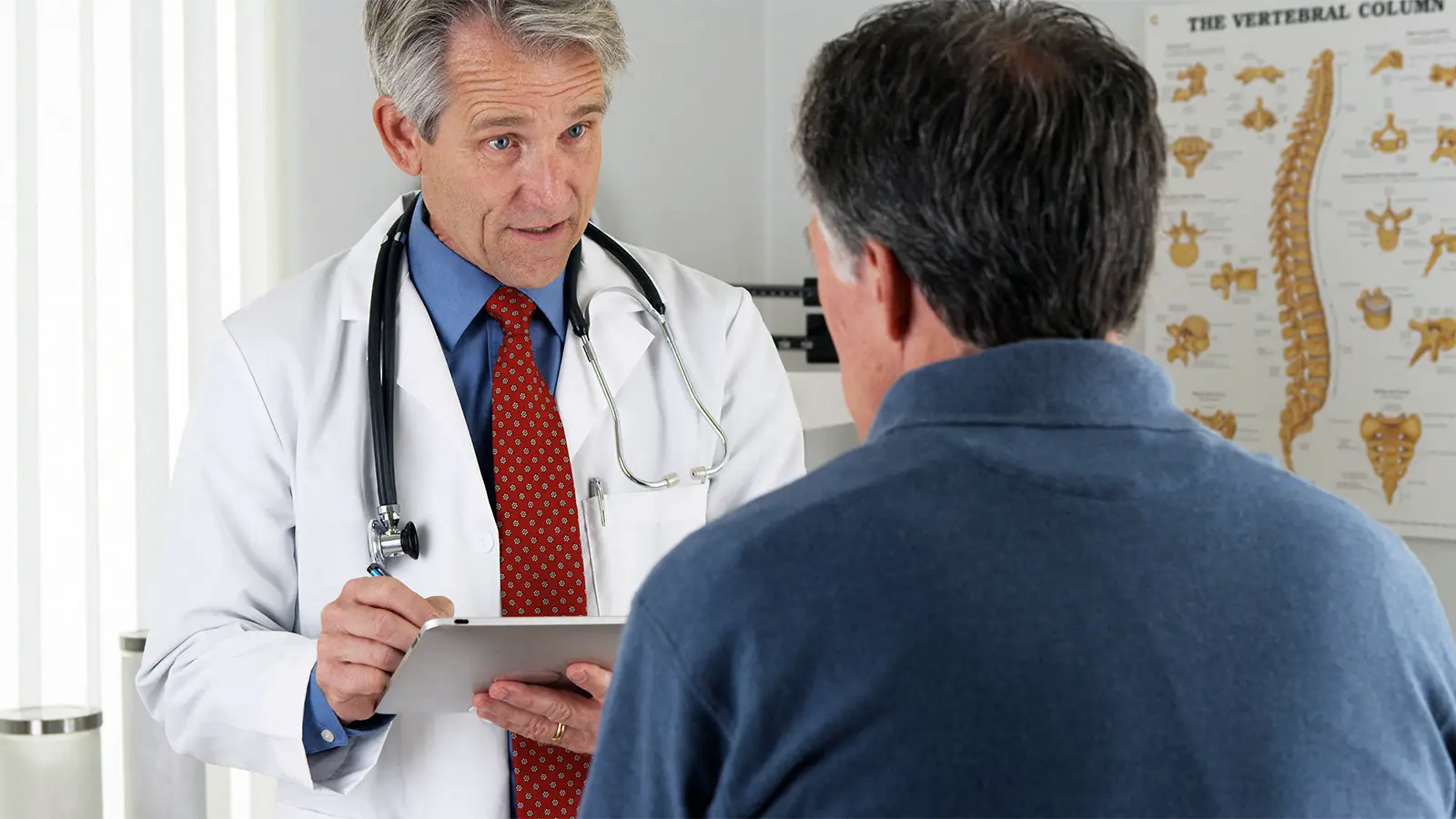
“Please confirm your name and date of birth for me.”
How many times are patients asked this through the course of their clinical interactions with us? On the inpatient service, it happens dozens of times a day — every interaction with doctors, nurses, food service staff, and radiology techs. In the outpatient setting, they hear it on arrival, they hear it when they get their ID wristbands, they hear it when their vitals are taken, they hear it when they’re placed in the exam room, they hear it when they’re having an EKG or phlebotomy or vaccines done, and they’re asked by every provider who interacts with them.
Patients Are Bewildered
The two most common questions I get from patients are “How many times are we going to get asked this today?” and “Don’t you know my name yet, Dr. Pelzman? You’ve taken care of me for so many years now.”
For my part, I gently explain to them that it’s not that I don’t know who they are, but I tell them that I need to make sure that we put the right wristband on them when they went through the check-in process, because even though someone should’ve caught this by the time they get to me, we’ve all seen people pass through the Swiss-cheese holes of quality assurance and come out misidentified at the other end. That’s when bad things can happen.
Once a patient of mine checked in for his wife’s appointment — because hers was before his and she was running late — and the check-in staff dutifully put her ID band on his wrist. It made it all the way through to me without anyone catching it, but luckily no harm came to either him or his wife because of this.
The other thing that happens is our patients get asked the same questions, so many things, so many times, over and over again. They’re asked to confirm all of their identifying information to make sure we’re dealing with the right patient. They’re asked to confirm everything we have in the big sections of their chart, from their past medical history and past surgical history to medications and allergies. They’re asked to confirm their insurance status, their emergency contact information, and their home address.
The wrong way to ask this, as far as I can tell, is to say to patients, “Has anything changed since the last time you were here?”, to which they often reply, “No; everything is the same,” when in fact things may have very much changed.
The Dangers of Outdated Information
Quite a few years ago a patient of mine had a critical result come back from the lab late in the evening, and after they did not answer their home phone, when we went in the chart to look under emergency contact information, the person listed was their sibling, who had passed away 5 years earlier. Their parents were listed next, and they had been gone many years at that point.
In general, by the time patients get to us, they’re already frustrated and a little upset at all the things they’ve been asked, over and over again. Do they smoke? Do they drink alcohol? Do they use drugs? Have they fallen recently? The screens for domestic violence, depression and suicidal ideation, as well as all of the social determinants of health, including food and housing insecurity, often weigh heavily on patients when we bring these things up in advance of the visit. And the results, once presented to the provider, often leave us frustrated that we have very few resources to do much with their answers.
One patient who’s been with me since I first started practicing here in New York City complained to me the other day, “I wish you all just still had those paper charts, and the folks at check-in would look at my insurance card, tell me to have a seat, and then you do my checkup and then someone would draw my labs and then I’d go home.”
Our patients are challenged by the smart tablets, signature pads, and questionnaire after questionnaire that they’re expected to fill out before even getting close to seeing the doctor or nurse. I’m not saying that these things aren’t important. They could become critically useful tools to help us catch things early, intervene, point our patients to the resources they need, and truly take care of them. But when they just saw someone in radiology early this morning, then a subspecialist at noon, then me late in the day, they are usually in form-filling-out overload, and not happy about it at all.
Our elderly patients, as well as those who are dealing with low vision, developmental delays, or serious mental illness, or are less tech-savvy, all likely feel overwhelmed by the morass of stuff coming at them that they’re expected to click on over and over again. We hear the frustration in their voices when they tell us, “I’ve already filled these forms out; why do I have to do them again?”
Dreaming of a Better Future
I’ve often dreamed about a time when all of our medical information was there for everybody to see, floating along in the background with us, readily available to anyone who needed it right when they needed it. It would be in the patient’s best interest — almost a responsibility, as a member of the healthcare community — to keep this stuff updated. They could depend on us, and we could depend on them.
Hopefully, as interoperability improves, we will get to a point where all of the stuff will get updated from multiple sources, and accuracy will be assured through multiple checks and balances.
Right now, for the patient who has a partial colectomy in the hospital, there’s a very high chance that by the time they arrive in their primary care doctor’s office for a follow-up visit, no one will have entered this event under their past surgical history, nor will the diagnosis of colon cancer have made it onto their problem list after the pathology came back.
My advice is that the folks out there working on the smarter systems and thinking about ways to improve healthcare, should try to make the patient experience a smoother one, as well as creating a world where practitioners taking care of them don’t need to do all of this manual work. At the beginning of an office visit with a patient, I find myself suddenly responsible for reading all the answers to five or six or more questionnaires, worried that something is going to slip by me, that I’m not going to notice an answer on one line in a questionnaire buried in their chart.
Catching all of this stuff, cleaning it all up, getting it all in the right place at the right time, smoothing out the pain points, will be a really good start to a better healthcare system for all of us.
Over and over again.
Source link : https://www.medpagetoday.com/opinion/patientcenteredmedicalhome/120781
Author :
Publish date : 2026-04-14 16:21:00
Copyright for syndicated content belongs to the linked Source.