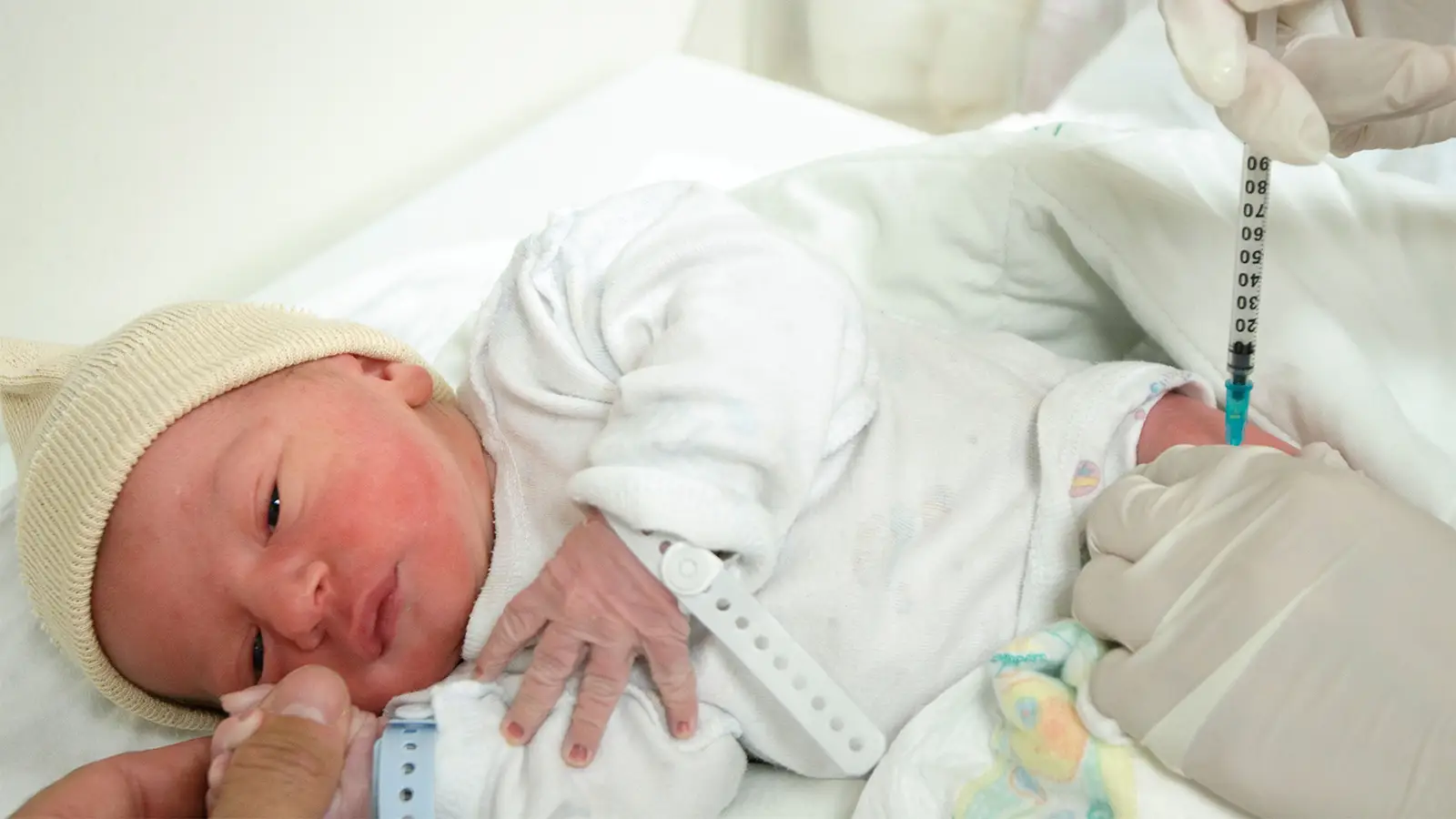
- In a shift, ACIP now recommends shared decision-making for hepatitis B vaccination instead of a universal vaccine birth dose in newborns when a mother tests negative for hepatitis B surface antigen.
- As a result of the change, two modeling studies predicted additional acute hepatitis B virus (HBV) infections, chronic infections, and more liver cancers and death.
- The “new ACIP recommendations will have a negative impact on the health of infants and children in the U.S.,” one of the committee’s former chairs warned.
Skipping the universal birth dose of the hepatitis B vaccine would cause preventable acute and chronic hepatitis B virus (HBV) infections, liver cancers, deaths, and add millions of dollars in additional healthcare costs, according to two modeling studies published in JAMA Pediatrics.
The two studies’ cautionary predictions come in the wake of Health Secretary Robert F. Kennedy Jr.’s overhaul of the CDC’s Advisory Committee on Immunization Practices (ACIP), and “clearly demonstrate that the new ACIP recommendations will have a negative impact on the health of infants and children in the U.S. and result in greater healthcare costs,” said Grace Lee, MD, of Stanford University in Palo Alto, California, in an editorial accompanying the studies.
After Kennedy dismissed every ACIP member and stacked the influential committee with vaccine-skeptical panelists, ACIP in December voted to reverse more than three decades of U.S. vaccine policy and stop recommending a universal dose of the hepatitis B vaccine at birth.
The risk for chronic HBV infection is highest among infants, at 90% compared with 5% for adults, and critics of the ACIP decision have warned that the move would leave children vulnerable to HBV-related chronic liver disease, liver cancer, and death.
The American Academy of Pediatrics (AAP) and other organizations still recommend the universal birth dose, and a federal judge in March temporarily blocked ACIP’s new recommendations, but HHS has started to make moves that could reinstate the controversial guidance.
In its December vote, ACIP recommended shared decision-making for an HBV vaccination birth dose in newborns when a mother tests negative for hepatitis B surface antigen (HBsAg). In babies who don’t get a birth dose, the panel also recommended delaying the first dose of the three-dose series to at least age 2 months. (ACIP continues to recommend that infants born to mothers who test positive or who are unscreened for HBV receive a birth dose within 12 hours of delivery.)
The new recommendations come at a time when hepatitis B vaccination rates have already been decreasing in the U.S., and Lee noted that even among women who screen positive for HBV infection in pregnancy, over 50% don’t get recommended monitoring and treatment.
At the December meeting, “there was a notable absence of any data on health benefits from preventing chronic disease and death,” noted Lee, a former ACIP chair, and the findings of the two modeling studies represent what typically would have been presented before any change in recommendation.
Modeling More HBV Infections Without Birth Doses
In a 1-year birth cohort of roughly 3.5 million infants, switching from a universal birth dose to shared decision-making and a first dose at 2 months in babies whose moms tested negative for HBV could lead to an additional 90 acute HBV infections through 18 years of age, 76 more chronic infections, 30 more cases of cirrhosis, 21 additional liver cancers, 29 more HBV-related deaths, and $16.4 million in added healthcare costs, according to a model developed by Eric Hall, PhD, of Oregon Health & Science University in Portland, and colleagues.
Those numbers assume 100% adherence to the three-dose HBV vaccine schedule in all children regardless of maternal HBV test results or screening status.
Imperfect adherence to the three-dose HBV vaccine series would drive all of those numbers higher: 238 more acute HBV infections, 112 more chronic infections, 61 additional cirrhosis cases, 39 more liver cancers, 62 more HBV-related deaths, and $21.6 million in additional healthcare costs.
“The absence of evidence for serious long-term adverse effects from hepatitis B vaccines balanced against our modeled increase in HBV infections among infants with any delay in initiating the first dose of the hepatitis B vaccine favors maintaining a universal hepatitis B vaccination at birth policy,” Hall and colleagues wrote.
Ripples From Shared Decision-Making
A second model predicted that dropping the universal birth dose recommendation for test-negative mothers could have damaging ripple effects on HBV vaccine coverage rates among babies of unscreened moms. In 2021, 14% of pregnant women weren’t screened for hepatitis B, according to CDC reports, and 80% of infants whose mothers were unscreened or HBsAg negative received a birth-dose vaccination.
Based again on a 1-year birth cohort of a similar number of infants, dropping the universal birth-dose recommendation for mothers who test negative could lead to 268 additional neonatal acute HBV infections and 565 additional chronic infections, predicted researchers led by Margaret Lind, PhD, of Boston University.
That scenario assumes that, among moms who were unscreened, the percentage of their infants who received the still-ACIP-recommended universal birth dose fell from the current 80% to 10% — roughly the percentage drop seen in that maternal group after the AAP and the U.S. Public Health Service in 1999 temporarily recommended that test-negative moms delay birth doses.
Even if 80% of babies born to unscreened mothers continued to receive a birth dose, the shared decision-making recommendation for moms who test negative would lead to 62 more acute neonatal infections and 62 chronic infections than sticking with a universal birth dose recommendation regardless of a mother’s testing status, according to Lind and colleagues.
Although ACIP’s birth-dose recommendation for infants of unscreened mothers didn’t change, “historic data suggest that maintaining high coverage in this group without a universal recommendation is unlikely,” Lind and colleagues wrote. “By shifting birth vaccination from a default practice at birth to an opt-in decision, overall HBV vaccine coverage will likely decline and, in turn, increase long-term population infection and disease risk.”
From Bad to Worse?
The models’ worst-case scenarios paint a bleaker picture.
In the model from Hall’s group, imperfect adherence to vaccine recommendations and a delayed first dose at 2 months among both test-negative mothers and unscreened mothers in the 1-year birth cohort would lead to 1,437 additional acute neonatal HBV infections, 1,127 more chronic infections, 462 additional cirrhosis cases, 304 more liver cancers, and 482 more HBV-related deaths than a universal birth-dose vaccine scenario. The additional lifetime healthcare costs would tally $222.4 million.
If birth-dose coverage falls, Lind’s team warned, maternal screening rates would have to climb to near-perfection just to keep pace with current infant HBV infection rates. Were birth-dose coverage levels to fall to either 10% or 50% among unscreened mothers, screening rates would have to climb to 98% or 96%, respectively, to match the median number of infections seen with the current 86% maternal HBV screening rate under a universal birth-dose recommendation.
Given that federal vaccine recommendations no longer align with those of organizations such as the AAP, clinicians need to understand that communication with parents matters even more, Lee said: “We can understand that trust happens when we are consistent in our approach to listening and sharing our knowledge in a way that is respectful.”
Hall and colleagues used a Markov model to quantify the lifetime health and economic outcomes for their 1-year birth cohort. Lind and colleagues developed a compartmental model to estimate the number of neonatal and chronic HBV infections in a 1-year birth cohort.
Study limitations in the Hall model included limits on HBV infection risk to age 18 years, as well as use of only one birth cohort to model outcomes. The model didn’t include the increasing risk of horizontal HBV transmission in future birth cohorts as population prevalence increased. The Lind model drew its parameter estimates from the literature and may not reflect current HBV epidemiology. The model also didn’t include factors such as access to care and sociodemographic data.
Source link : https://www.medpagetoday.com/infectiousdisease/hepatitis/120986
Author :
Publish date : 2026-04-27 21:44:00
Copyright for syndicated content belongs to the linked Source.