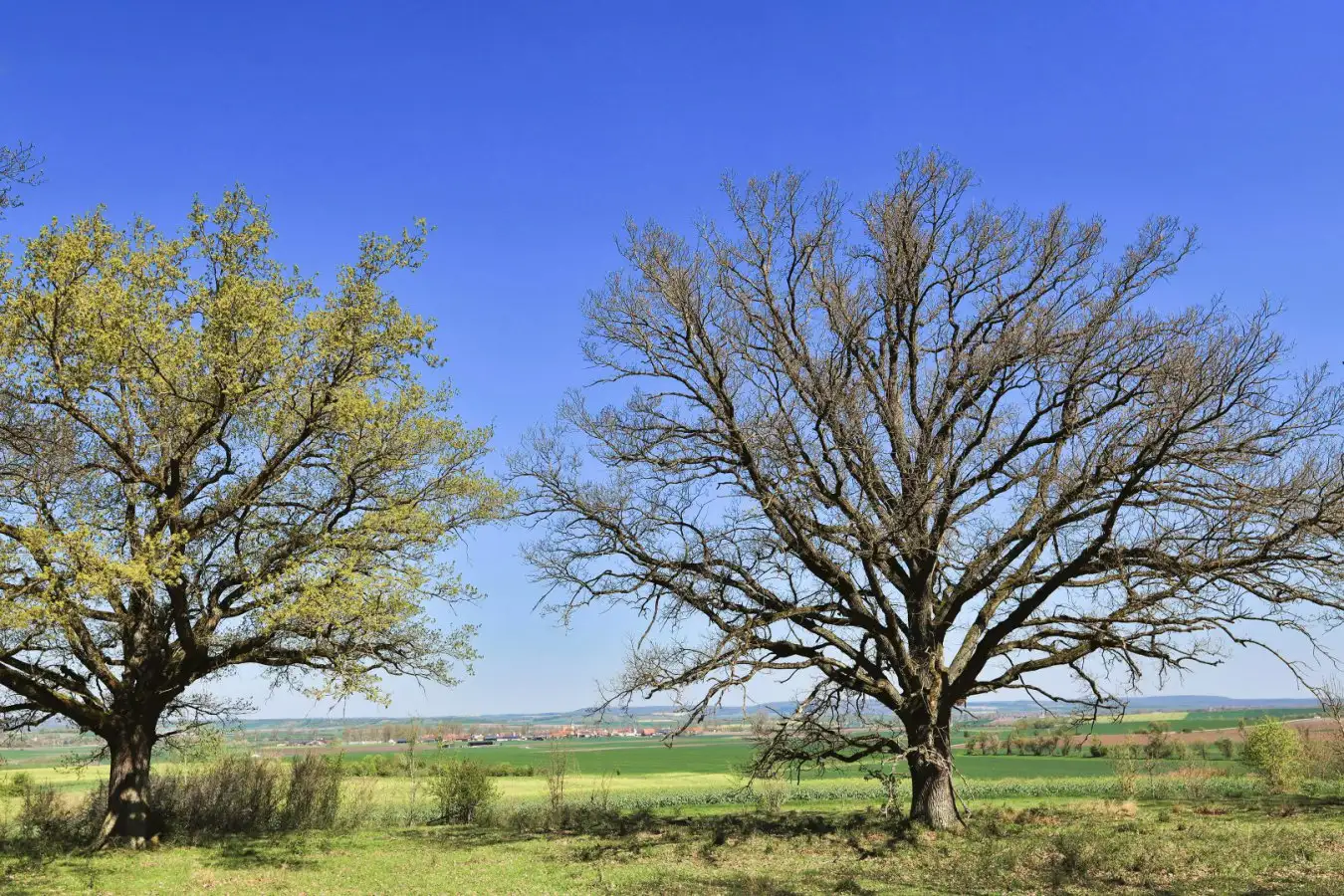
Two oak trees in the spring, with varying degrees of leaf growth
Sven Finnberg
If caterpillars have munched through a lot of an oak tree’s leaves one year, then, the following spring, the tree’s buds open three days later. This delay means the caterpillars don’t have food available when they hatch, and so many die, halving how many leaves get eaten.
In spring, longer, warmer days drive trees to start growing again, opening buds and unfurling young leaves. Many species time their life cycle to match this, so some caterpillars, for example, hatch when the leaves are new and soft, so they can start eating immediately.
Now, Soumen Mallick at the University of Würzburg in Germany and his colleagues have discovered that oak trees have a way to fight back. They analysed the condition of tree canopies in images from Sentinel-1 radar satellites for a 2400-square-kilometre area in the northern Bavaria region of Germany between 2017 and 2021.
The forests there are dominated by two species of oak: the pedunculate or English oak (Quercus robur) and the sessile oak (Quercus petraea). Each pixel in the satellite images showed an area of 10 by 10 metres – about the size of the crown of one tree – and the team looked at 27,500 pixels in total.
In 2019, there was a massive outbreak of gypsy moths (Lymantria dispar), the hairy caterpillars of which feed on tree leaves, causing extensive damage when they are plentiful.
The satellite data showed which trees were stripped of leaves and how they responded. If an oak tree was heavily infested by caterpillars, the following spring, its leaves would emerge three days later than those of trees that hadn’t been badly eaten.
This delay slashed the damage caused by feeding on the tree by 55 per cent compared with the year before. This is because the caterpillars still hatch at the same time, but they emerge to a bare cupboard rather than a feast of young leaves, leading many of them to die, says Mallick.
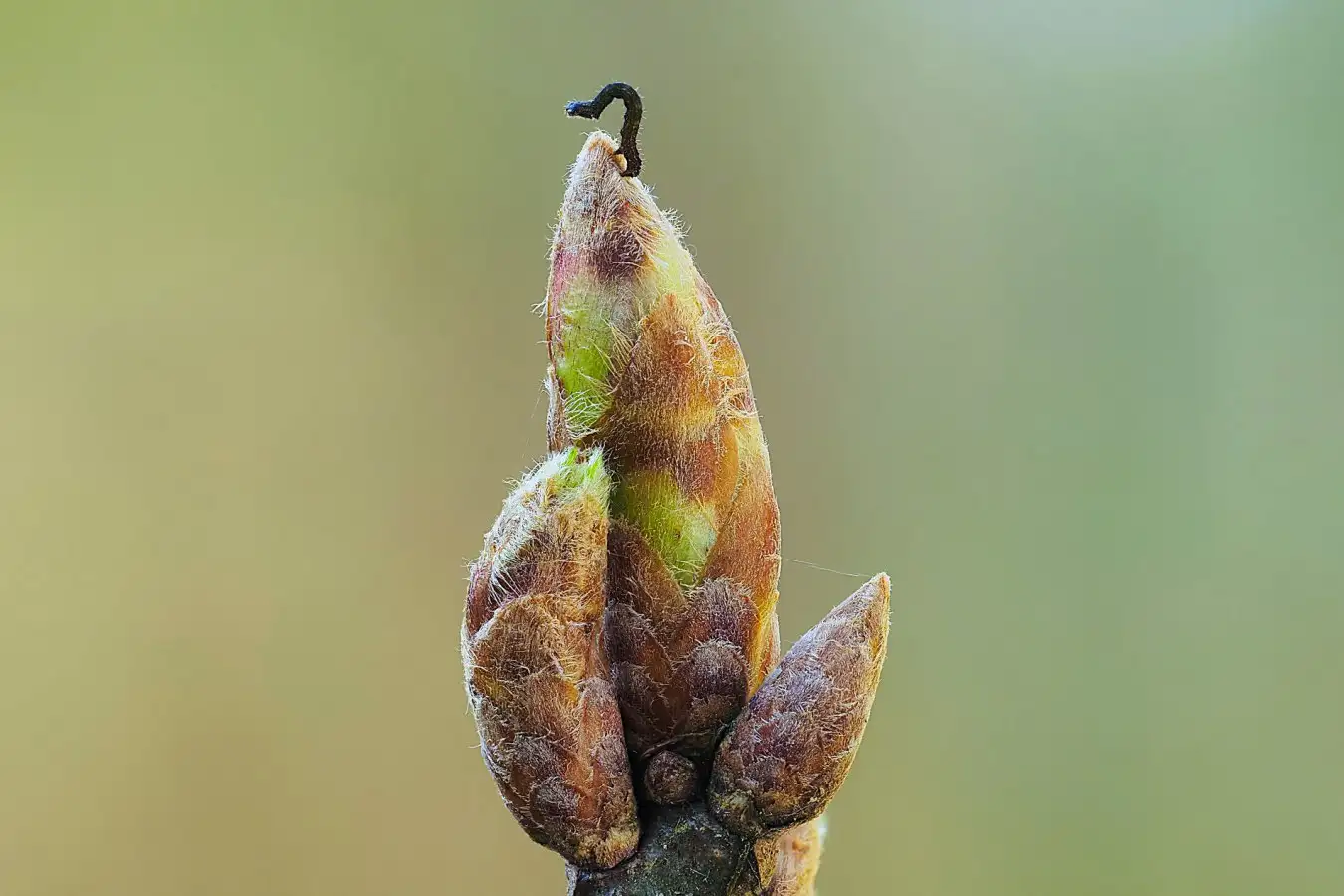
A caterpillar on an oak leaf bud
Sven Finnberg
Oak trees also have other defences, including making leaves tougher to chew or producing aromatic compounds that may attract other organisms to prey on the caterpillars. “The delay in bud opening seems to be more efficient than all these other defence mechanisms,” says Mallick, who thinks other deciduous plants may do it, too.
“It’s very plausible,” says James Cahill at the University of Alberta in Canada, but he says the delay in bud emergence after the caterpillar outbreak is a correlation, and evidence of causality isn’t yet there. The delay could be caused by decreased plant vigour as a result of the leaf loss, he says, but having data from more than one outbreak would help work out what’s going on. “It certainly deserves more research.”
Mallick says the delay could be explained by physiological constraints such as resource depletion, but because it was seen across dozens of tree populations and was strongest in forests where a delay most effectively reduced herbivory, he thinks it isn’t just a physiological response by individual trees, but an adaptation.
“The mechanisms are intriguing and are a key aspect requiring further research,” says James Blande at the University of Eastern Finland.
Forests sometimes turn green later in spring than computer models predict they will based on temperatures, especially as the climate warms, and this study explains why, says Mallick.
“This point that plants respond to much more than climate change is very important,” says Cahill.
Topics:
Source link : https://www.newscientist.com/article/2524968-oak-trees-use-delaying-tactics-to-thwart-hungry-caterpillars/?utm_campaign=RSS%7CNSNS&utm_source=NSNS&utm_medium=RSS&utm_content=home
Author :
Publish date : 2026-05-01 10:00:00
Copyright for syndicated content belongs to the linked Source.