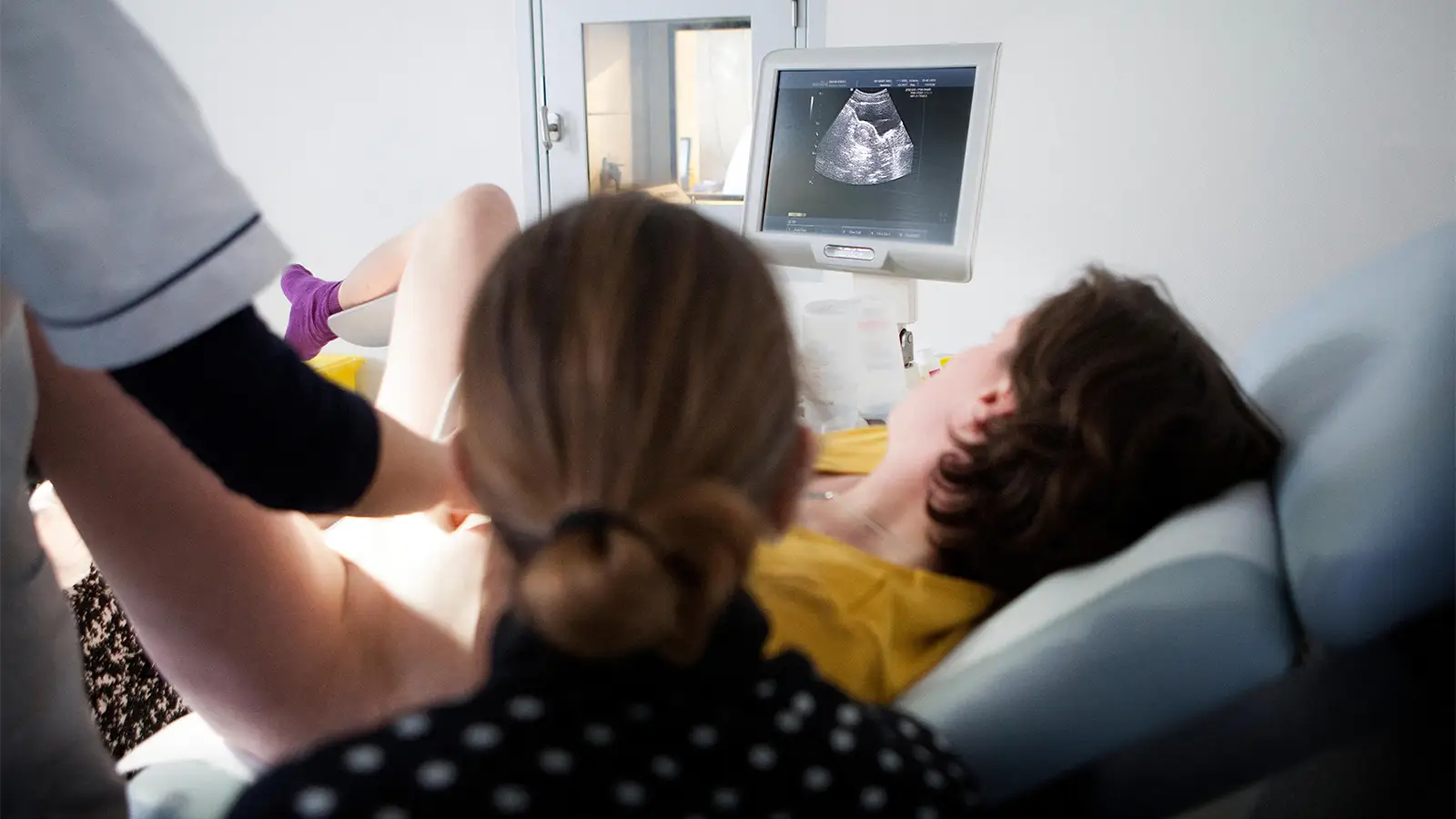
- Patients in full remission from endometrial cancer who underwent fertility-preserving treatment before cancer treatment had less IVF success than matched controls.
- The question remains as to what exactly drives this difference in pregnancy outcomes.
- Authors noted that findings show preserving the uterus doesn’t necessarily preserve endometrial function, which should be considered in patient counseling.
Functional endometrial recovery was not a sure thing for patients who underwent fertility-sparing treatment before endometrial cancer treatment, researchers from China reported.
In the retrospective cohort study, patients who underwent fertility-sparing treatment before endometrial cancer treatment and then did in-vitro fertilization (IVF) after histologic complete remission had less success than their counterparts without cancer, according to Peng Peng, MD, of the National Clinical Research Center for Women’s Health and Obstetric and Gynecologic Diseases in Beijing, and colleagues.
In the first frozen-thawed embryo transfer cycle, those with a history of endometrial cancer or endometrial intraepithelial neoplasia (EIN; severe precancerous lesions) had significantly lower rates of clinical pregnancy than the matched control group (37.3% vs 61.1%, P<0.001), they stated in Obstetrics & Gynecology.
They also had significantly lower live birth rates (23.8% vs 47.6%, P<0.001) and ongoing pregnancy rates (26.2% vs 49.2%), the authors said.
Additionally, a Kaplan-Meier analysis found a significantly lower cumulative live-birth rate in the endometrial cancer group compared with controls (HR 0.60, 95% CI 0.40-0.89, P=0.012).
“Collectively, these findings highlight that preservation of the uterus does not necessarily equate to preservation of endometrial function,” Peng’s group wrote.
Fertility-sparing treatment for this patient group typically involves prolonged exposure to high-dose progestins, gonadotropin-releasing hormone agonists, and repeated endometrial assessments. Both the treatment and the endometrial cancer itself may adversely impact reproductive potential.
Rachel Weinerman, MD, of Case Western Reserve University in Cleveland, told MedPage Today that the findings have been noted by experienced clinicians, but that the well-designed study offered evidence to back that practical knowledge.
The question remains as to why the endometrium is not as receptive in these patients, she noted, stating that it may be an inherent difference in responsiveness to estrogen and progesterone, either caused by, or possibly predating, the endometrial cancer. It also could be iatrogenic injury from the cancer treatments, like dilation and curettage procedures, she added.
“This study can’t answer that question but it can provide the basis for further studies to better understand the biology of the endometrium in this population,” said Weinerman, who was not involved in the research.
Peng and colleagues looked at patients who had achieved complete pathologic remission after fertility-sparing treatment for endometrial carcinoma or EIN and then underwent IVF at a single tertiary hospital between Jan. 1, 2020 and Dec. 31, 2024. The primary outcomes were clinical pregnancy and live birth rates in the first frozen-thawed embryo transfer cycle as well as the cumulative live birth rate across all transfer cycles.
Patients in the endometrial cancer group had to be age 45 or younger, have histopathologically confirmed well-differentiated endometrioid adenocarcinoma, verified wild-type p53 status, and complete documentation of fertility-sparing treatment with synthetic progesterone or gonadotropin-releasing hormone agonist. They also had at least one frozen-thawed embryo transfer cycle with endometrial preparation by artificial cycle.
Controls had no history of endometrial malignancy, underwent IVF at the hospital, and had infertility attributed to tubal or male factors. In all, there were 126 pairs matched 1:1 on age, BMI, and primary infertility. Before matching, there were significant differences between the groups with those in the endometrial cancer group veering younger (P=0.026), having a higher BMI (P<0.001), and having a higher proportion of primary infertility (P<0.001). After matching, the groups were balanced.
There were 297 frozen-thawed embryo transfer cycles initiated in the endometrial cancer group, of which 37 were cancelled. In the matched control group, it was 222 cycles initiated and nine canceled.
The authors reported that patients with a history of endometrial neoplastic lesions required a longer estrogen-only phase than the control group (median 14 vs 12 days, P<0.001). Their serum estradiol levels were significantly higher than the control group on both the day of endometrial conversion and the day of embryo transfer (P<0.001 for both), yet endometrial thickness was also lower at both time points (P<0.001 for both), with fewer cycles achieving an endometrial thickness exceeding 8 mm on the day of conversion (83.3% vs 99.2%, P=0.003).
They also found that time to complete remission exceeding 6 months was independently associated with reduced odds of clinical pregnancy (OR 0.50, 95% CI 0.30-0.85, P=0.011), which “suggests that delayed resolution may reflect more refractory lesions or greater cumulative injury to the endometrial basal layer.”
Study limitations included the retrospective, single-center design. Also, patients chose whether to undergo endometrial receptivity analysis, introducing potential indication bias in evaluations.
Peng and co-authors concluded that “histologic remission after fertility-sparing treatment for endometrial carcinoma does not equate to functional endometrial recovery” and that these findings “highlight the necessity of incorporating endometrial protection into initial oncologic treatments.” They also noted that these findings should be considered in patient counseling.
Source link : https://www.medpagetoday.com/obgyn/infertility/121509
Author :
Publish date : 2026-05-30 16:37:00
Copyright for syndicated content belongs to the linked Source.