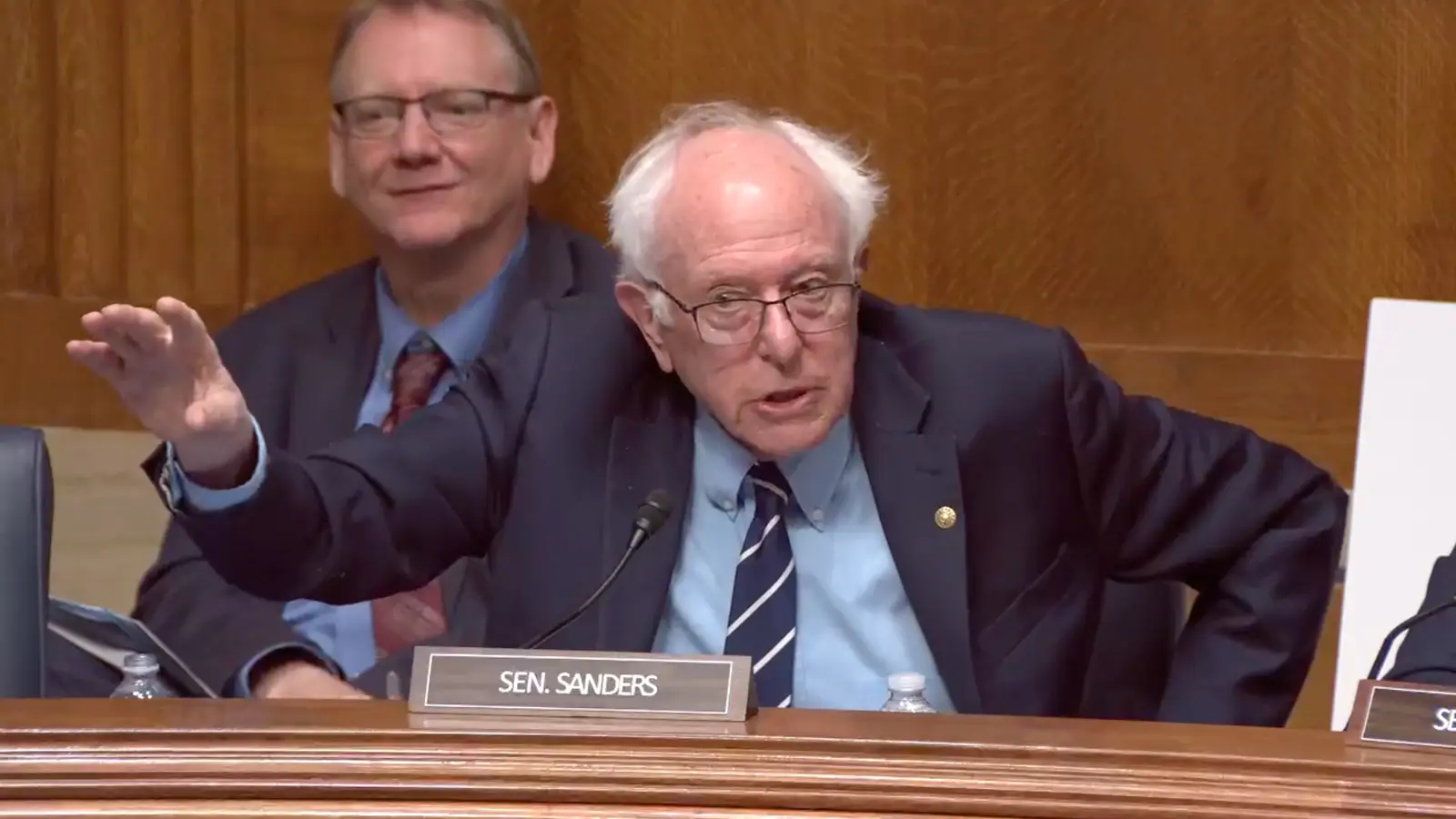
As the Trump administration continues to target gender-affirming care for youth, the Senate Health, Education, Labor and Pensions (HELP) committee debated the issue in a hearing on Wednesday.
Committee members heard testimony against and in support of such care, with some calling for a federal ban, and others questioning why they were even there when there are more pressing healthcare issues facing Americans and decisions about medical care are better left to families and physicians.
“As senators, it is our job to stand up for what is right and against what is wrong, to support science, and to speak out against quackery, and to align public policy with the best interests of children and families,” Sen. Bill Cassidy, MD, (R-La.), outgoing chair of the HELP committee, said. “This includes not funding providers or organizations taking generous federal dollars and then promoting or performing gender transition services on minors. Let’s put politics aside, and first do no harm. Let’s fulfill our duty to let kids be kids.”
Sen. Bernie Sanders (I-Vt.) immediately pushed back, calling Wednesday’s hearing “disappointing.”
“It is disappointing in the sense as to why millions of Americans are giving up on the political process,” Sanders said. “They look to Washington at a time when they are facing unprecedented crises, and they’re saying who is responding to our needs. And today we are … spending hours on a hearing that impacts an infinitesimal number of people.”
He pointed instead to high rates of childhood poverty and hunger in the U.S. as well as high costs of healthcare.
Meanwhile, “what the medical and scientific community tells us is that gender-affirming care is associated with a lower risk of depression, severe anxiety, and suicidal thoughts,” Sanders continued. “Bottom line, gender-affirming care for youth should be between a doctor, a patient, and their parents, not politicians and the federal government. Not only would banning gender-affirmative care do nothing to protect kids, it will make it harder for them to get the healthcare they need, and that would be a tragedy.”
Efforts targeting gender-affirming care for youth under the Trump administration have included Department of Justice subpoenas to doctors and medical clinics providing such care, as well as efforts by CMS to eliminate such care by withholding hospitals’ participation in Medicare and Medicaid programs.
Such efforts have faced legal challenges but left facilities on the front lines grappling with difficult choices about funding and the care they provide.
Shannon Minter, legal director for the National Center for LGBTQ Rights in San Francisco, called attention to the issue in testimony delivered at the hearing.
The government is “attempting to rob families of the right and freedom to make medical decisions about their own children,” he contended. Additionally, the government is “baselessly attacking safe and effective medical care.” And finally, “in a way we have never seen before in this country, the government is attempting to seize, secretly, the medical records of families to use private medical information about their children for an unlimited and unknown purpose.”
“Few principles in American law are more settled than the right of parents to make medical decisions for their own children in consultation with their doctors,” he added.
In response to questions from Sanders, Minter noted the “level of anguish” that healthcare professionals and families are experiencing due to the current administration’s targeting of gender-affirming care for youth is “really profound.”
Indeed, many medical organizations and healthcare professionals have pointed to serious concerns should access to gender-affirming care continue to be slashed.
However, Chloe Cole, a 21-year-old detransitioner and advocate from Escalon, Calif., was among those who testified during Wednesday’s hearing in support of federal action banning gender-affirming care for youth. Cole began the process of medically transitioning at the age of 12, and underwent a double mastectomy at 15 before detransitioning at 16, Cassidy noted.
Cole said her parents were told by doctors that they could lose her to suicide should she not transition, and that neither she nor her parents were warned of the potential for long-term and irreversible effects from the treatments she received. “For me, the worst part is that nobody knows whether I’m able to have children now,” Cole said. “I have no idea what my future is going to look like. No studies, surveys, or numbers are ever going to be able to quantify just how heartbroken I am.”
“Congress needs to ban these procedures on minors, protect parents who refuse them, investigate the medical institutions that promoted them, and make sure that children who have already been harmed are cared for,” she added.
Ultimately, there was bipartisan support for Cole’s bravery in sharing her story. However, a number of HELP committee members still argued against a federal ban on gender-affirming care for youth, or for another kind of solution altogether.
Sen. Tim Kaine (D-Va.) said Cole’s experience is tragic, but contended it is a classic case of medical malpractice.
“I think the solution here is malpractice cases,” Kaine said. “I think the solution is standards of care by the [American Medical Association] and the plastic surgeons and the pediatricians, which are evolving as more research is done. I don’t think the right answer is a federal one-size-fits-all.”
Source link : https://www.medpagetoday.com/washington-watch/washington-watch/121579
Author :
Publish date : 2026-06-03 19:14:00
Copyright for syndicated content belongs to the linked Source.