[ad_1]
- Investigators tested cervical spinal cord stimulation (SCS) as a temporary therapy for chronic post-stroke in seven patients with upper limb hemiparesis.
- The preliminary evidence suggested safety, feasibility, and efficacy of this neuroprosthetic approach in assisting upper limb function in daily living.
- Developers envision SCS therapy as a permanent implant that ultimately can go 10 to 20 years between battery changes, but more rigorous studies are required beforehand.
Cervical epidural spinal cord stimulation (SCS) accrued more evidence backing its safety and feasibility as a treatment for chronic upper-limb paresis in stroke survivors.
In a pilot study, seven people got SCS neuroprosthetic implants and showed improvements in motor function immediately upon SCS being turned on (average +32% strength and +5.6 Fugl-Meyer Assessment [FMA] points), according to Marco Capogrosso, PhD, a biomedical engineer at the University of Pittsburgh, and colleagues.
Motor function remained significantly improved at the end of the study (4 weeks; +6.6 FMA points), after the patients had logged modest, periodic motor activity (8.6 hours, 5.5 hours with SCS on). Notably, three of seven participants with residual corticospinal connectivity to finger muscles improved hand and/or finger movement with SCS, Capogrosso’s group reported in Nature Medicine.
“This study represents the conclusion of our initial feasibility phase and an important step toward real-world clinical application,” Capogrosso said in a press release. “Our goal is to develop a technology that could eventually be used in everyday life, not just in the clinic. These results give us confidence that spinal cord stimulation could become a practical, implantable option for helping stroke survivors use their arms when it matters most.”
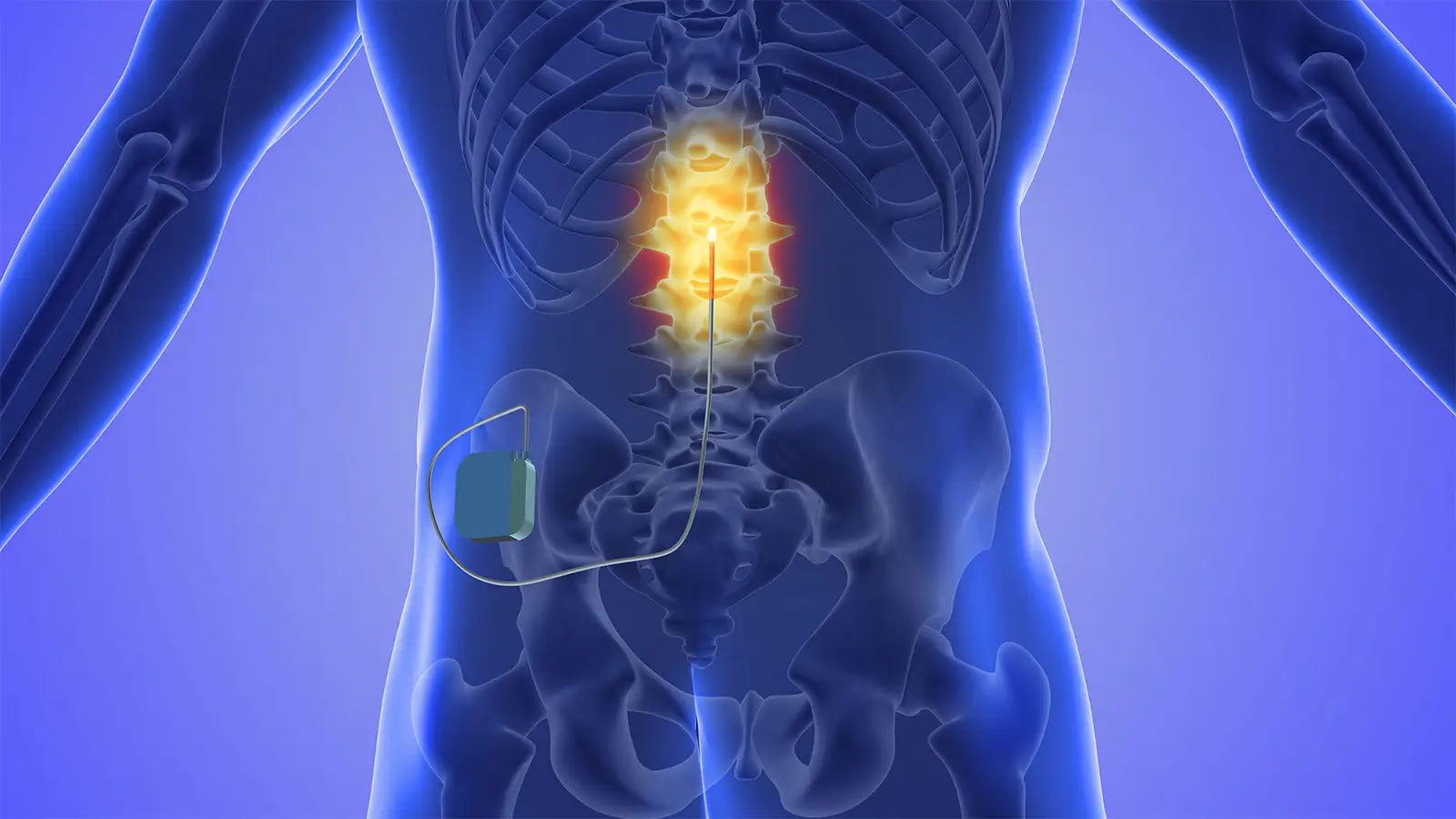
The SCS system tested comprised two leads placed unilaterally for epidural electrical stimulation of the cervical spine. SCS is ultimately intended to come from a permanent implant, staying continuously switched on with a rechargeable battery. “Usually these systems work for 10 to 20 years” before a need for surgery to replace the battery, Capogrosso told MedPage Today.
“This approach is designed to rapidly help people move their arms better, even years after a stroke,” he explained in a statement. “The stimulation works mostly as an assistive technology — when it’s on, people can move better. By stimulating the spinal cord, we can immediately allow residual connections between the brain and the spinal cord to work more efficiently, enabling better movement.”
In addition, the authors showed that there was no need for concomitant motor rehabilitation for the neuromodulation technology to work — in contrast with the vagus nerve stimulation system Vivistim that was FDA approved in 2021 for use alongside exercise rehabilitation.
As for safety, the seven device recipients showed no moderate or serious adverse events. There were 14 mild adverse events, all of which resolved rapidly without sequelae, according to the investigators.
Of note, one such event was an episode of shortness of breath when SCS reached 5 mA using an electrode contact located between C3 and C4 spinal levels. “This adverse event was immediately resolved by discontinuing stimulation. We think that this adverse event resulted from undesired stimulation of the phrenic nerve, likely interfering with diaphragm function. In response, we reported this adverse event to the IRB [institutional review board] and the FDA; as a precaution, we also modified our protocol to avoid stimulation of the most rostral cervical spinal levels,” Capogrosso and colleagues reported.
The next step for SCS is a 20-person phase I-III study on a fully implantable system that has just been started. This will look at SCS’s long-term effects as a permanent implant and compare this therapy against intense exercise training, according to Capogrosso.
The present seven-person report builds on the initial two female stroke patients with chronic hemiparesis getting SCS.
Now, with a wider patient population, a mix of stroke types were represented (three hemorrhagic strokes and four ischemic strokes), as are both sexes (four women and three men). Patient age ranged from 31 to 64 years.
Study authors reported that the seven patients entered the study with profound motor deficits (FMA scores 15-36).
With the SCS device turned on, motor function immediately improved regardless of impairment severity. SCS decreased spasticity in all participants.
However, Capogrosso’s team noted, a preliminary analysis found that spared sensory function may be a determinant of responsiveness to SCS.
A major limitation of the pilot study was the enrollment of just seven individuals, out of 10 to 15 planned, due to institutional budget constraints, he acknowledged.
“Importantly, after reviewing the results, together with NIH staff and monitoring committee we determined that after seven participants had completed the study we had sufficient information to move forward to the next study,” he said.
[ad_2]
Source link : https://www.medpagetoday.com/neurology/strokes/121607
Author :
Publish date : 2026-06-04 20:41:00
Copyright for syndicated content belongs to the linked Source.