[ad_1]
The following is a transcript of the podcast episode:
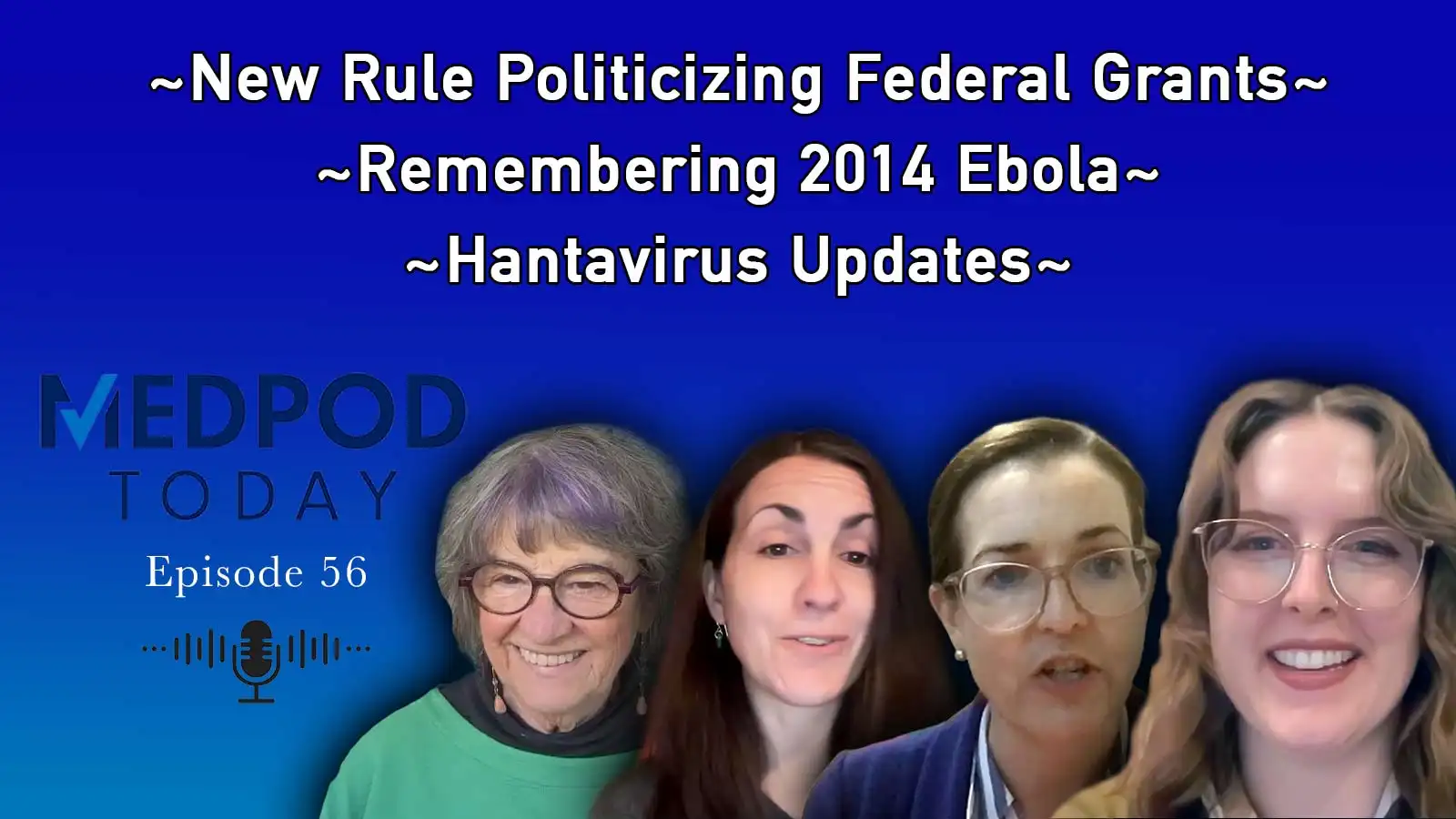
Rachael Robertson: Hey everyone, welcome to MedPod Today, the podcast series where MedPage Today reporters share deeper insight into the week’s biggest healthcare stories. I’m your host, Rachael Robertson.
Today we’re talking with Cheryl Clark about a change to the federal grant-making process that’s worrying researchers. With Ebola in the news, Shannon Firth talked with the medical teams who treated Ebola patients a decade ago, and she’s here to fill us in on those conversations. And lastly, Kristina Fiore will update us on how the hantavirus situation has evolved.
This week, researchers across the country were again expressing outrage over what they considered another Trump administration assault on science. Cheryl Clark is here to tell us more about the situation.
So, Cheryl, what exactly were researchers reacting to?
Cheryl Clark: Well Rachael, the White House Office of Management and Budget published a lengthy proposed rule in the Federal Register, and it would, in a nutshell, allow the Trump administration’s appointees to decide what researchers and what research would be awarded federal grants.
Now, this could be huge, because the administration is broadly saying that if the purpose of the project is not in line with the administration’s policies and priorities, it will not be funded. Political appointees will review these grant applications instead of, say, study section chiefs or NIH directors, and if finalized, the new law of the land would allow grants already in process, like in their second or third year, to be terminated abruptly. I could go on.
Robertson: Please do. What else?
Clark: Well, it appears that the primary goal of this proposed rule is to eliminate any research the administration considers “woke” – and I’m quoting woke, that word is in the rule – or any projects that have the words diversity, equity, and inclusion, or DEI, especially those enabled by the “prior administration,” meaning the Biden administration.
DEI is also mentioned throughout the rule, and there are references to what the administration considers “gold standard science,” which is kind of vaguely defined, according to my sources. And many of the researchers that I spoke with used words like “dystopian,” “disastrous,” you know, “flagrant assault on our democracy,” to describe the impact of this rule.
And there are a lot of other prohibitions in it. For example, researchers could not be funded for their projects if they collaborate with researchers from certain countries or certain organizations. The Infectious Diseases Society of America likened it to McCarthy-era politics. They can’t use federal money to pay publication fees, and they can’t go to legitimate scientific conferences related to their research unless the administration grants permission in writing in the original document approving their grant.
One former NIH program official who quit last year when she started to see federal influence, said that she compared last year’s version of this funding rule with this year’s. Every time there was the word “guidance,” she saw that it was changed to “regulation.” And I have to add that this just isn’t related to medical science research. The rule would, if finalized as is, relate to any research funded by any federal agency – agriculture, defense, environmental protection, housing and urban development, energy – you name it.
Robertson: I imagine researchers will try to fight back, right?
Clark: You betcha. One group, Stand Up for Science, which was started last year during the first year of the second Trump administration, is pushing for scientists everywhere to submit comments to this proposed rule, which they do through regulations.gov. It wants members of Congress to realize that this fundamental change to how federal research dollars are spent will affect their constituents, their hospitals, community organizations, and their public health efforts.
Robertson: Well, thank you for your reporting on this, Cheryl.
Clark: Thank you, Rachael.
Robertson: The ongoing Ebola outbreak in the Democratic Republic of the Congo, and the debate over where American patients sickened abroad should be treated, are top headlines this week. But a decade ago, the U.S. responded to a different Ebola outbreak. Reporter Shannon Firth spoke with clinicians at Emory University Hospital and the University of Nebraska Medical Center (UNMC) about what it was like to provide Ebola care back then, and she’s here to tell us more.
So, Shannon, fill us in on your conversations with these medical teams. What happened during the previous Ebola outbreak?
Shannon Firth: So Rachael, I spoke with Aneesh Mehta, MD, who was the physician on call at Emory when the first patients arrived at his hospital in August 2014. He told me that none of the clinicians there had ever treated an Ebola patient before, but this was exactly the type of crisis that they trained for. Emory’s biocontainment units were specifically designed to treat CDC workers who’d been exposed to some type of pathogen in a lab or abroad.
I also spoke with nurses at UNMC, Angela Vasa, MSN, RN, and Morgan Shradar, MPH, BSN, RN, who similarly told me that they were prepared. They had trained almost exclusively for Ebola, because, as Vasa said, it was the most dangerous type of outbreak they could imagine responding to, with the exception of smallpox, if it were to re-emerge as a bioweapon.
Robertson: So, who were the patients back then, and what was the hardest part of caring for them?
Firth: So, most of the patients were healthcare workers living abroad, but some were clinicians who caught the virus treating patients in the U.S. One clear challenge was that the whole country was watching. When Kent Brantly, MD, a physician and the very first patient treated for Ebola in the U.S., walked out of the ambulance at Emory — that was all over the news. The medical team had to care for patients with these pressures, and also reassure their own families and the community that they were not going to let this virus spread.
Now, the fear of Ebola in 2014, I don’t know if you remember, was intense. There were photos and videos of people bleeding from their eyes, and most Americans probably didn’t know that this virus is far less contagious than something like measles, and that the people who typically contract it are caregivers and clinicians. That’s why when people heard about Ebola patients having been in public spaces (before they were symptomatic), such as Craig Spencer, MD, some lost their ever-loving minds. But, you know, that’s somewhat understandable. They saw Ebola killing hundreds of people in Africa, and they were scared.
Again, the teams in the U.S. were prepared; they were covered from head to toe in PPE, personal protective equipment, and Emory University had “safety partners” outside patients’ rooms watching their colleagues’ every move, so that they could make sure there were no breaches and no exposures.
Robertson: Did everyone survive?
Firth: Sadly, Rachael, no. Thomas Eric Duncan, a Liberian man who was treated in Dallas and then later at NIH in Bethesda, Maryland, died. He was the first person to die of Ebola in the U.S. Martin Salia, MD, a surgeon born in Sierra Leone, who cared for patients abroad, who was a permanent U.S. resident, also died. He arrived at UNMC on day 13 of his illness. He was unconscious, his kidneys had failed, and he died 72 hours later.
Of the three Ebola patients at UNMC, Salia was the only death. All four patients treated at Emory lived, though there were some close calls. Over at Emory, Mehta told me that the team there had tried things that had never been tried before with an Ebola patient. That included mechanical ventilation, dialysis, and the aggressive use of vasopressors – those are medications to keep your blood pressure up.
Even though this was more than a decade ago, in speaking with the healthcare professionals who treated Ebola patients back then, you can tell that this left a lasting impression. So the takeaway from a more objective lens was that patients treated in these biocontainment units, when medical teams have the chance to intervene early and when they receive aggressive supportive care, have a pretty strong prognosis.
Today, there are 13 biocontainment units in the U.S., and Mehta said his team is ready and willing to receive new patients if that becomes necessary. As of June 3, which is when we’re recording, the Trump administration’s plan is still to care for Americans with suspected Ebola in Kenya, and we’ll be following the news if that changes.
Robertson: Thanks, Shannon.
Firth: Thanks, Rachael.
Robertson: States are monitoring even more people for potential hantavirus exposure. While there were originally 41 people under monitoring around the country, that number now stands at 65 as of June 3, which is when we’re recording this. Kristina Fiore has been keeping track of the numbers since the CDC isn’t making them publicly available, and she’s here to tell us more.
Kristina, why are more people being monitored at home for potential exposure?
Kristina Fiore: It appears that more people are being monitored in connection with two flights that had a cruise ship passenger who was sick with the virus. While initially high-risk people who sat near the infected passenger were being monitored, that seems to have broadened to anyone on the flights, although those who were further away are considered lower risk. Here’s what a spokesperson for the Washington State Department of Health told me: two additional people in that state are being monitored because, “they were on the same international flight as an ill person who was later confirmed to have Andes virus. However, they are considered low risk because they did not sit close to the sick passenger.”
Robertson: How did we first learn that more passengers were being monitored?
Fiore: So, we first published our tracker of where people were being monitored a few weeks ago, and on that map, North Dakota initially had five people under monitoring, based on information that I was given by sources. But when I wrote to the state’s public health department to confirm, they said the number had risen to seven, but they wouldn’t give more details.
So I started checking in with other states that were already known to be monitoring people who had returned from the cruise early or who had been near the infected passenger on the plane, and several of them had increased their numbers of people under monitoring. California rose from two to eight, and Maryland rose from two to five, for example. So then I started checking in with other states that weren’t on our map earlier, and it turns out that additional states were indeed monitoring people, including Montana, Oregon, South Carolina, South Dakota, and Wisconsin. Right now, the total number under monitoring stands at 65 and there could be more people, but only a handful of states didn’t respond to our queries.
Robertson: Some people in Nebraska have left quarantine there, right?
Fiore: That’s right. So there were 18 people in Nebraska, who completed the initial 3 weeks of monitoring at the state’s national quarantine unit. Five of those people have opted to go home. Two are in New York, there’s one in Arizona, one in California, and one in Oregon. Thirteen others have said that they will stick out their remaining 3 weeks of quarantine in Nebraska, which is what the facility has recommended, but we’ll see if more people decide to go home over those next 3 weeks.
Keep in mind the quarantine period for the people who left the ship earlier and who flew home with the infected passenger will be over soon — I think June 5 marks 6 weeks — so we are getting very close to the end of this saga, and hopefully no one else tests positive.
Robertson: Yeah, let’s really hope so. Thanks, Kristina.
Fiore: Thanks, Rachael.
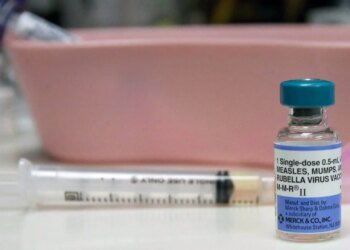
Robertson: And before we go, a quick update on the measles front. There were 36 cases last week and 48 the week before. Things have slowed down in Arizona and Utah, which have been hot spots for months. In the past two weeks, there were 10 new cases in Utah and one in Arizona. Virginia, on the other hand, is the state to watch. Experts have said last week there were 21 cases there, bringing the state’s overall total to 70. As usual, check out our full map to track measles’ spread. We update it at the top of each week.
And that is it for today. If you like what you heard, please leave us a review wherever you listen to podcasts, and hit subscribe if you haven’t already. We’ll see you again soon.
This episode was hosted and produced by me, Rachael Robertson. Sound engineering by Greg Laub. Theme music by Palomar. Our guests were MedPage Today reporters Cheryl Clark, Shannon Firth, and Kristina Fiore. Links to their stories are in the show notes.
MedPod Today is a production of MedPage Today. For more information about the show, check out medpagetoday.com/podcasts.
[ad_2]
Source link : https://www.medpagetoday.com/podcasts/anamnesis/121615
Author :
Publish date : 2026-06-05 15:30:00
Copyright for syndicated content belongs to the linked Source.