[ad_1]
While ingestion of foreign bodies is far more common in children, adults have their share of incidents. Take this case of a 40-year-old man who, after questioning by clinicians, revealed what he’d swallowed while drinking with friends decades earlier.
The man met with a gastroenterology team after experiencing 2 years of persistent, intermittent abdominal pain. An abdominal exam found no tenderness nor any palpable mass, and his lab test results were normal, reported Jiahuang Huang of the First Affiliated Hospital of Shenzhen University in China, and colleagues.
After targeted questioning, the patient disclosed that he accidentally swallowed a plastic toothbrush after a period of heavy drinking 20 years earlier, following a bet he’d made with friends, they noted in the American Journal of Case Reports.
The patient said he had no psychiatric history but acknowledged that he was a heavy drinker with “impaired behavioral control when intoxicated.”
“Small blunt foreign bodies often pass spontaneously, but long rigid objects (>6 cm) rarely traverse the pylorus or duodenal sweep, requiring intervention to prevent pressure necrosis, perforation, or fistula formation,” Huang and team wrote.
Evan P. Cohen, MD, of Northwell Health’s Northern Westchester Hospital in Mount Kisco, New York, told MedPage Today that when children swallow objects, it’s mostly out of curiosity. While adult ingestion of foreign objects is much more rare, Cohen noted that he has seen hair clips, hotel shampoo bottles, bezoars (material, such as hair, that forms a solid mass, seen in patients with trichotillomania), and baggies of cocaine and heroin. The largest object was something resembling a dildo — a case in which the patient narrowly avoided a laparotomy.
Cohen added that he had seen a similar case to this one, though it was “purely accidental.” A patient was brushing the very back of his tongue and a gag reflex caused him to choke on the brush.
With any case of this type of ingestion, it’s important to understand how and why the incident happened. With adults, most incidents stem from wanting medical attention, attempting to smuggle or hide something, or wanting to harm themselves, Cohen said.
When faced with such a case, the first concern is airway obstruction, followed by perforation, which would require consideration of x-rays of the chest and abdomen to look for signs of free air in the thorax or abdomen, he explained. “The worst-case scenario, other than an airway obstruction and immediate death, would be a perforation in the esophagus, mediastinum, stomach, or intestine … leading to peritonitis, sepsis, and requiring extensive surgery or worse.”
In the case of this particular patient, “the fact that it was there for 20 years doesn’t mean it’s going to be safe for the next 20,” Cohen pointed out. “Any toothbrush in the gastrointestinal tract should have emergent consultation with gastroenterology and/or a surgeon to strategize a safe removal,” he noted, adding that either a flexible or rigid endoscope can be used.
“That’s your best, least invasive, simplest option,” he said.
Huang and team reported that a contrast-enhanced CT scan showed a “linear foreign body” that extended from the lowest part of the stomach into the small intestine with “suspected adhesion of the duodenal bulb to the liver capsule.” It at first appeared that sinus tract formation was likely, they noted.
Given that the CT scan results were in fact more severe than the patient’s actual complaint, the team chose to do a diagnostic upper endoscopy to determine the extent of the injury. The procedure confirmed the placement of the toothbrush, which appeared “freely mobile,” and showed no signs of perforation, sinus tract, or fistula.
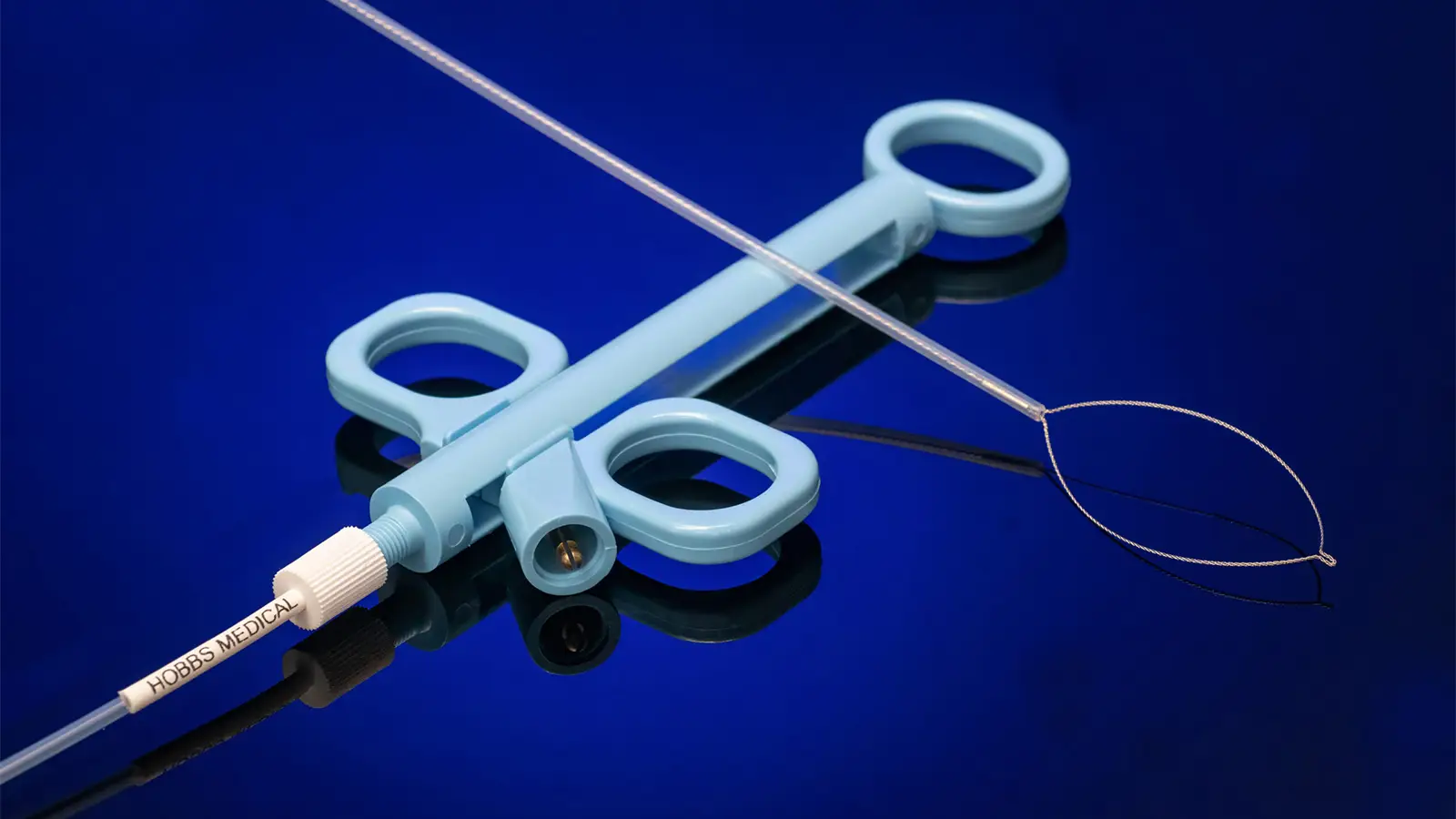
After talking to the family, the team chose to use a polypectomy snare — a tool frequently used in endoscopies and colonoscopies for snipping polyps — to remove the toothbrush, retrieving it in a single pass. Multiple duodenal inspections following the procedure found no inflammation of the mucous membranes nor any residual sinus tract.
Within hours of the procedure, the patient said his pain had dissipated entirely. A follow-up CT scan 3 days later showed that any inflammation of the duodenum had resolved. The patient continued to feel better at the 6-week follow-up appointment.
In their case report, Huang and co-authors highlighted one key takeaway: “That cross-sectional imaging can overestimate the extent of local injury in cases of retained upper gastrointestinal foreign bodies, and that endoscopy can be both diagnostic and therapeutic.”
While an outside CT triggered concern for a possible duodenal-hepatic fistula, the endoscopy revealed a “mobile toothbrush and intact surrounding mucosa without a visible sinus tract.” What the CT actually captured may have been “chronic local inflammatory apposition,” in which inflamed tissues press together, as opposed to a permanent fistulous tract, they noted.
Cohen found it “remarkable … that somebody could live a functioning life and not have complications after 20 years of a toothbrush in their stomach, but again, very few things surprise me.”
He added that the patient was fortunate to have no perforation or ulcers or strictures in his gastrointestinal tract. “I would consider him lucky, and somewhat of a medical mystery,” he said.
[ad_2]
Source link : https://www.medpagetoday.com/casestudies/gastroenterology/121655
Author :
Publish date : 2026-06-08 17:16:00
Copyright for syndicated content belongs to the linked Source.