[ad_1]
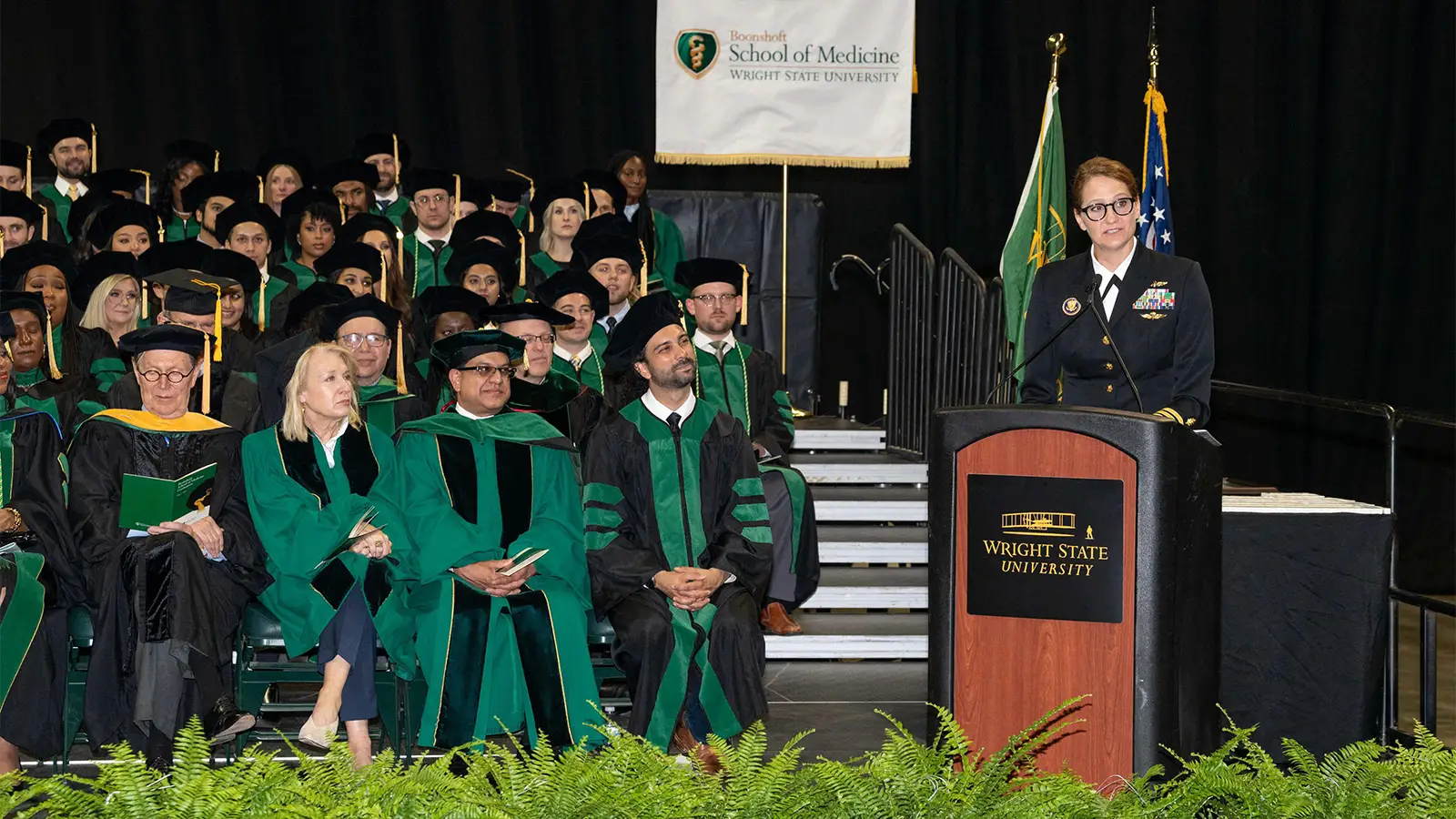
Around this time of year, medical schools are engaging in a 250-year-old annual tradition: they’re graduating their latest class of career-ready physicians. It’s a deservedly triumphant moment — the culmination of at least a decade’s worth of determination, discipline, and grit.
Almost three decades ago, I too was a medical school graduate. I walked across the stage, was handed a rolled-up diploma, and was told I was a physician. I had chosen a new speciality — emergency medicine — predicated on the idea that all patients deserve high quality life-saving care, regardless of background or ability to pay. Our keynote speaker delivered a speech about medicine’s illustrious history and intoxicating future, and the overall sentiment was that medicine could accomplish just about anything.
Today, I’m twice as old as I was when I graduated, with my own share of battle scars and a career path that was anything but linear. In the years since graduation, I’ve sometimes found myself wondering what I would tell a new physician about a career in medicine. For that matter, what did my 1998 self need to know to survive the next 30 years?
So here it is: the five things I wish someone had said at my medical school graduation.
Beware of Medical Dogmatism
Things change. Right now, you’re putting esophageal tubes and charcoal down the throats of overdoses and keeping heart attacks in bed for a week. Once upon a time, tonsillectomies were practically a childhood rite of passage. Ignaz Semmelweis, MD, was nearly driven out of medicine for his ideas about hand hygiene; Elisabeth Kubler-Ross, MD, faced mockery and skepticism. I wish someone had said that one day, someone will insist that food is medicine and fen-phen is not, that eggs are good for you and alcohol is not. In your second year of residency, a guest lecturer will wheel a giant computer into your lecture hall and inform your class that you will one day use it to write your notes; all of you will just about die laughing.
You can view this uncertainty as a threat, a burden, an anathema, or as something that keeps your job interesting. My advice: stay intellectually humble. Get to know the people who disagree with you, even if their ideas seem like an abomination. You’ll be surprised how often they start making sense once you understand where they’re coming from. Elizabeth Blackwell, MD, was rejected from 29 medical schools before the 30th accepted her as a practical joke — at the time, the idea of a female physician was an abomination. As George Bernard Shaw once wrote, “All great truths begin as blasphemies.”
Despair in Doctoring is Unavoidable
People will tell you the enemy is burnout, but I’m going to suggest the true enemy is despair. Burnout is a situational response to workplace stress, characterized by exhaustion, cynicism, and depersonalization. Despair is different — despair is an existential, deep-rooted hopelessness and helplessness that hits hard when you least expect it.
In residency, there will be a day when you treat a woman whose partner has so badly bludgeoned her face with a hammer you will struggle to find her airway to intubate her, and you will feel despair. And that will only be the first time. Despair in doctoring is a natural consequence of having a front row seat to the best and worst of humanity, of realizing how bitterly unfair life and death can be, and of understanding that anyone is capable of anything given the right set of circumstances. Over the next few decades, you will develop techniques to mitigate this despair, but you can’t avoid it entirely. It’s part of the job.
Work-Life Balance
Congratulations, you’ve graduated! Now there’s no more school and no more points for good grades or being a gunner (something we might today call doctor-maxxing). No one will ever care again what your class rank was.
You get about a hundred years (if you’re lucky) to live, and you will spend about 35 of them practicing medicine. Being a physician will soon become a core piece of your identity, and you’ll cease to remember who you were before. This is both an extraordinary gift and a weight to carry. Practicing medicine is intoxicating and addicting, and it can consume you. Or as Pink would put it: it’s just like a pill.
For the past decade, getting into medical school and graduating has been your primary hustle; now it’s time to get a side hustle. The best doctors are the ones who achieve some work-life balance and have fulfilling personal lives. In 25 years, Harvard will publish a study stating that your well-being is not a function of your occupation, income, or status — but of your relationships. Furthermore, the most common regret elderly people express in that study will be, “I wish I hadn’t spent so much time at work.” You need a passion and relationships outside of medicine.
You Are Antifragile
In 2012, a risk analyst named Nassim Taleb, PhD, MBA, will coin the term “antifragile” to describe the idea that while many things break when exposed to stress, some things strengthen. Some time later, a social psychologist named Jonathan Haidt, PhD, MA, will propose that human beings, and especially young people, are antifragile. Resilient things bounce back from challenges and failures unchanged; antifragile things (and people) adapt and become richer in character and strength.
Over the next three decades, you’ll make some poor decisions, have some incredible saves, and wonder more than once if you accidentally killed someone. You’ll feel rage and joy. You’ll second-guess yourself, feel like an imposter, and realize you are a gifted physician — sometimes all in the same day. In other words, you’ll evolve. Your humanity means you’ll make some gut-wrenching mistakes. But your antifragility, tempered with compassion, is the secret weapon that will allow you to flourish and reach your full potential.
Keep Practicing Clinical Medicine
You’ve heard the saying — if you’ve never dropped a lung, you haven’t put in enough central lines. Well, if by the end of your career you’ve never felt like throwing in the towel and giving up clinical medicine altogether, you didn’t do it right. The years to come will be challenging due to factors like vaccine hesitancy, Big Medicine, an evolving climate crisis, vast health system inequities, and the uncharted territory of artificial intelligence.
Your medical degree opens many doors — research, biotech, administration, politics. Many of these are valid pursuits, and they will be tempting. In fact, by 2023, 58% of medical school graduates will be skeptical of or intend to do something other than clinical medicine. No wonder: bedside medicine is hard. It’s also beautiful, awe-inspiring, unpredictable, humbling, heartbreaking, challenging, grounding, and marvelous. It’s worth it. Stick with it.
Congratulations, 1998 self, on graduating from medical school. You don’t know this yet, but as the decades pass, you’ll come to understand that entering medicine was one of the most consequential and best decisions of your life. Get ready for an incredible ride.
This perspective is the author’s alone and does not necessarily reflect that of any institutions or companies with which she is affiliated.
[ad_2]
Source link : https://www.medpagetoday.com/opinion/calamities/121731
Author :
Publish date : 2026-06-12 16:43:00
Copyright for syndicated content belongs to the linked Source.