[ad_1]
- Among more than 93,000 newborns, females were less likely to receive vitamin K prophylaxis and hepatitis B vaccination than males.
- The magnitude of the association was stronger for vitamin K, which may be related to circumcision.
- Refusal of newborn vitamin K prophylaxis and hepatitis B vaccination rose over the course of the study.
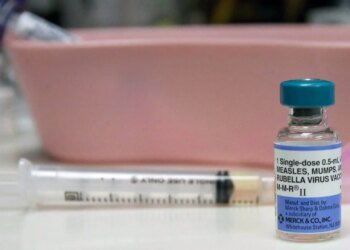
Newborn girls were less likely to receive vitamin K prophylaxis and hepatitis B vaccination than newborn boys, according to a cohort study involving more than 93,000 babies.
Female sex was associated with non-receipt of vitamin K prophylaxis (adjusted odds ratio [aOR] 2.03, 95% CI 1.74-2.35, P<0.001) and non-receipt of the hepatitis B vaccine (aOR 1.06, 95% CI 1.01-1.10, P=0.02), compared with male sex, reported Sarah Coggins, MD, MSCE, of CHOP Newborn Care at Pennsylvania Hospital, and colleagues, in JAMA Network Open.
Coggins told MedPage Today that she and her colleagues have been “trying to think of ways to address parental concerns and to identify factors associated with refusal of these important newborn care practices.” They noticed that parents who wanted a circumcision for a newborn boy often accepted vitamin K prophylaxis, “even if they were previously hesitant to accept vitamin K.”
“We were unfortunately not surprised that vitamin K refusal more commonly affected female newborns compared to male newborns,” Coggins said, noting, however, that “we were taken aback by the magnitude of this relationship.”
Vitamin K prophylaxis and hepatitis B vaccination are “recommended for all infants, regardless of sex,” Coggins said, “and the sex-based differential disparities between vitamin K and hepatitis B administration suggested to us that other factors (individual, social, and cultural) are impacting parental decision-making.”
The cohort study examined all live births from January 2018 to December 2025 at 3 centers within the University of Pennsylvania health system in Philadelphia. Additional findings were that rates of decline for vitamin K prophylaxis and hepatitis B vaccination increased among both sexes during that time.
Rates of passing on vitamin K prophylaxis among female newborns increased during the study, rising from 9.6 per 1,000 births in 2018 (55 of 5,708 births) to 19.8 per 1,000 births in 2025 (113 of 5,706 births). The same was true for newborn boys, but to a lesser extent, rising from 4.0 per 1,000 births in 2018 (23 of 5,820 births) to 10.1 per 1,000 births in 2025 (60 of 5,934 births).
As for rates of hepatitis B vaccination, decline among female newborns increased from 86.4 per 1,000 female births in 2018 (493 of 5,708 births) to 173.7 per 1,000 births in 2025 (991 of 5,706 births). Among boys, rates of decline rose from 77.9 per 1,000 male births in 2018 (453 of 5,818 births) to 166.3 per 1,000 births in 2025 (987 of 5,934 births).
The researchers noted that no circumcisions were performed for newborns who did not have vitamin K prophylaxis.
Overall, among 93,163 newborns, 777 did not receive vitamin K prophylaxis and 9,400 did not receive hepatitis B vaccination.
The study was limited because it was conducted within a single health system, which could limit generalizability. There was also potential for residual confounding due to unmeasurable factors like parental beliefs or clinical counseling, as well as an inability to link vaccination status and morbidities like vitamin K deficiency bleeding beyond birth hospitalization.
“We now urgently need to understand whether [the] complications [of non-receipt] are occurring more commonly among female infants, particularly as rates of vitamin K and hepatitis B vaccine refusal increase,” Coggins said. “In addition, we need to understand reasons for increased rates of vitamin K refusal among both female and male infants, and adjust our counseling (which may need to be sex-specific) in order to address the concerns of all parents.”
[ad_2]
Source link : https://www.medpagetoday.com/pediatrics/vaccines/121762
Author :
Publish date : 2026-06-15 18:15:00
Copyright for syndicated content belongs to the linked Source.