[ad_1]
“Criminals thrive on the indulgence of society’s understanding.” — Batman Begins
If smearing their victims becomes fruitless, abusive men in the public eye follow a classic playbook: performative contrition and a tearful narrative about their mental health struggles. Bonus points if they find God shortly thereafter.
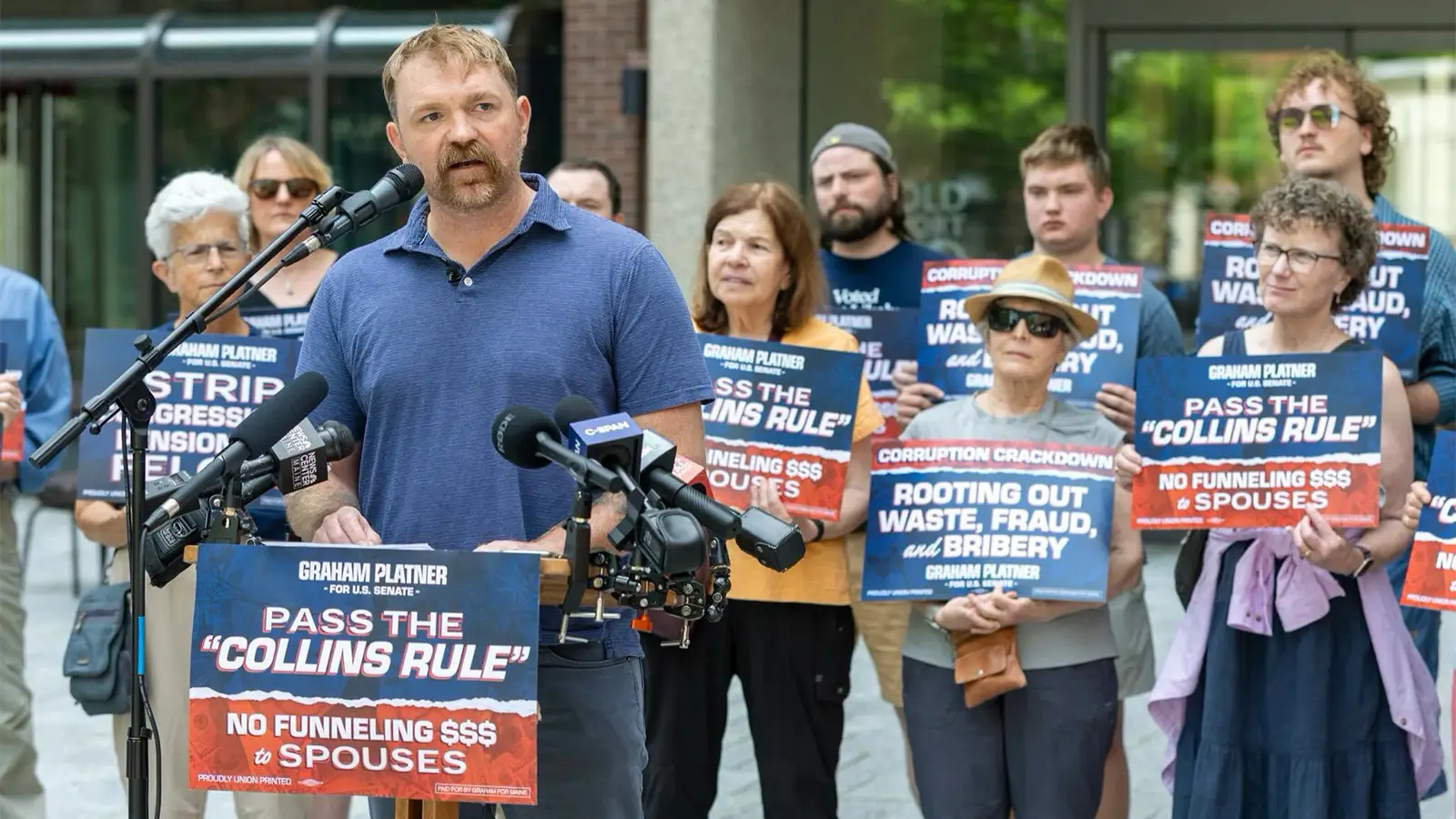
Most recently, we’re seeing the same frenetic clutching at public sympathy from former Maine senatorial candidate Graham Platner. Platner’s failed damage control by citing his struggle with post-traumatic stress disorder (PTSD) began weeks before Jenny Racicot — Platner’s alleged victim — publicly made her rape disclosure.
He certainly had help with his attempted rehabilitation to protect his political aspirations. Many Democrats showed profound hypocrisy by continuing to champion him and seemingly dismissing his misogyny — in some cases even after the concerning reports about his behavior towards women became highly publicized. Some changed their stance this week after Racicot’s rape allegation.
As a side note, this is not the first time the Democratic party has demonstrated its willingness to sacrifice women for political power (and the same goes for the Republican party, despite absurd protestations to the contrary). Previously, we covered the institutional betrayal of Lindsey Boylan and the effects on her mental health after she disclosed her experience of sexual harassment by Andrew Cuomo. The intellectual incoherence upended her sense of trust; the party betrayed her and their purported values.
While most media narratives involve political mudslinging over which party is most hypocritical about its treatment of women, I’d like to focus on an important medical aspect of this case: Platner’s widely-cited mental health concerns, usually offered as relevant context for his behavior.
Two critical points must be considered:
- Mental illness does not cause someone to be abusive. Abuse is a choice.
- Mental illness absolves no one of experiencing the consequences of their choices.
Two Things Can Be Simultaneously True
I first came to realize that two things can be simultaneously true a decade ago, as my friend Janice and I discussed a male peer over dim sum. His unwanted, persistent romantic advances towards women in our Master’s program were repugnant, and he had little respect for boundaries. But part of me wanted to hold grace for him — he was open about his autism diagnosis and I erroneously wondered if that diagnosis might affect how he related to women.
Janice wasn’t having it: “Chloe, both things are true. He has autism AND he’s also a huge…” (My editor won’t let me finish that sentence verbatim.)
She was right; I was wrong. “No,” is a complete sentence and autism does not inherently preclude respecting anyone’s clear boundaries. People who have mental health or neurodevelopmental diagnoses can make poor choices independent of those diagnoses.
Nuance is warranted here. Although patients with severe and persistent mental illness (SPMI) are more likely to be victims of violence than they are to be perpetrators, the elevated risk of violence in this population is significant. Our inpatient psychiatry units are highly restrictive and structured specifically with safety in mind; they look very different from a standard medical or surgical floor. Law enforcement is readily available in many psychiatric spaces — like our psychiatric emergency department — and psychiatry residents have de-escalation and violence risk mitigation training built into their education. The violence is frequently mediated by substance use and is often impulsive or motivated by fear and thought disorganization, not by sheer malice. But it’s still destructive and we must be realistic about safety.
That said, most SPMI patients or patients with any mental health diagnosis are not violent, and our culture tends to conflate bad behavior with mental illness. Though untreated mental illness can certainly increase violence risk by contributing to increased impulsivity, mood lability, and aggression (and is a risk factor in an already-abusive situation) it does not cause or necessitate antisocial behavior.
Explaining abuse by arguing that the perpetrator is mentally ill is not only a pitiful excuse, but also deeply insulting to patients with severe mental illness who already face profound stigma. It also demonstrates a fundamental misunderstanding of abuse. Abuse is deliberate, insidious, and about power and control. It is an entitlement to a victim’s body and dignity, not a lack of self-control or a moment of weakness. Clinically and personally, I’ve met very few abusive people who did not feel justified in inflicting harm on their victims. Meanwhile, my SPMI patients who have lashed out violently while psychiatrically decompensated often express grief and remorse when their insight is restored.
Does he keep it together publicly, while violating her behind closed doors? If so, it’s not a mental illness. It’s a choice.
Hurt People Don’t Have to Hurt People
Attributing all maladaptive behaviors to mental health pathology does a disservice to patients by infantilizing them. It also allows people to avoid responsibility. We treat mental illness empathetically, but we are not in the business of coddling or avoiding consequences in psychiatry, and in fact, shaping behavior by examining natural consequences is an important staple in therapy.
Barring any psychiatric process that might interfere with perception and thought organization (like untreated psychosis or mania, for example), our patients are capable of insight into their choices, and many make excellent choices. I’ve seen patients with severe primary psychotic disorders or the worst traumas lead full, happy lives.
If there is nothing wrong with a patient’s thought processes and they are capable of insight, yet choose to abuse their partners, they don’t need a psychiatrist; they might need jail. They certainly do not need to be platformed as political leaders.
Ill-controlled PTSD is not a good reason for abusing people who trust you. It’s a diagnosis I carry myself, and I manage to refrain from raping anyone, internet trolling, and racism during my worst days.
With misguided benevolence, we often say, “Hurt people hurt people.” I disagree. Hurt people may be imperfect like anyone else but are uniquely positioned to help people precisely because they have an intimate understanding of profound suffering and sadness, and many try to heal themselves by protecting others from the same experiences.
If hurt people go on to hurt people volitionally, they’re choosing to do so. We need to stop excusing it.
The views above are held only by the author and are not shared by any institution with which she is affiliated.
Love should not hurt. Everyone deserves relationships free from abuse. The National Domestic Violence Hotline is available 24/7 at 1-800-799-SAFE (7233). If you or someone you love are in immediate danger, please call 911. If you or someone you know may be experiencing a mental health crisis, contact the 988 Suicide & Crisis Lifeline by dialing or texting “988.”
[ad_2]
Source link : https://www.medpagetoday.com/opinion/second-opinions/122140
Author :
Publish date : 2026-07-10 16:13:00
Copyright for syndicated content belongs to the linked Source.