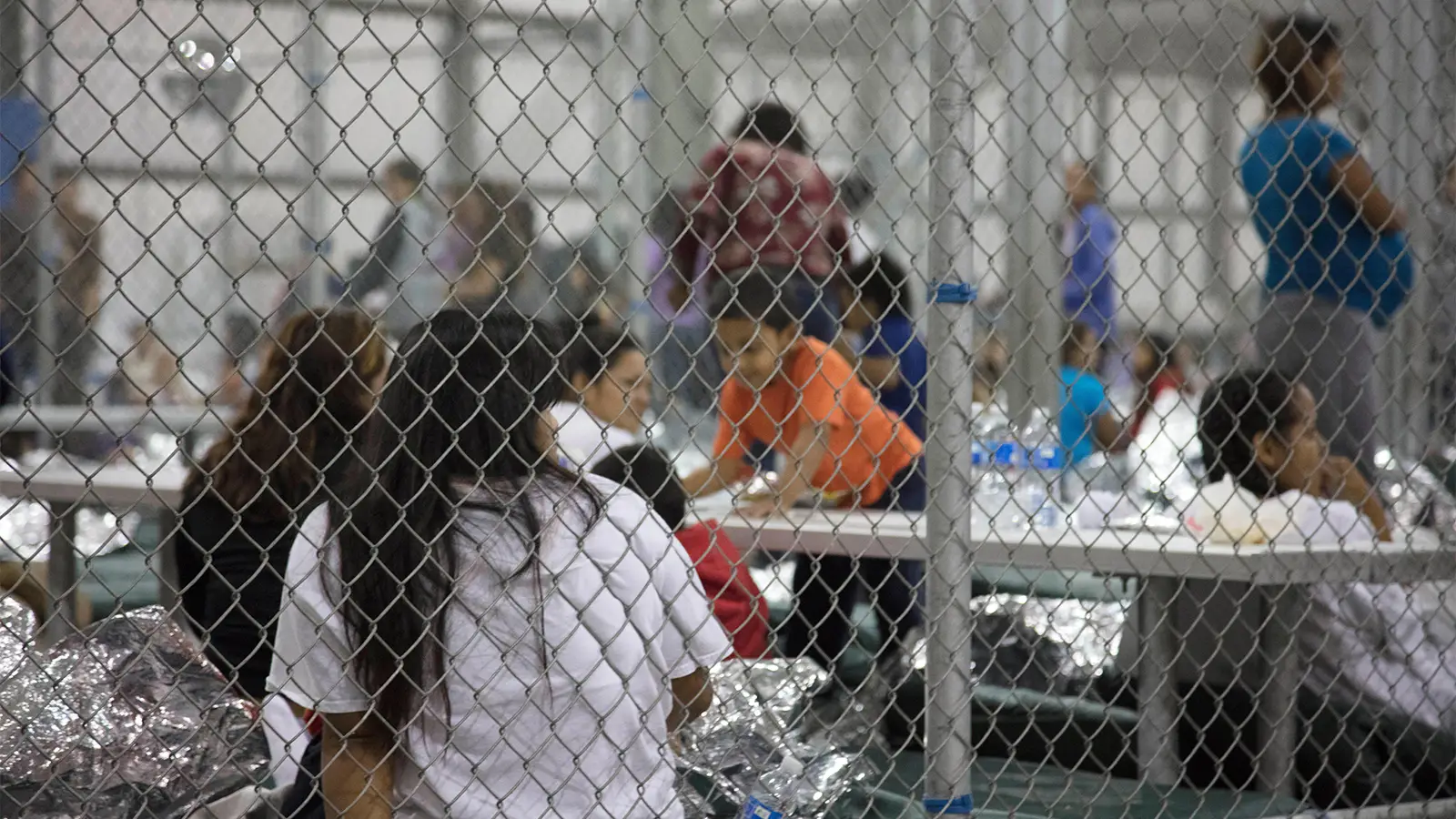
[ad_1] Under a cloudless sky, shrieks of youthful joy pierced the air as a kite took flight. Two children sang as they turned the rope for their jumping companion, smiling when younger ones interrupted the game in pursuit of a runaway toy. The sounds and activities were familiar; they could have come from any neighborhood across the U.S. In reality, these children were refugees living in a camp hastily arranged in a remote area of Ethiopia. They had been forced from their homes into desolate living conditions and, in some cases, they were witnesses to or victims of traumatic events that no human should ever experience, much less a child. And yet, here they were, embodying the resilience of youth, maintaining their innocence through play. As pediatricians who have worked with forcibly displaced groups around the world, we have witnessed these scenes and been amazed by the ability of children to create joy, even in the direst of situations. That is, until we stepped foot in immigration detention centers for families in our own country. When we visited family detention facilities under the first Trump administration, we did not witness the joyful innocence of children. What we saw were children of all ages -- including teenagers -- constantly in close proximity to their parent(s), so afraid of being separated that they remained in physical contact at all times. Large play structures sat empty, and the air was eerily quiet. There was no joy there. In its place, there was an overwhelming sense of fear of what the future may hold. Parents enveloped in this fear were also grappling with the reality that they had lost all decision-making power in most aspects of their children's current situation. Meals were provided on a restricted schedule with limited variety, with no flexibility to offer food whenever their children were hungry and no ability to prepare or request food based on their children's preferences. Bedtime was predetermined for everyone based on center rules. Young children often had difficulty falling asleep in the evening, were awakened too early, or missed crucial naps due to overcrowded, noisy, and too-bright living quarters. Parents were unable to change the conditions surrounding their children's nutrition and sleep, forced to watch helplessly as their children's physical and mental health deteriorated. Most children we encountered had a cough and/or runny nose, and many appeared tired, lying with their heads resting on their parent's lap. Diarrhea or constipation were common culprits causing abdominal pain, likely due to viral infection or inadequate intake of nutritious food and clean drinking water, respectively. Parents frequently told us that they had difficulty obtaining even basic, over-the-counter medications for fever or pain, and nothing was done for their child at the detention center's on-site health clinic. Negative impacts on the children's mental health were also apparent. Older children typically made poor eye contact with us and rarely smiled or talked. Parents told us of their adolescents who had tried to kill themselves due to being detained. As we watched some younger children clinging to their parent and crying, others ran right to us strangers to give a hug or crawl into our laps. This latter act of inappropriate familiarity was a clear sign that a caregiver-child bond had been severely damaged due to physical separation and/or emotional detachment. What we witnessed and experienced exemplifies why detention is no place for a child. Children thrive when they are surrounded by love with familiar sights, smells, and noises, a world of certainty and natural rhythm. Immigration detention is the exact opposite. In detention, children are suddenly placed in an unknown space and inundated by unfamiliar sights and sounds. They sense that their parent is no longer able to protect them, no longer in charge, but instead, is filled with dread and fear. In detention, children cannot thrive. They stop eating, despite their hunger. They stop playing. Curiosity is replaced by terror. Ongoing uncertainty leads to despair and a loss of hope. Historically, pediatricians have been granted formal opportunities to observe family detention. These visits allowed outside experts to share insights that could lead to improvements in care for detained children. Now, due to de facto restrictions on visitation since 2025, our insight only comes from publicly reported accounts from lawyers, 911 calls, and young people who have been released from detention. And they paint a grave and alarming picture: children being rushed to the hospital in respiratory distress; moldy food with worms making children sick; children as young as 5 years old attempting suicide; and many children being held in detention for several months. Based on these reports, it appears the conditions are worse now than in any other time in recent history -- and the government is in the process of expanding this cruel practice. The American Academy of Pediatrics unequivocally states that any amount of time in detention is harmful for children. While immigration attorneys, pediatric healthcare professionals, and other advocates continue to work tirelessly to end this dangerous practice once and for all, crucial protections must remain in place for the children who are being held in detention right now. Since 1997, the Flores Settlement Agreement has required that certain standards are met for the safety and well-being of children in detention, and that their release is prioritized. The administration is working to end this agreement. The Flores agreement must be upheld in law and safeguarded in practice through independent (non-governmental) monitoring of detention facilities. Children are suffering. As pediatricians, we will continue to speak out until their voices are heard and our policymakers act. Detaining children is a policy choice – and one that must end. Please enable JavaScript to view the comments powered by Disqus. [ad_2] Source link : https://www.medpagetoday.com/opinion/second-opinions/122206 Author : Publish date : 2026-07-15 20:29:00 Copyright for syndicated content belongs to the linked Source.