[ad_1]
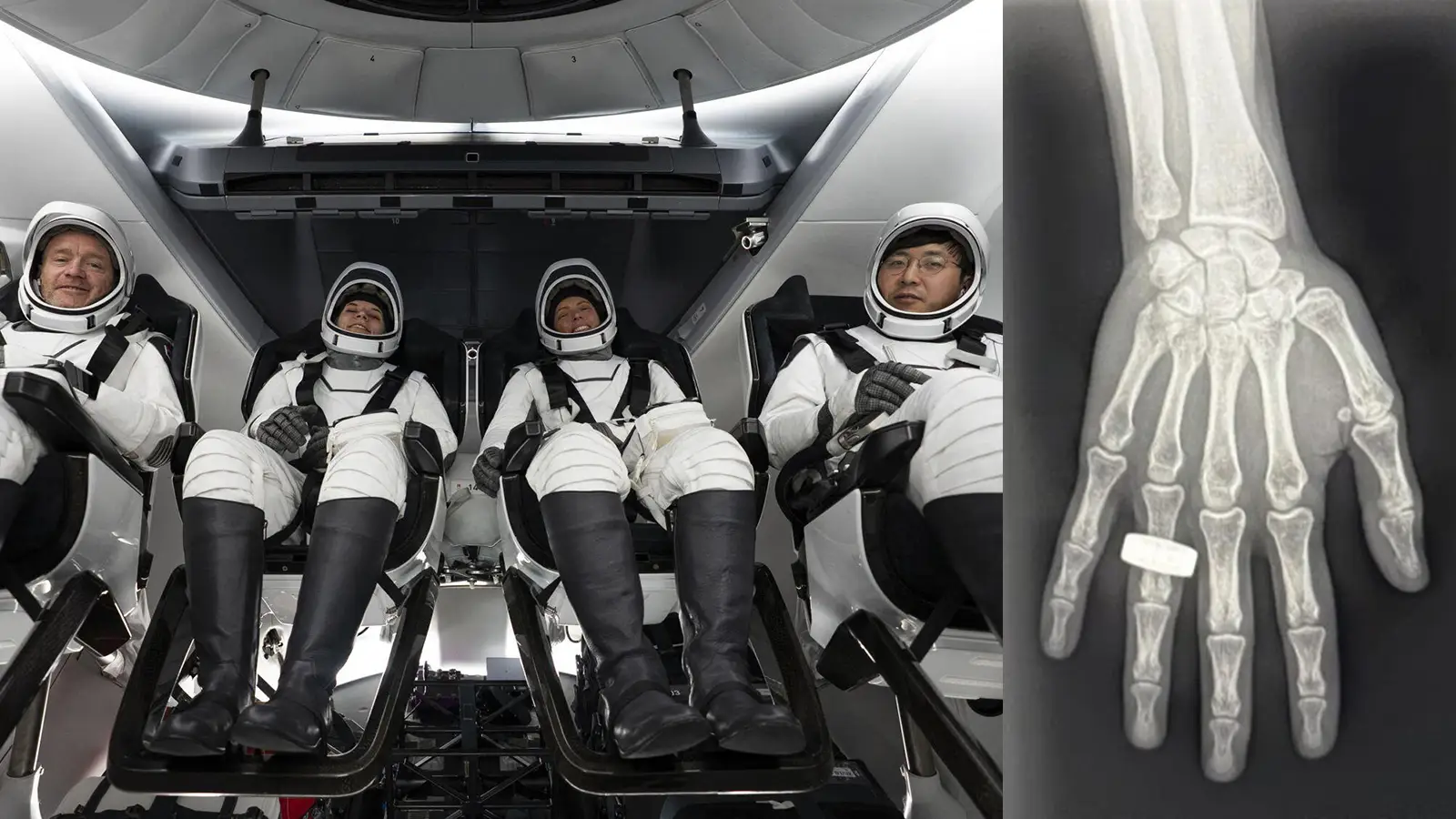
- Using a portable radiography system, three crew members on a 3.5-day polar orbital flight were able to take diagnostic-quality x-rays, the first human radiographs in space.
- In-flight images had similar overall image quality, spatial resolution, and contrast resolution compared with images taken preflight.
- Use of a portable radiography system could potentially improve diagnostic capabilities for crew health, researchers said.
It was feasible to take x-rays in space, potentially improving diagnostic capabilities for crew health, according to a small prospective study.
Using a portable radiography system, three crew members on the 3.5-day Fram2 polar orbital flight were able to take diagnostic-quality x-rays, the first human radiographs in space, reported Sheyna Gifford, MD, of the Mayo Clinic in Rochester, Minnesota, and colleagues.
As evaluated by a team of radiologists using Likert scores of 1-5, the in-flight images acquired by the crew members, as compared with images taken preflight, demonstrated no evidence of differences in:
- Overall image quality (mean score 4.86 vs 5.0, P>0.99)
- Spatial resolution (mean score 4.86 vs 5.0, P=0.46)
- Contrast resolution (mean score 4.86 vs 5.0, P=0.46)
However, for central radiographs of the chest, abdomen, and pelvis, image positioning was worse in-flight versus preflight (mean score 4.07 vs 4.95, P=0.02).
“The user-friendly design of our commercial-off-the-shelf system enabled rapid performance of numerous imaging examinations despite limited in-flight operational time, minimal crew training, and the absence of anchoring equipment in the microgravity environment,” Gifford and colleagues wrote in Radiology.
For decades, space missions have had to rely on portable ultrasound machines for any imaging requirements. “It’s been a dream for aerospace medicine to have more than one imaging modality for diagnosing illnesses and injuries in space,” Gifford said in a press release.
“Traditional x-ray machines are very large, produce a lot of radiation, and have a tendency to produce a blurred image if there’s movement,” Gifford explained. “Because everything in space is constantly moving, the conceit has been that obtaining a diagnostic image in orbit was too technically challenging.”
“Acquiring diagnostically useful x-rays in space is something that anyone can do,” she added. “Three very talented nonmedical people with 4 hours of training in one of the harshest environments did it right and did it well.”
In an accompanying editorial, Suhny Abbara, MD, of the Mayo Clinic in Jacksonville, Florida, and Alan B. McMillan, PhD, of the University of Wisconsin-Madison School of Medicine, noted that “the benefits may not remain confined to spaceflight.”
“Portable, rugged, low-resource radiography systems with autonomous guidance could improve care in austere terrestrial settings, including disaster response, military medicine, remote communities, expeditionary environments, and low-resource health systems,” they wrote. “Space exploration often serves as an extreme testbed for technologies that later return to Earth with broader clinical value, such as memory foam, cell phone cameras, and cordless drills.”
“As our species crosses another boundary, from Earth to orbit and beyond, radiology is not merely following humanity into space; it is becoming part of the infrastructure that may make long-term exploration safer and more sustainable,” they concluded.
Gifford and colleagues previously demonstrated the feasibility of x-ray imaging in simulated microgravity on a parabolic flight using an off-the-shelf, portable radiography system to capture radiographs of a human subject and a phantom during lunar gravity, Martian gravity, and microgravity.
In order to determine whether such a system would be suitable for an orbital flight, Gifford’s team partnered with the commercial company SpaceX to test it on the 3.5-day Fram2 polar orbital flight launched in March 2025 on a SpaceX Falcon 9 rocket.
Prior to the spaceflight, three crew members underwent 4 hours of training on the portable radiography system and acquired preflight images, including x-rays of a hand, forearm, abdomen, pelvis, and chest.
The crew members acquired anatomic and equipment x-rays in-flight without any ground support. These included images of a phantom object used to calibrate the system, as well as a smartwatch, hand, forearm, abdomen, pelvis, and chest. These images were immediately transmitted to an onboard computer and reviewed by the crew.
The quality of preflight and in-flight radiographs acquired by the crew was rated by three independent radiologists — one with 10 years of experience and a fellowship in abdominal imaging, one with 6 years of experience and a fellowship in abdominal imaging, and one with 6 years of experience and a fellowship in musculoskeletal imaging.
The three crew members completed a survey after the flight and all agreed or strongly agreed that the x-ray system was easy to use and the protocol was easy to follow. They noted that improved mechanisms were needed to securely mount and clamp the x-ray detector and generator.
Gifford and colleagues suggested that further “miniaturization, ruggedization, and improved usability” could eventually enable the inclusion of a commercial-off-the-shelf radiography system on future missions.
[ad_2]
Source link : https://www.medpagetoday.com/radiology/diagnosticradiology/122209
Author :
Publish date : 2026-07-15 21:44:00
Copyright for syndicated content belongs to the linked Source.