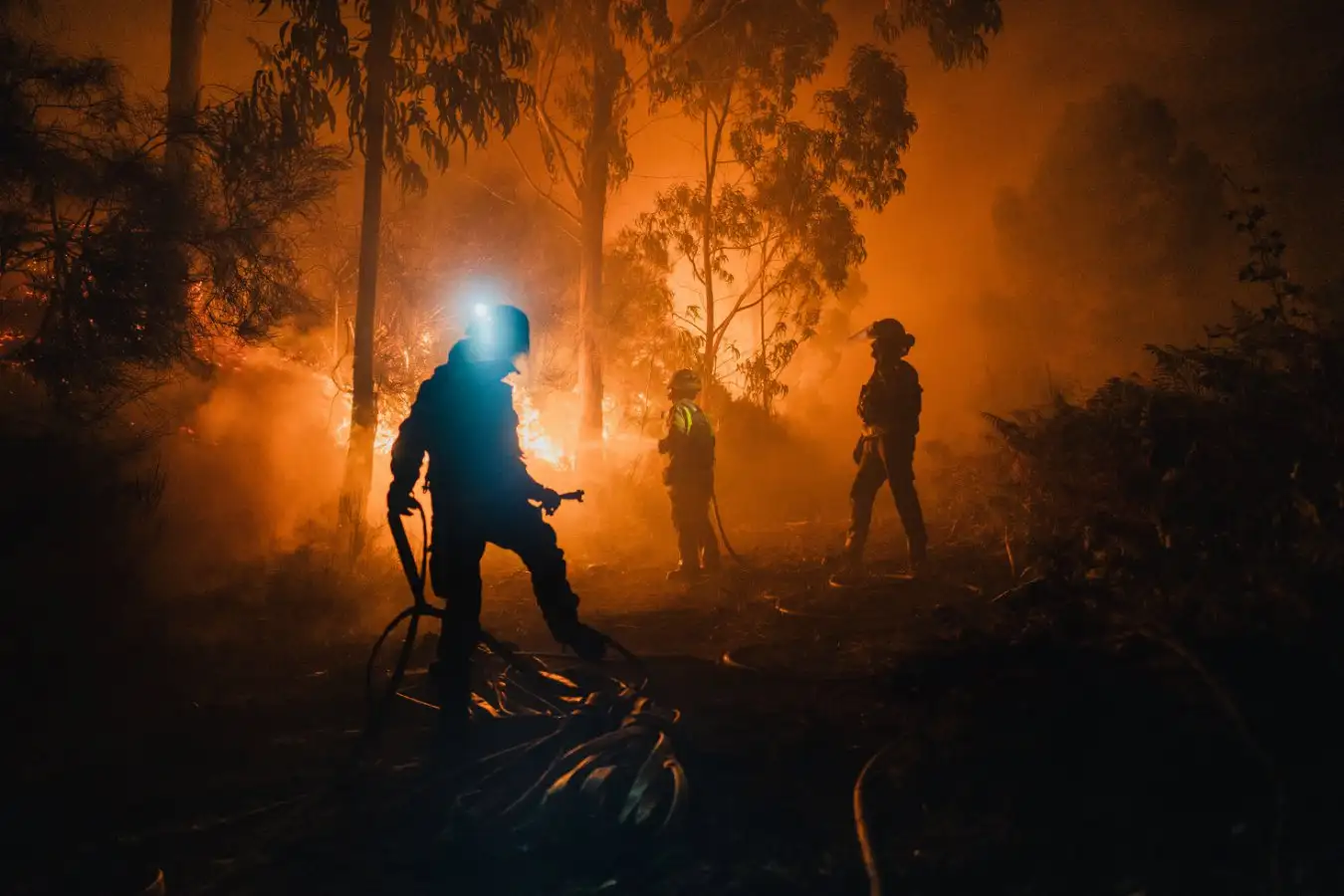
Firefighters working in Spain in August
Pedro Pascual/Anadolu via Getty Images
This year is set to be the second warmest year on record behind 2024, with many regions experiencing unprecedented storms, wildfires and heat.
The mean temperature for 2025 is currently 1.48 °C above the preindustrial average, according to European Union’s Copernicus Climate Change Service (C3S). That would tie it with 2023 and put it second after 2024, which was 1.6°C above preindustrial.
While the El Niño climate phase warmed the planet in 2024, the world is now in the alternate La Niña phase, when an upwelling of cool water in the tropical Pacific Ocean tends to lower global temperatures. But fossil fuel emissions reached yet another record in 2025, meaning temperatures will keep trending up, contributing to devastating extreme weather.
“The reality is that it’s the extreme events that impact people, impact society, impact our ecosystems, and we know that those extreme events increase in their frequency and in their severity in a warmer world,” says Samantha Burgess at C3S. “Storms get worse because the atmosphere holds more moisture.”
This summer, climate change caused an additional 16,500 deaths as heatwaves broiled Europe. In October, Hurricane Melissa, the strongest hurricane to ever hit Jamaica, killed more than 80 people and caused an estimated $8.8 billion in damages. World Weather Attribution, an international academic collaboration, found climate change intensified Melissa’s rainfall by 16 per cent and wind speed by 7 per cent.
In November, a string of cyclones and storms triggered landslides and flooding across Sri Lanka, Indonesia, Thailand, Malaysia and Vietnam, killing more than 1600 people.
Arctic sea ice extent is currently the lowest on record for this time of year, and Antarctic sea ice is also below normal.
The three-year temperature average is now on track to exceed 1.5°C above preindustrial for the first time, according to C3S. Scientists expect that warming will exceed a long-term average of 1.5°C by 2029, busting the Paris Agreement goal.
“There’s no magical cliff at 1.5 degrees, but we know that extreme events will get worse … as we exceed 1.5 degrees,” says Burgess. “The proximity of tipping point thresholds gets closer as well.”
An October report argued that one tipping point, the irreversible die-off of tropical coral reefs, had already been reached, and the world risks soon crossing tipping points for Amazon rainforest dieback and collapse of the Greenland and West Antarctic ice sheets, as well as Antarctic sea ice.
Topics:
Source link : https://www.newscientist.com/article/2507635-2025-is-the-second-hottest-year-since-records-began/?utm_campaign=RSS%7CNSNS&utm_source=NSNS&utm_medium=RSS&utm_content=home
Author :
Publish date : 2025-12-09 03:00:00
Copyright for syndicated content belongs to the linked Source.