[ad_1]
CAR T-cell therapy can be very effective against cancer, and it might be about to get more accessible
Nemes Laszlo/Shutterstock
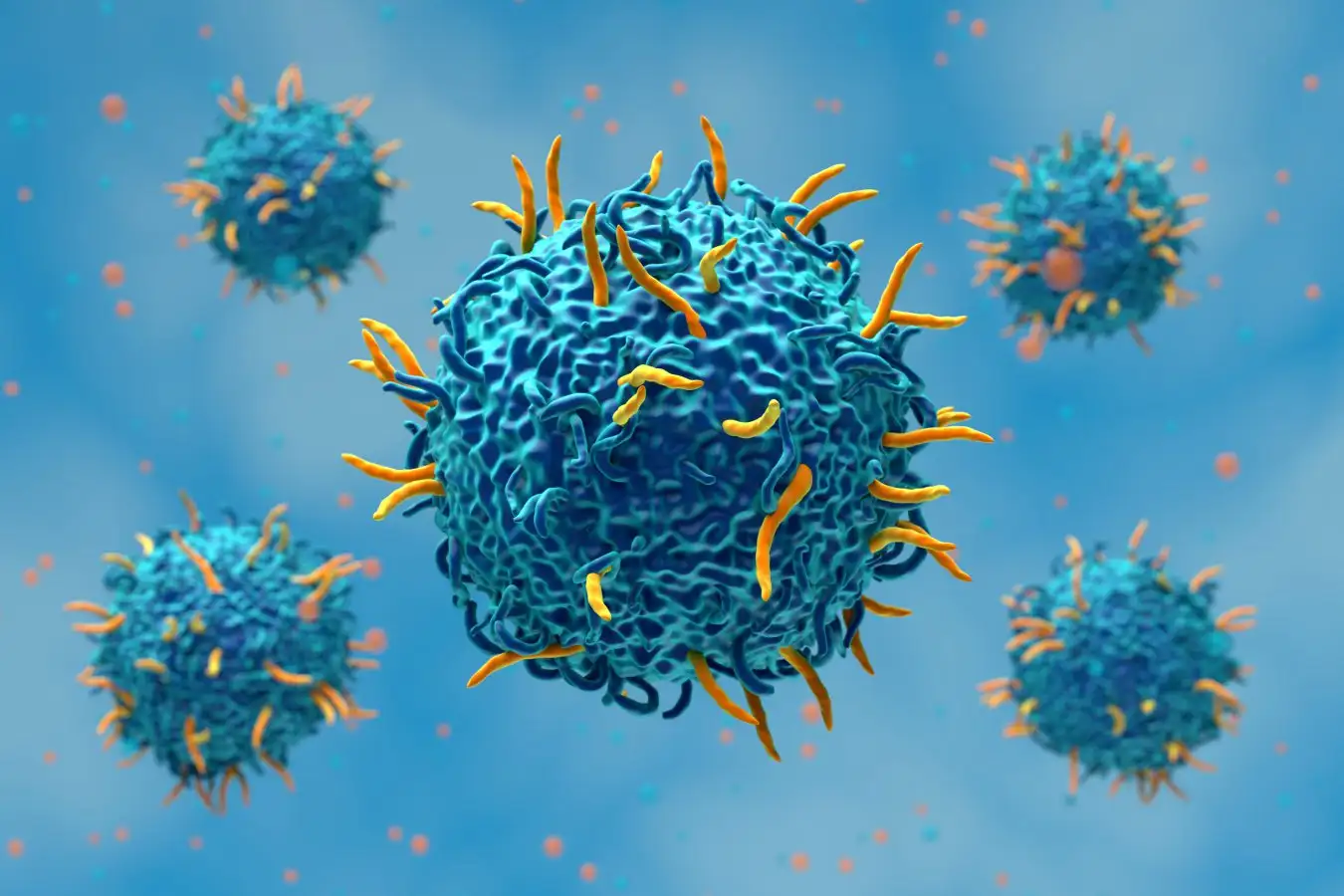
CAR T-cell therapy, when someone’s immune cells are genetically engineered to kill cancer cells, is highly effective for treating certain types of cancer, but it is too expensive to be widely available worldwide. But utilising 3D printing could mean that these engineered cells are produced for less money and – crucially – faster, making the treatment more accessible.
“When you’re treating very sick patients, some patients might never get the therapy because they’ve deteriorated so much in the three or so weeks it might take to make the CAR T therapy,” says David Coe at CoED Biosciences, a biotechnology company in Cardiff, UK, who wasn’t involved in the latest research.
CAR T-cell therapy involves extracting immune cells called T-cells from someone’s blood before genetically engineering them to recognise and destroy cancer cells.
This is usually done by mixing the cells with tiny beads that activate their proliferation. They are also mixed with a harmless virus that delivers them the genetic code for a protein that targets molecules on the surface of cancer cells, called a chimeric antigen receptor (CAR). Typically, 30 to 70 per cent of the T-cells are successfully reprogrammed, with a higher proportion tied to better outcomes.
All the cells are then multiplied for a few weeks before being infused back into the body, meaning the entire process can take about a month. Another issue is that just one round of the therapy can cost more than £280,000. “CAR T-cell therapy is phenomenally expensive, so it’s only really available in wealthier nations,” says Gillian Griffiths at the University of Cambridge, who wasn’t involved in the research.
To address these limitations, Judit Guasch Camell at the Materials Science Institute of Barcelona, Spain, and her colleagues 3D printed a gel to form structures that resemble the texture and arrangement of human lymph nodes, where T-cells are usually activated upon recognising a threat.
Prior studies suggest that T-cells sense the physical properties of lymph nodes, which helps them activate and proliferate more efficiently, said Guasch Camel, who presented the research at the Biophysical immunoengineering conference at The Royal Society in London earlier this month. During the standard approach for making CAR T-cells, the T-cells are activated while they interact with flat plastic surfaces – like lab dishes or bags – that fail to provide many of these tactile cues, which limits their proliferation and uptake of the CAR genetic code, she said.
To test their 3D approach, the researchers added human T-cells, a virus encoding a cancer-specific CAR and the beads to the lymph-node-like structures. For comparison, they also mixed the same components in plastic dishes.
Five days later, about 50 per cent of the T-cells grown with the standard approach had successfully become CAR T-cells, compared with 75 per cent with the lymph-node method. This suggests the approach could reduce the amount of extremely expensive chemicals needed to genetically engineer CAR T-cells, says Coe.
The T-cells also grew about twice as fast in the lymph node structures as in the standard approach, which could cut down on labour costs and ensure patients are treated before it’s too late, says Coe.
Such improvements are a step towards improving access to CAR T-cell therapy worldwide, says Griffiths. “It’s about making immunotherapies [treatments that use our immune system to fight cancer] accessible worldwide, including in lower- and middle-income countries,” she says. But further studies are needed to determine how easily, and at what precise cost, the method can be scaled up, says Coe.
Topics:
[ad_2]
Source link : https://www.newscientist.com/article/2528140-3d-printed-lymph-nodes-could-widen-access-to-car-t-cell-therapy/?utm_campaign=RSS%7CNSNS&utm_source=NSNS&utm_medium=RSS&utm_content=home
Author :
Publish date : 2026-05-28 12:00:00
Copyright for syndicated content belongs to the linked Source.