
Welcome to Culture Clinic, MedPage Today‘s collaboration with Northwell Health to offer a healthcare professional’s take on the latest viral medical topics.
People are complaining about a strange side effect of Brazilian butt lifts (BBLs) on social media: an unwanted rank, musty odor referred to as “BBL smell.”
The cosmetic procedure, also known as gluteal fat grafting, has become popular in recent decades. From 2011 to 2021, the popularity of BBLs surged by more than 800%, from 7,382 procedures to 61,387, according to data from the American Society for Aesthetic Plastic Surgery.
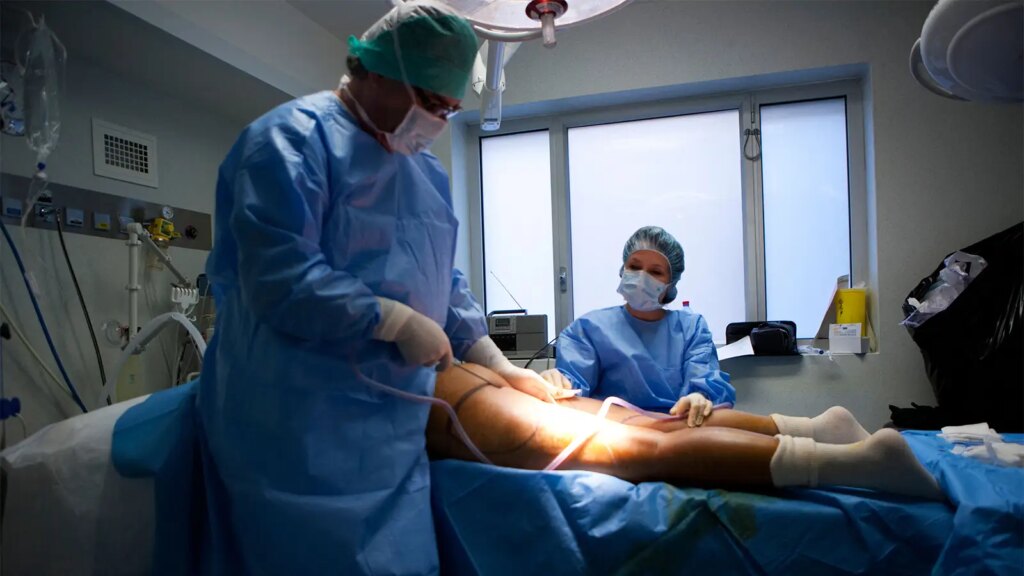
While not necessarily a “lift,” BBLs can increase the size and round out the shape of the buttocks. Fat is removed via liposuction from the abdomen or hips, processed to separate out the anesthetics, and then carefully re-injected into the butt.
“The idea is it’s a self auto transplant of fat so that you don’t get any kind of immune reaction, and most of the fat survives in its new position,” explained Michael Rosenberg, MD, a plastic surgery attending who is also the vice president of physician surgical services and associate medical director at Northwell’s Northern Westchester Hospital in Mount Kisco, New York.
While the procedure itself is straightforward, the recovery process can be grueling — and that’s where patients have reported issues with odor.
For a few weeks after getting a BBL, patients have to minimize the weight they put on their butt. That means no sitting down and wearing a compression garment nearly all the time. Rosenberg described the garment as kind of like a girdle: it’s tight and typically has a cutout for the buttock itself. The garment helps people keep pressure off the buttocks while compressing the area where fat was removed so that the skin tightens. These postoperative precautions help the BBL settle and avoid unwanted fat migration.
“You’re placing the fat where you want it, but until it settles in its new position and gets its own blood supply, as a graft does, there’s potential for it shifting, so we really try to keep people off the buttock,” Rosenberg told MedPage Today.
While being careful to not put too much pressure on the buttocks after a BBL is important, Rosenberg said some people take this caution a little too far.
“Because we’re telling people not to sit on it and not to rub too much, it leads to some issues with hygiene afterwards,” he said.
In short: a lot of patients don’t clean enough after using the bathroom for fear of harming their BBL results. That area of the body is already prone to smells if not properly cleaned, but then there’s the added issue of the compression garments. Patients have to wear the garments nonstop for weeks except when washing themselves. These garments can start to stink due to sweat buildup and trap unwanted odors on the skin below.
Rosenberg recommends that his patients buy two of these garments so they can wash one while wearing the other, to avoid the double whammy of odors.
Ultimately, Rosenberg said odor issues after a BBL have “more to do with sweat and hygiene than with the operation.” However, if BBL smell lasts more than a few weeks — especially if the patient is regularly washing the compression garment — he said they should consult their doctor to make sure there isn’t something seriously wrong. He clarified that BBL smell is different than a stench caused by an infection, which would be way more serious and require medical attention.
While BBLs are straightforward procedures, Rosenberg cautioned that they can be dangerous if not done correctly, so it’s important for patients to go to reputable surgeons who will do the procedure safely. Research has characterized BBLs as having the highest mortality rate of any aesthetic surgical procedures, largely from pulmonary fat embolism caused by the fat being re-injected incorrectly.
While a real risk, both patients and physicians should be aware that “meticulous technique can avoid the problem,” Rosenberg said.
Please enable JavaScript to view the comments powered by Disqus.
Source link : https://www.medpagetoday.com/popmedicine/cultureclinic/121396
Author :
Publish date : 2026-05-21 17:16:00
Copyright for syndicated content belongs to the linked Source.