[ad_1]

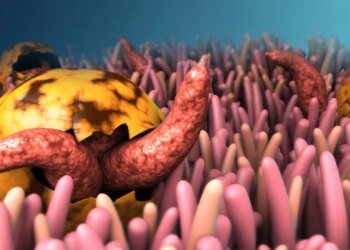
Products like breads and smoothies that are fortified with the fibre could soon be on sale
Panther Media Global / Alamy
Breads, smoothies and cereals that contain a “supercharged” form of fibre could go on sale in Europe within the next year. The fibre stimulates the release of hunger-reducing hormones such as GLP-1, which can prevent weight gain, and has now been approved as safe to eat by the European Food Safety Authority, allowing it to be added to foods.
“We showed in a randomised-controlled trial in middle-aged people that when it’s consumed daily, it prevents weight gain,” says Gary Frost at Imperial College London. “In young people, although you don’t see the impact on body weight, you see a change in body composition. These young people ended up with a higher lean body mass.”
Dietary fibre consists of molecules that our bodies can’t digest but that some bacteria in the large intestine can. The breakdown of fibre by these bacteria produces short-chain fatty acids. If you eat a lot of fibre and your gut senses lots of these fatty acids, it stimulates the release of appetite-suppressing hormones such as PYY and GLP-1, whose action is mimicked by weight-loss drugs such as Ozempic.
The problem is you have to eat large amounts of fibre for this effect to kick in. Animal studies suggest people would have to eat around 80 grams of fibre to produce enough short-chain fatty acids to trigger the release of these hormones, says Douglas Morrison at the University of Glasgow, UK. Many countries recommend that people eat at least 25 or 30 grams of fibre a day, but most do not eat this much.
But just 10 grams a day of the supercharged fibre – called inulin-propionate ester, or IPE – can trigger this effect. In a randomised-controlled trial involving 60 overweight people aged between 40 and 65, Frost, Morrison and their colleagues showed that blood levels of GLP-1 and PYY increased after a 10 gram dose of IPE, and that people taking IPE ate less. After six months, none of the people on IPE had gained a significant amount of weight, whereas 17 per cent of the controls had. The only side effect of IPE was increased flatulence, as is common with high-fibre diets.
In another randomised-controlled trial involved 270 overweight people aged between 20 and 40, there was no difference in body weight after a year between those who took IPE and those who didn’t. However, the fat-free mass of those on IPE increased by more than a kilogram, on average.
IPE was created 15 years ago when Frost was trying to study the effects of short-chain fatty acids such as propionate in the large intestine. But you can’t just feed them to people – not only do they taste vile, they get absorbed before reaching the large intestine. “Your only option is to stick a tube in from the top, or to stick a tube up from the bottom, and neither of these are particularly pleasant,” says Morrison.
So, Morrison attached propionate to a fibre called inulin to create IPE. Inulin is a common carbohydrate found in many plants, and is already widely taken as a supplement.
IPE passes through the stomach and small intestine, and is split apart by bacteria in the large intestine. The released inulin becomes a normal type of fibre, while the released propionate helps get short-chain fatty acid levels high enough to trigger the release of GLP-1 and PYY. “[The propionate] is supercharging a dose of fibre,” says Morrison.
It has taken Frost, Morrison and their colleagues 12 years to get European Food Safety Authority approval. “I don’t know of any other academic groups that have taken something from the bench into a state where it can be used in the food chain,” says Frost.
While this approval applies only in the European Union (EU), the pair expects the UK regulator to quickly follow suit. Frost and Morrison are now talking to companies about launching products that contain IPE, such as smoothies, cereals and breads. “I think within 12 months this could be appearing on the market in the EU for sure,” says Morrison. Most people can’t taste added IPE, says Frost, but a very small proportion sense a bitter taste.
But Brendan Gabriel at the University of Aberdeen, UK, says the evidence for the benefits of IPE is not very strong. The trials showing it helped prevent weight gain in those aged over 40 involved small numbers of people, he says. And while the trial showing an increase in fat-free mass in people aged between 20 and 40 involved larger numbers, the method used didn’t show whether the increased lean mass was muscle or another kind of non-fat tissue, says Gabriel. “But eating fibre as part of a healthy diet, or in IPE supplement form, may have other health benefits and may support gut health.”
Frost says the team hopes to do further studies, including looking at whether IPE can help preserve lean mass when people are on GLP-1 drugs, and whether it can help reduce weight gain when people stop taking these drugs.
Topics:
[ad_2]
Source link : https://www.newscientist.com/article/2532336-a-type-of-fibre-that-stimulates-glp-1-release-approved-for-use-in-food/?utm_campaign=RSS%7CNSNS&utm_source=NSNS&utm_medium=RSS&utm_content=home
Author :
Publish date : 2026-07-01 14:00:00
Copyright for syndicated content belongs to the linked Source.