


Developed in partnership with the Our Partner
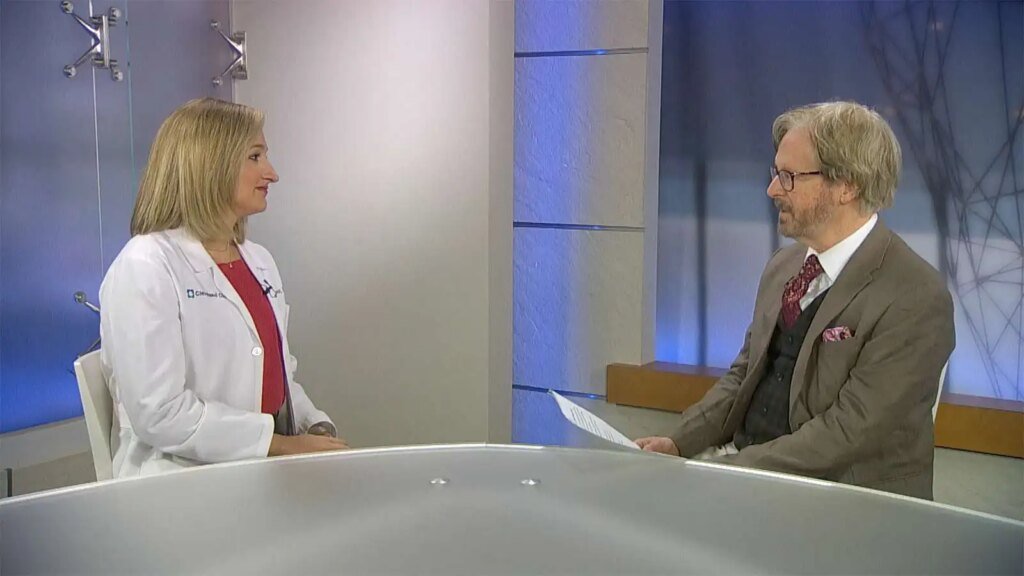
In “Beyond Diagnosis: CLL,” Cleveland Clinic hematologist/oncologist Allison Winter, MD, and host John Mangels explore how clinicians can communicate effectively and empathetically with patients navigating a chronic lymphocytic leukemia (CLL) diagnosis.
Each monthly installment examines an individual aspect of these crucial discussions, including addressing misconceptions, explaining watchful waiting, and supporting patients through emotionally complex decisions.
This third of six episodes focuses on adapting communication styles to different patient personalities and helping patients find the information and support that best fit their needs.
The following is a transcript of their remarks:
Mangels: Welcome to “Beyond Diagnosis,” where we talk with doctors about talking with patients. I’m your host, John Mangels. Today, we’re discussing chronic lymphocytic leukemia. It’s a serious but often slow-moving illness, which can make communicating about it more complicated. Our guest is Cleveland Clinic hematologist Dr. Allison Winter. She helps guide patients with CLL through their journey from diagnosis to watchful waiting and treatment. Dr. Winter, thanks so much for being here.
Winter: Thank you for the invitation and the opportunity to share my insights.
Mangels: So patients react differently to their disease. I’m sure you see lots of different kinds of patients: stoic ones, data-driven ones, emotional ones. How do you adjust your communication style to deal with all those different kinds of patients?
Winter: There certainly are all kinds of different patients and when they walk into the room, you know that it might be different than even what you expected when you’re reading their medical records. I think that’s why the initial approach to just, tell me all about you, let me get to know you, which includes the social history too, so I can get a sense of maybe what their health literacy will be, really helps me not change my message, but adapt my message and my education for that particular patient.
And sometimes patients want very, more emotional, like help with the anxiety of the diagnosis, but other times I can think of a patient who came to see me for their third opinion and they really were craving something more than what the first or second oncologist gave them, which was very generalized information about the diagnosis. I could tell in our interaction up until the education part that they were craving very specific, very data-driven responses.
And so I actually use a PowerPoint when I educate patients, a slideshow that I pull up on my laptop. And I have slides for very basic explanations, but I do have some more advanced slides, because I know sometimes people specifically seek me out as a CLL specialist to get that more data-driven, more deep dive on the biology and the treatment landscape of CLL. So I adapt my conversation with them based on what I’ve learned.
Mangels: And so when you’re showing them your PowerPoint presentation, do you always show every slide or do you sort of tailor it to, as you say, the kind of patient you’ve got?
Winter: I do not show every slide. So I have a very long slideshow, but which slides I decide to jump to will vary depending on the patient.
Mangels: How do you support patients who are stoic and kind of minimize their symptoms, particularly because they don’t want to alarm or otherwise put a burden on those around them?
Winter: I think the stoic patients are the patients that you really need to kind of call the elephant in the room without them saying it. Wow, this word “leukemia” is really, really a scary word, or use just very open-ended questions or even questions like, “Who have you told about this diagnosis?”
Mangels: So if you encounter a patient like that, how can you get them to open up to others who could be supportive to them if they knew? How do you get them to kind of get beyond, “I want to keep this inside.”
Winter: So one thing I do is just ask why. Why haven’t you told anyone in your family? The next thing I mention, if I sense that someone doesn’t want to burden their family, is to let them know about all kinds of resources they can use to still get some emotional support that they are craving. For instance, there’s the Fourth Angel program where you get matched with a peer who has that same diagnosis. So maybe they don’t want to talk to the family member or create that burden, but they want to talk to someone who doesn’t know their life and they can just talk about CLL.
Mangels: What about the patient that comes in with lots of printouts and has been on Google and knows a lot about their disease and is maybe asking questions, but more sort of pushing back on what you’re telling them. How do you deal with the really data-driven patient?
Winter: I use a different approach. So I know obviously I’m a physician and I have physician friends and I know a lot of my physician colleagues and friends can sometimes have the first emotion of anger, like, “Oh, they thought that ChatGPT was more than what they could get from a consult with me.”
Mangels: How dare they challenge what I know? I’ve spent all this time becoming an expert at this.
Winter: Exactly. But I don’t use anger or self-defense about that. I look at the stack of paper as a challenge to be better than the stack of paper. And I kind of look at it like, “What do you have in that stack of paper there?”
Mangels: What do you got for me?
Winter: Yeah, what do you have there? Get a sense of what’s in that stack of paper and use it as a challenge to be better than AI [artificial intelligence]. Because I don’t want to be replaced by AI.
Mangels: Nor should you be.
Winter: Yeah, because what you can’t get from AI is that individual approach and also the communication. The communication is just the most important thing in almost any components of our life, including the doctor-patient relationship.
Mangels: Thanks so much for your insights, Dr. Winter. And thank you for joining us on “Beyond Diagnosis,” where we explore not just what physicians know, but how to effectively and compassionately share that knowledge with patients. See you next time.
Please enable JavaScript to view the comments powered by Disqus.
Source link : https://www.medpagetoday.com/beyond-diagnosis/cll/120298
Author :
Publish date : 2026-03-13 17:26:00
Copyright for syndicated content belongs to the linked Source.