
[ad_1]
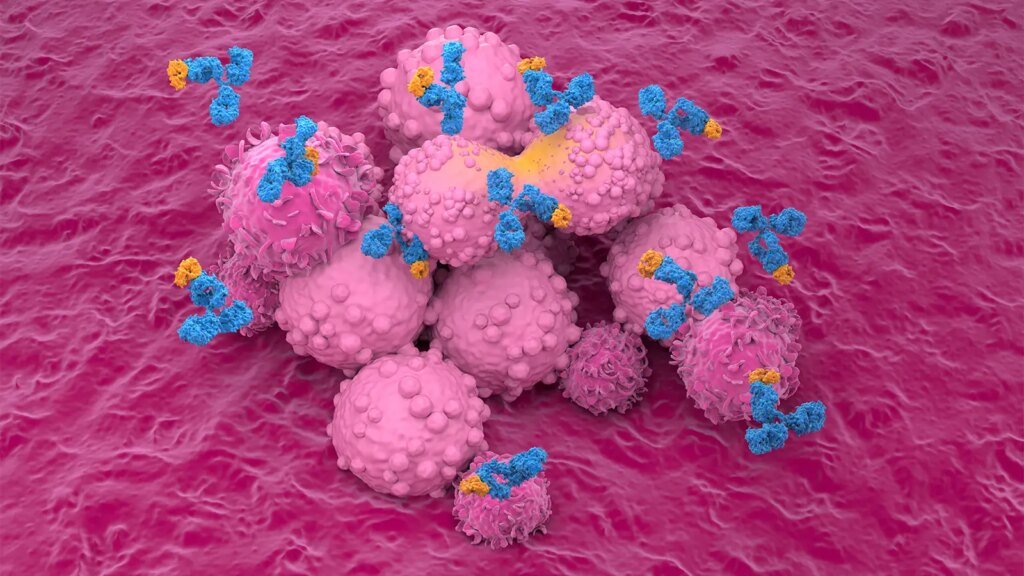
Antibody-drug conjugates (ADCs) are becoming an increasingly relevant first-line treatment option for metastatic triple-negative breast cancer (TNBC).
“ADCs are a fairly old class of drug that has really transformed the treatment of many different cancer types in the last 5 years or so,” said Sheheryar Kabraji, BMBCh, chief of Breast Medicine at Roswell Park Comprehensive Cancer Center in Buffalo, New York.
ADCs aren’t necessarily geared toward new targets but use “new payloads and chemistry that allow them to be more potent and effective with less toxicity than the previous generation of drugs,” Kabraji added.
There are currently two ADCs approved by the FDA as options in unresectable or metastatic TNBC: sacituzumab govitecan (SG; Trodelvy) and datopotamab deruxtecan (Dato-DXd; Datroway).
SG was initially approved in 2020 in the third-line setting. In the ASCENT trial of TNBC patients who had received two or more prior lines of therapy, SG showed significant improvements in progression-free survival (PFS) and overall survival (OS) compared with physician’s choice of chemotherapy.
Current National Comprehensive Cancer Network (NCCN) guidelines recommend SG in the first-line metastatic setting. The ASCENT-03 trial evaluated SG in the first-line metastatic setting in patients who were not candidates for PD-(L)1 inhibitors. Again, SG significantly improved PFS compared with chemotherapy (median 9.7 vs 6.9 months).
More recently, the ASCENT-04 trial evaluated first-line SG plus pembrolizumab (Keytruda) compared with chemotherapy plus pembrolizumab in patients with PD-L1-positive TNBC. SG plus pembrolizumab also significantly prolonged PFS compared with the control (median 11.2 vs 7.8 months).
This regimen is recommended in the NCCN guidelines as well, and SG recently got the greenlight from the FDA in these two first-line scenarios.
The FDA has approved first-line Dato-DXd for metastatic TNBC patients who are not candidates for PD-(L)1 inhibitors based on results from TROPION-Breast02. Among immunotherapy-ineligible patients with TNBC, Dato-DXd significantly improved PFS (median 10.8 vs 5.6 months) and OS (23.7 vs 18.7 months) compared with investigator’s choice of chemotherapy.
Studies are also looking at the safety and efficacy of combining Dato-DXd with durvalumab (Imfinzi) in the first-line treatment of TNBC.
Choice of Therapy
With these two available options, selecting the best therapy for each patient is “the million dollar question,” according to Kathrin Dvir, MD, of Moffitt Cancer Center in Tampa, Florida.
“These agents should not be viewed as interchangeable simply because both are TROP2-directed ADCs with topoisomerase I inhibitor payloads,” Dvir said. “They were studied in different phase III populations, with different eligibility criteria, control arms, crossover rules, and toxicity profiles. For that reason, the most responsible interpretation is nuanced rather than a direct cross-trial comparison.”
In ASCENT-03, SG was evaluated in patients who were not candidates for immunotherapy, and patients with recurrent disease were required to have a disease-free interval of at least 6 months. In contrast, TROPION-Breast02 enrolled immunotherapy-ineligible patients regardless of disease-free interval, including patients whose disease recurred immediately after completion of curative-intent therapy.
“That difference matters clinically, because early relapse after curative-intent therapy often reflects more resistant tumor biology,” Dvir said. “For a patient who relapses very soon after completing perioperative therapy, TROPION-Breast02 may more closely resemble the clinical scenario in front of us. Conversely, ASCENT-03 provides randomized data for SG in a somewhat more selected first-line population. The absence of crossover in TROPION-Breast02 also makes the OS signal important, while still requiring caution when comparing outcomes across trials.”
The side effect profile of each ADC is also different. SG is commonly associated with neutropenia and diarrhea, which may require proactive supportive care, including upfront growth factor support; Dato-DXd has a distinct toxicity profile that includes stomatitis or mucositis and ocular events such as keratitis, which require prevention, early recognition, and active management.
“Shared decision-making should take into account the pace and burden of disease, sites of involvement, prior exposure to immunotherapy or chemotherapy in the early-stage setting, the presence or risk of brain metastases, comorbidities, and patient preferences,” Dvir said. “In practice, this is not just a question of which drug has the longest median PFS. It is about choosing the regimen whose evidence and toxicity profile best fit the patient in front of us.”
New Options, Targets, Payloads
ADCs have become an increasingly important therapeutic class in metastatic TNBC, allowing selective delivery of potent cytotoxic payloads through tumor-associated surface targets. Three ADCs are now FDA approved and NCCN listed for use in TNBC. SG is a TROP2-directed ADC linked to SN 38, the active metabolite of irinotecan. Dato-DXd is also TROP2-directed and delivers a deruxtecan topoisomerase I inhibitor payload. Trastuzumab deruxtecan (T-DXd; Enhertu) targets HER2 and delivers the same deruxtecan payload, providing an option for TNBC tumors with HER2-low expression — defined as immunohistochemistry (IHC) 1+ or IHC 2+/in situ hybridization (ISH) negative. Together, these agents have expanded the treatment landscape in TNBC beyond conventional chemotherapy, although their optimal sequencing remains an active area of clinical investigation.
However, Kabraji explained that research has begun to show that the level of these target proteins on the tumor cells may not be the major determinant for how effective these ADCs are.
“We realized that the protein is only one part of the step-wise effect of these molecules,” Kabraji said. “Meaning the antibody targets the drug to the cell, but the active part of the drug — the payload — can pass from cell to cell, even when the cells don’t have the target at a high level.”
Despite that, Dvir said that the field urgently needs ADCs with new targets, new payloads, and pragmatic sequencing strategies.
“ADCs have moved from the salvage setting into the first-line, which is a major advance for patients,” Dvir said. “At the same time, most of the currently available and emerging ADCs still rely on topoisomerase I inhibitor payloads. If we continue to move similar payloads earlier in the disease course, we need to understand resistance, cross-resistance, and how best to sequence these agents after prior ADC exposure,” Dvir said.
At the 2026 American Society of Clinical Oncology meeting, data were presented on the novel, first-in-class bispecific antibody-drug conjugate izalontamab brengitecan (iza-bren), which targets EGFR and HER3 with a topoisomerase I inhibitor payload.
The phase III PANKU-Breast02 trial was conducted in China and enrolled patients with unresectable locally advanced or metastatic TNBC who had progressed after one to two prior lines of therapy. Patients were randomly assigned to iza-bren or treatment of physician’s choice. A pre-planned interim analysis showed a more than doubling of PFS (median 8.5 vs 3.1 months) and a significant improvement in OS (median 15.9 vs 12.5 months) with iza-bren compared with control.
“The results are impressive because they show both PFS and OS improvement in a heavily pretreated population where survival gains are often difficult to achieve,” Dvir said. “Iza-bren still uses a topoisomerase I inhibitor payload, but it introduces a different targeting strategy through EGFR and HER3. That is scientifically interesting and clinically relevant.”
Iza-bren could become a viable treatment option for this patient population, if the results are validated in a global study and if its safety profile remains manageable in broader practice, Dvir said.
Importantly, patients were not eligible for PANKU-Breast02 if they had prior exposure to any ADC, which does not reflect the modern standard of care.
“The major challenge for this regimen is there are now two FDA-approved agents — SG and Dato-DXd — for this group,” Kabraji said. “Identifying whether to sequence these drugs, how they should be sequenced, and which is better tolerated and effective will be important going forward.”
Please enable JavaScript to view the comments powered by Disqus.
[ad_2]
Source link : https://www.medpagetoday.com/spotlight/tnbc/122138
Author :
Publish date : 2026-07-10 15:11:00
Copyright for syndicated content belongs to the linked Source.