
Developed in partnership with the Our Partner
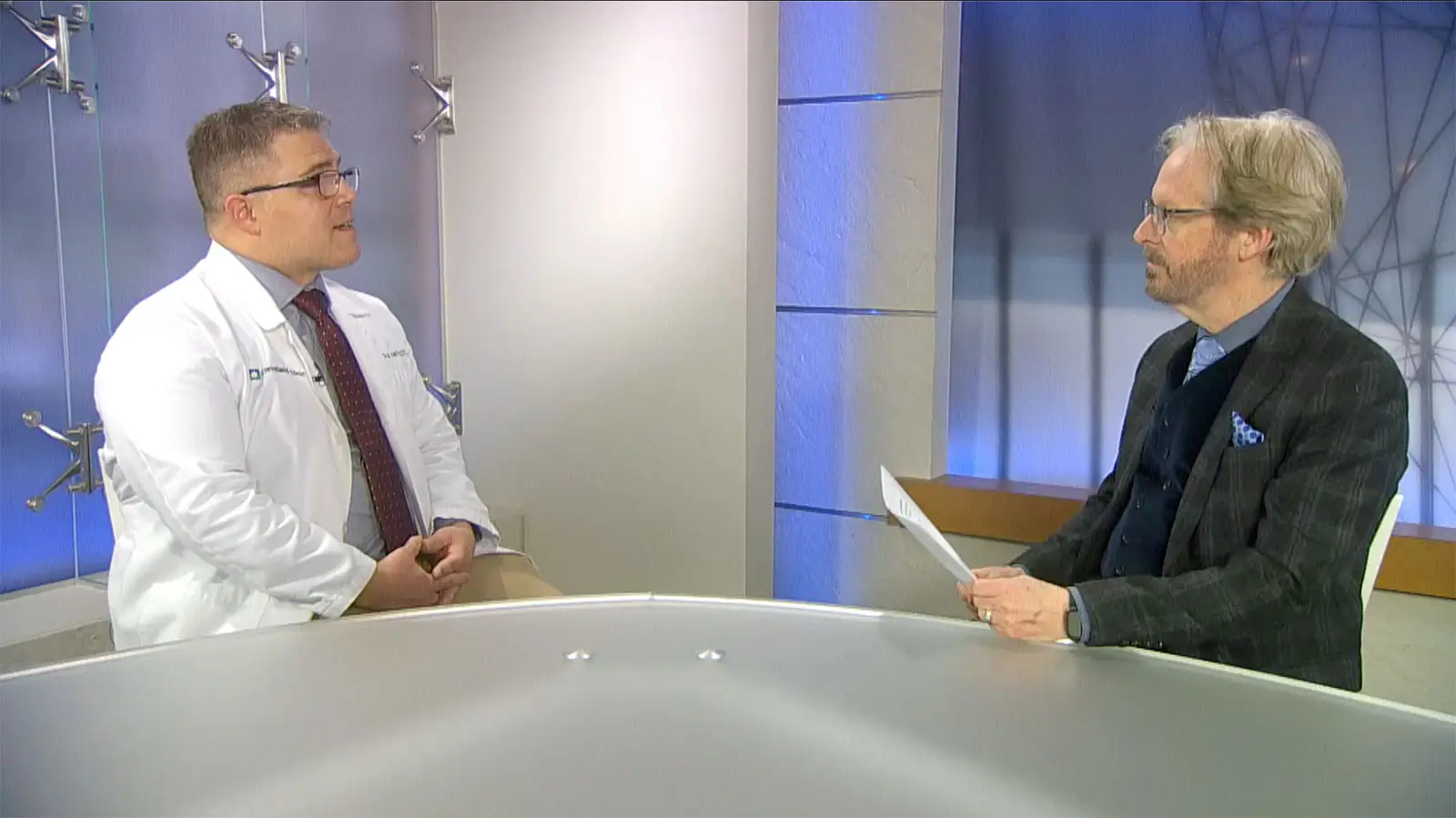
In “Beyond Diagnosis: Vaccines,“ Cleveland Clinic infectious disease specialist Donald Dumford III, MD, and host John Mangels continue their conversations on communicating effectively and empathetically with patients around vaccination decisions.
Each monthly installment examines an individual aspect of these crucial discussions, including building trust, addressing misinformation, and navigating emotionally and culturally influenced concerns.
This fifth of six episodes focuses on helping patients understand their personal risk, addressing questions about newer vaccines, and reinforcing trust through transparency and clear communication.
The following is a transcript of their remarks:
Mangels: Welcome to “Beyond Diagnosis,” where we talk with doctors about talking with patients. I’m your host, John Mangels.
Today, we’re exploring one of the more challenging topics that clinicians face: speaking with patients about vaccinations.
Our guest is Cleveland Clinic infectious disease specialist Dr. Donald Dumford. He spends a lot of time navigating these dialogues: listening, building trust, and helping patients understand their choices. Dr. Dumford, thanks for being here.
Dumford: Thanks so much for having me.
Mangels: Some vaccines may be harder to discuss with patients than others because they’re newer or they’re unfamiliar or even controversial. The shingles vaccine is an example of vaccinating for a condition that to a patient may seem far in the future or abstract. They may just not think that they’re vulnerable to it. How do you approach that conversation?
Dumford: I remind people of how common shingles is. If you think about it, really one in three people sometime in their lifetime is going to suffer from shingles. And I try to let them know, one, how severe those effects can be, both what they feel as well as their future risks. We have to remember that shingles is probably one of the more painful things that people go through. Pain or numbness in the area that’s affected can last for a long time.
And I think we’re learning more and more too is that there’s risks for other conditions related to shingles that’s reduced by shingles vaccination. We know that people who get vaccinated for shingles are less likely to have heart attacks and strokes than those that aren’t vaccinated.
Mangels: Anyone who’s been through it doesn’t want to go through it again.
Dumford: No, definitely not. It’s one of the more painful things we can think about.
Mangels: The vaccine for respiratory syncytial virus [RSV] has only been on the market for, what, a couple of years, I think? What do you say to patients who are unsure how established the science might be for that vaccine, who associate RSV with infants and they’re adults, so they wonder if they even need it or just are unsure about risk?
Dumford: And that’s the interesting thing about RSV is we always think about a condition of children. But when we’re talking to our adult patients, we have to remind them that it’s very common to get hospitalized with RSV in our elderly populations, in our populations with some comorbid conditions. And when I talk about respiratory virus season, I usually always talk about the big three: flu, COVID, and I always keep RSV in there because it really is very detrimental.
And I think the other thing I remind people too is it’s not just the upfront condition with RSV or even some other illnesses, but after you’ve had RSV, you can actually, you’ve got an increased risk for heart attacks and strokes afterwards. So I really just remind them that getting this vaccination is going to not only reduce your risk of getting RSV, but if you do get it, it’s going to reduce your risk of being hospitalized with it. And it’s going to reduce your risk for these other conditions that may come about after you’ve had all the inflammation from the virus itself.
Mangels: You probably also have to do some educational groundwork to help patients understand what RSV is to begin with and how it’s different than flu and pneumonia.
Dumford: Definitely. And it’s tough because we have this whole smorgasbord of viruses that go around during respiratory virus season. And it’s just reeducating people, reminding them, this is what the flu looks like, this is what COVID looks like, this is what RSV looks like. And then there’s all this other stuff that’s not quite so bad. So I think it’s just reminding people about how severe those three in particular can be.
Mangels: The COVID vaccination, I’m sure is another one that generates questions in your patients and in a lot of patients. I’m guessing you’re getting questions about mRNA technology and how new it is and how it works, whether boosters are needed if someone has already had COVID, and why the vaccination doesn’t stop you from getting COVID necessarily. What do you say to patients to alleviate those kinds of concerns?
Dumford: I think the one thing in particular is the thing about the technology itself. While this is the first application for the technology and it’s still fairly new, work has been done on this type of technology for decades. So although the application is new, the science behind it is not. I think hopefully that helps to alleviate some concerns about that.
And then in particular with COVID, because it has been mutating so much and people are asking about the efficacy of the most recent formulations of the vaccine, I kind of let them know and I say, “Well, yes, it’s mutated a little bit more, so it’s not a perfect match.” But knowing that at least the most recent lineages are very similar, so that the ability for the antibody to… When we think about viruses, we think about antibody, we think about protein on the outside of the virus and how well those connect, and just let them know that while it’s not a perfect match, it’s still a very good match and you’re getting a good response with the vaccine and the antibodies that are produced from it.
Mangels: With COVID especially, there is so much information and misinformation out there about that particular vaccine. How do you help patients feel that they can trust you versus all of that information that’s out there in the world?
Dumford: The funny thing I thought about this is I try not to use the words “safe” and “effective,” because I think that it was kind of overused the past several years. I try to actually not use those phrases because I think people kind of turn off when you say “safe and effective” anymore. I try to just alleviate the concerns about the safety and efficacy without just sounding like I’m sounding like everybody else out there and just really bringing those concerns and letting them know that we don’t see a lot of side effects from this.
It’s still an effective vaccine even though we’re seeing less severe cases of COVID, and just reminding people, especially those that have those comorbid conditions — cardiac problems, lung problems, immunosuppressive problems — that it’s going to reduce their risk for severe outcomes. I also remind people that we still do see patients in the hospital with COVID. We do still see those severe cases.
One other thing to think about too is I don’t just talk to people about themselves. I also remind them that if they have family members at home who are elderly, who are immunosuppressed, who have some different comorbidities, they may put them at increased risk. I remind them that them getting vaccinated is also going to protect those friends and family members that they’re interacting with.
Mangels: You’re not just getting vaccinated for yourself, you’re getting vaccinated for those that you care about the most.
Dumford: Exactly. I kind of remind people that it’s a way we can help take care of each other.
Mangels: It also sounds like it’s important to the extent that you can without lecturing, help your patients understand how you know what you know, where your sources of information are coming from.
Dumford: Definitely. It helps patients to hear that so they know that you’re learning, you’re staying informed, you’re staying up to date, because if they hear that, they’re going to take your opinion a little bit more strongly.
Mangels: How do you maintain your credibility while being transparent and honest about the uncertainties that are involved?
Dumford: I’ve learned over the past several years, the easiest thing to do in those situations is just say, “I don’t know, but I will do my best to learn.” Being experts and being physicians, some of us are afraid to actually say that. That’s one thing I’m actually upfront with my patients about and I think it doesn’t just stop at the, “I don’t know.” It’s “I haven’t heard that question before.” “I haven’t thought about that particular detail. Let me go learn about that and I’ll get back to you.” I think that goes a long way with helping to establish that rapport and build that trust.
Mangels: Thanks so much for your insights, Dr. Dumford. And thank you for joining us on “Beyond Diagnosis,” where we explore not just what physicians know, but how to effectively and compassionately share that knowledge with patients. See you next time.
Source link : https://www.medpagetoday.com/beyond-diagnosis/vaccines/121099
Author :
Publish date : 2026-05-04 16:31:00
Copyright for syndicated content belongs to the linked Source.