
- Conversational AI led to self-reported benefits in a randomized trial of university students in distress.
- Improvements in anxiety and depression scores over 12 weeks were modest.
- No serious adverse reports were reported.
A conversational artificial intelligence (AI)-based platform led to modest self-reported mental health benefits in university students, a three-arm randomized trial showed.
After 12 weeks, students experiencing psychological distress who used conversational AI agents had better Generalized Anxiety Disorder-7 (GAD-7) scores compared with those in face-to-face group therapy (mean difference -2.17 points, 95% CI -2.67 to -1.67) or controls (mean difference -2.15 points, 95% CI -2.65 to -1.65), reported Anat Shoshani, PhD, of Baruch Ivcher School of Psychology at Reichman University in Israel, and colleagues.
The AI group also had better depression scores measured by the Patient Health Questionnaire-9 (PHQ-9) versus controls (mean difference -1.99 points, 95% CI -2.63 to -1.35) but not compared with group therapy, they wrote in JAMA Network Open.
In the AI group, changes in anxiety and depression scores from baseline did not indicate meaningful shifts: GAD-7 scores fell from 7.27 points at baseline to 6.28 points at week 12, and PHQ-9 scores fell from 7.64 points to 6.68 points. A minimally clinically important difference is a reduction of 4 points in GAD-7 scores and 5 or more points in PHQ-9 scores.
Well-being and life satisfaction scores were higher in the AI group, but changes in post-traumatic stress disorder scores did not differ between groups. No serious adverse events were reported.
The researchers noted that while the improvements were “significant, albeit modest,” conversational AI might be a scalable resource, though likely best suited as an adjunct or early intervention tool.
The findings highlight the power of “ambient support,” Shoshani wrote in an email to MedPage Today. “By integrating a psychologically informed AI into daily life, we move away from the idea that help must be a discrete, scheduled encounter.”
While AI interventions can address some barriers to mental healthcare, it’s not uncommon for users to ditch digital therapeutics. Some data have shown less than a 4% retention rate for mental health apps after 30 days.
AI mental health platforms also have been associated with serious risks and reports of escalating psychiatric crises, including psychosis and suicidality, after intense chatbot interactions. The extent of AI psychosis is unknown.
“Further research is required to evaluate the responsible integration of [conversational AI] systems into existing care models, with particular emphasis on scalability, equity, safety, and the maintenance of rigorous clinical oversight,” Shoshani and colleagues stated.
The three-arm trial, which ran from April to October 2025, randomized 995 Israeli students — 336 to the AI intervention, 331 to group therapy, and 328 to a waiting list control group. After the 12-week intervention period, participants were followed for an additional 3 months.
Half were female and the average age was 23.1 years. Baseline anxiety and depression scores were consistent with mild to moderate distress.
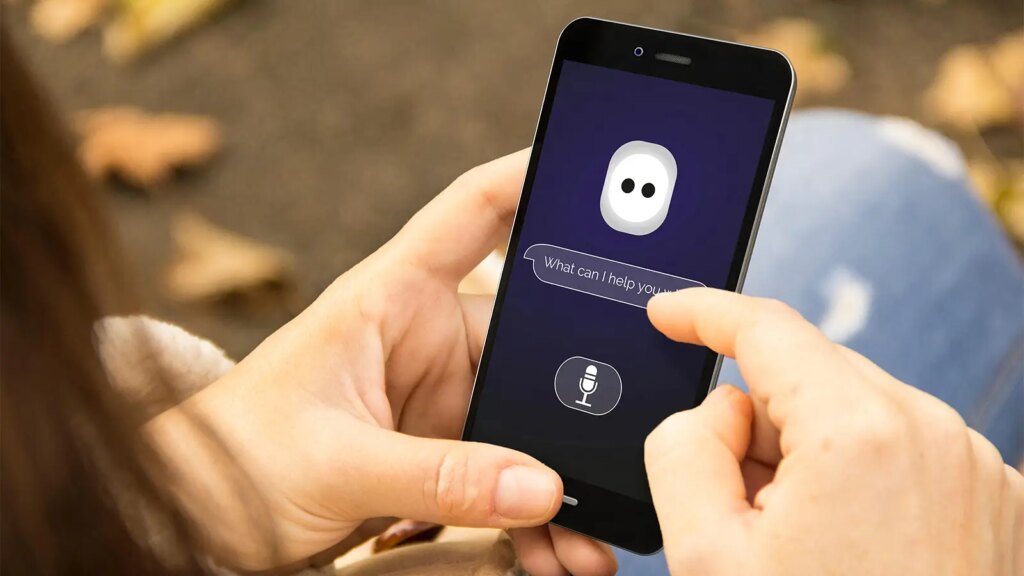
The AI group interacted with a platform that delivered tailored psychological support through natural language conversations. Daily exchanges included reflective prompts, stress-regulation and emotion-regulation exercises, breathing practices, and motivational messages to reinforce coping and self-awareness.
Group therapy participants attended 12 weekly 90-minute sessions run by licensed psychologists. Sessions involved roughly 20 participants and covered psychoeducation on depression, anxiety, and trauma-related stress reactions, alongside cognitive restructuring, behavioral activation, acceptance-based strategies for difficult emotions, mindfulness practices, relaxation and breathing techniques, and reflective writing.
Overall, 61% of participants remained active through week 12. Minor transient increases in emotional distress were reported by four participants in the AI group and five participants in the group therapy arm.
Perceived therapeutic alliance with the AI platform was significantly tied to engagement and symptom improvement. The AI tool and human therapists received comparable warmth and professionalism ratings.
At 3 months, attrition was 35%. Anxiety and depression scores remained lower in the AI group, and their life satisfaction and well-being scores remained higher.
Outcomes were self-reported, which may have introduced bias, the researchers acknowledged. Attrition at 3 months was “substantial,” they added, which may affect longer-term estimates.
Please enable JavaScript to view the comments powered by Disqus.
Source link : https://www.medpagetoday.com/psychiatry/generalpsychiatry/120813
Author :
Publish date : 2026-04-16 16:32:00
Copyright for syndicated content belongs to the linked Source.