Platzspitz is a small park located behind the Hauptbahnhof, Zurich’s buzzing central train station, and the imposing Swiss National Museum. Today, it’s quiet and secluded, a small green where families picnic and tour groups reconvene. But in the mid-1980s, Platzspitz was a disaster.
In response to increased heroin traffic from Lebanese and Turkish cartels, the Swiss government passed a law in 1975 that increased punishment for drug use and possession. That did little to stop heroin’s spread, however, and by the early 1980s, Platzspitz was reborn as “Needle Park,” and home to Zurich’s burgeoning heroin scene.
At first, Zurich didn’t seem bothered. The Swiss have a strong “out of sight, out of mind” mentality, and Needle Park was relatively quiet. Drug use was confined to the green, which was regularly patrolled by police.
But the situation quickly spiraled out of control. Within months, hundreds of people lived in Platzspitz, and over a thousand more visited each day. The park was riddled with violence, prostitution, and crime.
Then came AIDS. By the mid-1980s, pushed by shared needles and unprotected sex, almost a third of the heroin users living in Needle Park were HIV-positive, along with almost a quarter of Swiss heroin users nationwide.
Something had to be done. In 1985, André Seidenberg, MD, told federal officials he would disobey the 1975 law, which also forbade syringe possession. By 1986, Seidenberg was distributing clean needles from a parked bus to halt the spread of HIV.
By 1988, that system grew into ZIPP-Aids (Zurich Intervention Pilot Program-AIDS). In the Platzspitz public restroom, doctors distributed clean needles and condoms, provided rudimentary medical care, and responded to over 6,700 overdoses.
But it wasn’t enough. As Platzspitz’s population grew, so did its problems. In 1992, thousands of users moved to the abandoned Letten railway station, where the drug scene grew and HIV transmissions increased.
Seidenberg believed Switzerland needed a different response. In 1990, he and Robert Hämmig, MD, a psychiatrist in Bern, delivered “Perspectives for a New Drug Policy” to the federal Office of Public Health. They suggested a coordinated approach, one that combined law enforcement and harm reduction with prevention and treatment to reduce the total damage of the drug scene.
Their new “four-pillar approach” quickly took hold. While police controlled illicit drug use, harm reduction programs were expanded to include needle exchanges and supervised consumption sites. Meanwhile, prevention programs were instituted to decrease the number of new users, and treatment efforts medicalized heroin addiction, usually with methadone.
By 1993, there were over 150 low-threshold clinics across Switzerland, which partnered with city and cantonal services to offer methadone, medical care, and social services. For those who didn’t tolerate methadone, heroin-assisted treatment programs opened in 17 cities where patients could access medical-grade noncommercial heroin, distributed in clinical settings for free.
It worked. In the three decades since Switzerland enacted its “four-pillar approach,” Zurich has returned to its famously peaceful state. The country now experiences fewer than 200 overdose deaths a year, and only 0.2% of the population is infected with HIV. The Swiss heroin problem has “basically been solved,” said Thilo Beck, MD. “Addiction is a fundamentally livable disease.”
In June 2023, I traveled to Switzerland to see how its “four pillar approach” held up 30 years later. What I found was a pragmatic, public health-centered system that allowed the “children of Platzspitz” to survive into old age. Compared to the U.S., which experienced over 54,000 opioid overdoses in 2024, it is a remarkable sight.
The country’s largest clinic is ARUD (Arbeitsgemeinschaft für Risikoarmen Umgang mit Drogen, or Working Group for Low-Risk Drug Use), which Seidenberg helped open in Zurich in 1992. There, over 1,500 clients receive a daily form of opioid agonist treatment (OAT), with methadone, buprenorphine, long-acting morphine, or heroin. Most clients earn 7 days of take-home doses within a week, and as clients are stabilized, doctors and psychiatrists work on their other issues. The clinic now distributes psychiatric medications alongside OAT and provides basic medical care.
Clinics like ARUD are located across the country, treating all of Switzerland’s behavioral and substance use disorders, from addictions to cocaine and prescription pills to gambling and sex addictions. For those outside major cities, medications can be picked up from local pharmacies.
To control continued illicit drug use, Switzerland has instituted numerous K&As, or Kontakt- und Anlaufstellen, centers nationwide. K&As are zones of decriminalization, where drug use and sales are tolerated under strict controls. A K&A I visited in Basel featured supervised consumption zones, a small cafe, and regular visits from doctors and social workers to usher users toward recovery, housing, and food assistance. For many, it is their primary interaction with mainstream healthcare.
Access to these services is widely available because everyone is insured. A 1994 federal law mandated every Swiss resident have health insurance, and a private, non-profit insurance system was erected to provide universal coverage. For those without private insurance, they’re usually covered by cantonal welfare.
Switzerland’s about-face on drug policy, from zero tolerance in 1975 to the authorization of research into heroin-assisted treatment in 1992, was extremely controversial, especially for a right-leaning country that struggles with integrating immigrants and didn’t let women vote in federal elections until 1971. Critics feared it would lead to legalizing all drugs, which Switzerland has not done, or that it over-medicalized the problem, making heroin less intriguing.
But it also has been very successful. Treatment, prevention, harm reduction, and law enforcement together achieved what, individually, no component could do alone. Unlike in the U.S., where addiction treatment services often exist outside traditional healthcare and many programs operate on a for-profit basis, Switzerland solved its opioid crisis with a noncommercial, nonprofit, public health-oriented approach that emphasizes client and community health. Our respective overdose death rates speak for themselves.
“That’s the key to actually solving the problems of addiction and restoring social order and public health,” Seidenberg said. “You can’t fight it or eradicate or profit off it. You have to integrate it.”
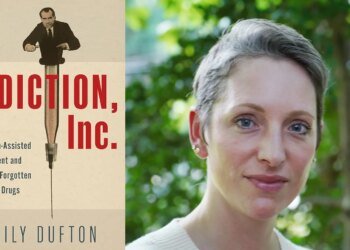
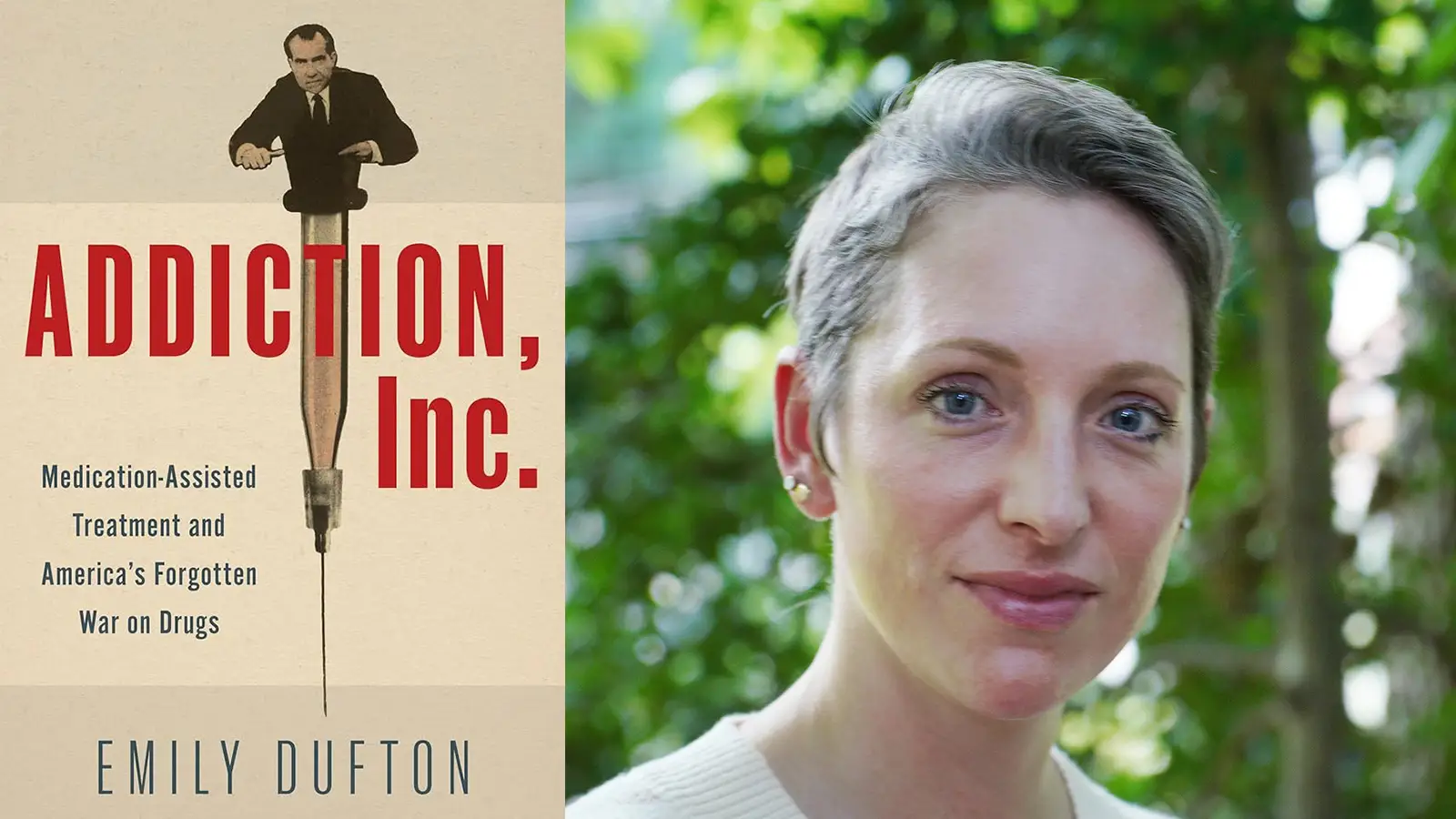
Emily Dufton is a writer and historian. Her latest book is, “Addiction, Inc.: Medication-Assisted Treatment and America’s Forgotten War on Drugs,” from which this piece was adapted and excerpted. © 2026 by Emily Dufton. Published by the University of Chicago Press. All rights reserved. Reprinted with permission.
Source link : https://www.medpagetoday.com/opinion/second-opinions/120767
Author :
Publish date : 2026-04-13 17:41:00
Copyright for syndicated content belongs to the linked Source.