
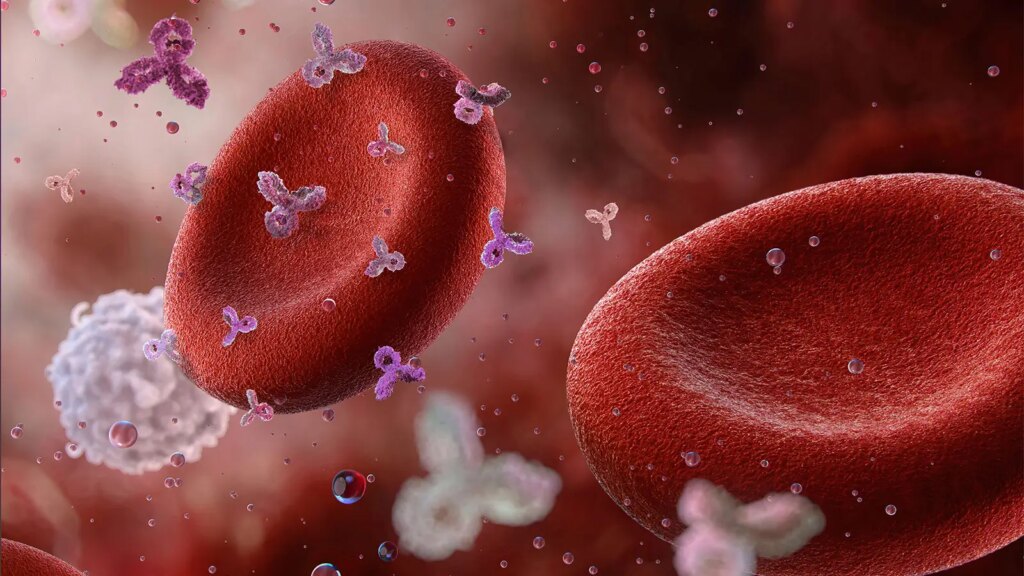
- The anti-CD38 monoclonal antibody mezagitamab had similar safety to placebo in patients with persistent or chronic immune thrombocytopenia.
- The drug also significantly increased platelet counts, a key secondary efficacy endpoint.
- Platelet response with mezagitamab was rapid — a mean of 4 days among patients who responded, and as fast as 2 days.
Treatment with the investigational anti-CD38 monoclonal antibody mezagitamab was safe and significantly increased platelet counts in patients with persistent or chronic immune thrombocytopenia (ITP), a phase II randomized trial showed.
Adverse events were reported in 68% of patients who received one of three doses of mezagitamab versus 69% of those who received placebo, while 18% and 23% had grade ≥3 adverse events and 14% and 8% had serious adverse events, respectively, reported David J. Kuter, MD, of Massachusetts General Hospital and Harvard Medical School in Boston, and colleagues in the New England Journal of Medicine.
“This drug was, quite surprisingly, devoid of any severe side effects — the same as placebo,” Kuter told MedPage Today.
Importantly, the incidence of infection-related adverse events — which Kuter noted is a concern with any immunomodulatory technique — was similar between the mezagitamab and placebo groups.
Looking at the key secondary efficacy endpoint, a platelet response was observed in 91% of patients treated with mezagitamab at the highest dose (600 mg) compared with 23% of patients who received placebo through week 16.
Primary ITP is an autoimmune disease characterized by a decreased platelet count and a subsequent increased risk of bleeding that can be severe and life-threatening. While about 80% of patients have disease well controlled by current therapies, the remaining 20% have no effective options, Kuter said. “So, there is an unmet medical need in ITP for better therapies.”
Mezagitamab is a fully human IgG1 monoclonal antibody that targets CD38, which is highly expressed on the surface of plasma cells. Kuter and his colleagues pointed out that anti-CD38 therapy is commonly used for the treatment of multiple myeloma, and has shown promise in treating autoimmune diseases.
This trial was conducted from November 2020 through April 2024 and included a total of 41 participants across 24 sites in Bulgaria, China, Croatia, Greece, Italy, Japan, Slovenia, Spain, and Ukraine.
Kuter and team assessed the safety and efficacy of mezagitamab at doses of 100 mg, 300 mg, or 600 mg, administered subcutaneously once weekly for 8 weeks in adults with persistent or chronic ITP (mean platelet count on ≥2 measurements of <30,000/μL).
Eligible participants were at least 18 years of age and had primary ITP that had persisted for at least 3 months. Patients who received mezagitamab had a mean age of 50 years, with a mean of four previous ITP therapies, while patients who received placebo had a mean age of 39 years and a mean of four previous ITP therapies. Mean baseline platelet count was 19,100 and 17,300/μL, respectively.
A platelet response was defined by a platelet count of at least 50,000/μL and at least 20,000/μL above the baseline value on at least two visits at any time through week 16. A complete platelet response was defined by a platelet count of at least 100,000/μL on at least two visits at any time through week 16. Of the 11 patients who received mezagitamab 600 mg, 9 achieved a complete response compared with no patients in the placebo group.
The mean change from baseline in the platelet count was higher in each of the mezagitamab groups than with placebo at all time points, with the platelet response beginning as early as 2 days after the first dose of mezagitamab, and a median response time of 4 days — a result Kuter called “striking.”
Given that immunoglobulin G (IgG) antibodies typically have a half-life of about 28 days, “this early platelet response was faster than could be explained by a reduction in antiplatelet antibodies through depletion of plasma cells,” the authors noted.
“What we think is happening here is that we’ve identified a novel mechanism of ITP, which is targeting NK [natural killer] cells,” Kuter said. The rapid platelet response may be because mezagitamab targets CD38 on NK cells, “which may have ramifications for a wide variety of other autoimmune diseases,” he added.
While not a formal endpoint, Kuter and colleagues also evaluated quality of life, and found that participants who received mezagitamab appeared to have a broad improvement in all quality-of-life measures.
“What’s important to note is that the quality of life of the patients is quite diminished in ITP, comparable to having diabetes or rheumatoid arthritis,” Kuter explained. “What’s striking about this drug is that it showed the quality of life on all 11 parameters increased dramatically in those who got active drug. So not only do people get better in terms of numbers, they felt better.”
The authors acknowledged that the size of the trial was too small for formal hypothesis testing of efficacy, as well as safety, and that the results need to be confirmed in a larger phase III trial, which began in February 2025.
Please enable JavaScript to view the comments powered by Disqus.
Source link : https://www.medpagetoday.com/hematologyoncology/othercancers/120700
Author :
Publish date : 2026-04-08 21:00:00
Copyright for syndicated content belongs to the linked Source.