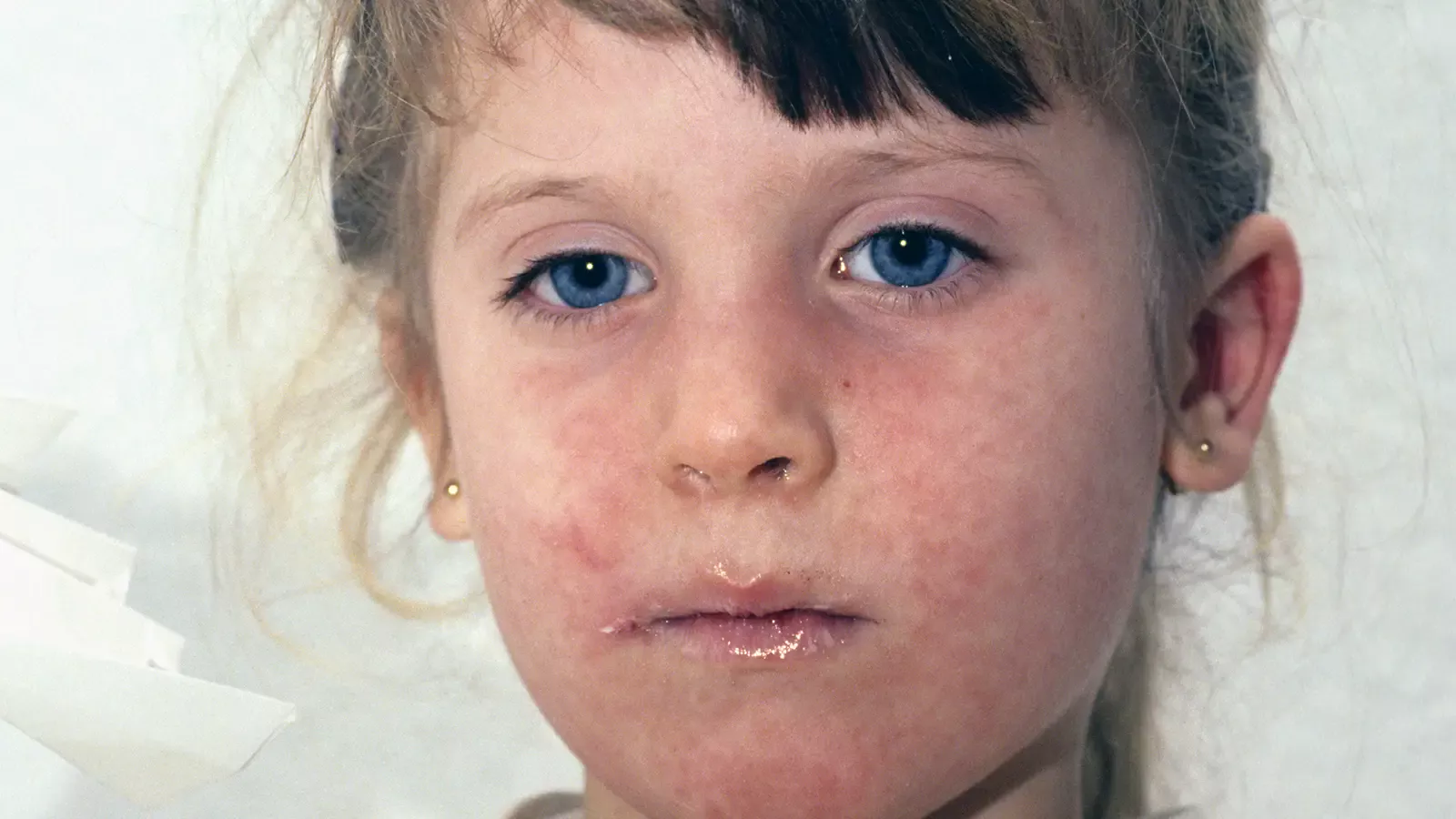
U.S. measles cases have topped 1,000 just 2 months into 2026, and outbreaks persist in a number of states, namely South Carolina and Arizona/Utah.
“It is very concerning to see more than 1,000 cases in the U.S. this early in the year,” Martha Edwards, MD, president of the South Carolina Chapter of the American Academy of Pediatrics, told MedPage Today. “Already, we have more than half the number of cases seen in all of 2025, and the number of cases in 2025 was one of the highest annual case counts seen in decades.”
“As people continue to believe inaccurate information about vaccines, and as non-medical exemption rates continue to rise throughout the country, we can expect case counts to continue to rise, threatening children and immunocompromised individuals with a disease that was nearly eliminated in our country through vaccination,” she added.
To date, South Carolina alone has nearly 1,000 cases in its ongoing outbreak that began last October, which has largely occurred in Spartanburg County.
“It is always concerning to see an increase in vaccine-preventable diseases in our communities,” noted Linda Bell, MD, South Carolina’s state epidemiologist and the Department of Public Health’s incident commander for the measles outbreak. “However, with a decrease in overall vaccination rates for diseases like measles, there are likely to be increasing numbers of these outbreaks in the future. This is especially true in areas where larger groups of unvaccinated individuals reside, as has been the case in Spartanburg County.”
Bell told MedPage Today that the primary challenge in the response to the current outbreak is the “initial low vaccination coverage and vaccine hesitancy in a pocket of our population,” adding that a “much more significant increase in vaccination is needed to achieve the 95% coverage for adequate herd immunity to prevent community spread.”
Edwards pointed to the growing mistrust of vaccines following COVID-19 vaccine mandates and misinformation about vaccines as factors that have made it difficult to quell the current outbreak.
Strong statements urging vaccination from state leaders are needed, she said, as is data sharing on measles hospitalizations and complications, like pneumonia and encephalitis, across health systems.
The Arizona/Utah outbreak has been running since August 2025. In Utah, measles cases have surpassed 300, and in Arizona, they’ve surpassed 250. Similar to South Carolina, the majority of cases in Arizona are in one county — Mohave County — which has a lower vaccination rate, while most of Utah’s cases are in its southwestern region.
“But we are also a state that has a lower vaccination rate than the nation,” Nicole Witt, MPH, assistant director of preparedness at the Arizona Department of Health Services, told MedPage Today. The vaccination rate for kindergarten entry is around 88%, “which is much lower than the 95% that we want to be at,” she explained.
“Certainly, it’s concerning as we continue to see a high number of cases,” Witt said. “In our state, it’s the highest number of cases of measles we have seen in 30 years. And with a low vaccination rate, we know that’s likely to continue. The disease is very infectious, and it has an opportunity to spread where there is a lower coverage rate for MMR [measles, mumps, and rubella].”
Experts agreed that there is work that can be done to thwart further spread.
Witt said healthcare providers should consider access to and opportunity for vaccination when seeing patients.
Edwards highlighted the need for “accurate information about the dangers of measles virus and the complications that can ensue, in addition to communicating the safety and efficacy of the measles vaccine.”
“Raising the bar to obtain non-medical exemptions for vaccines and requiring families to gain accurate information about the dangers of vaccine-preventable illnesses and the importance of vaccines would be a huge benefit in helping to raise vaccination rates in South Carolina and the rest of the country,” she added. “We would love to see a requirement for parents to come in person to the health department, watch a video on vaccine-preventable illnesses, and have a conversation with a healthcare professional before they choose non-medical exemptions.”
Source link : https://www.medpagetoday.com/pediatrics/generalpediatrics/120027
Author :
Publish date : 2026-02-24 21:59:00
Copyright for syndicated content belongs to the linked Source.