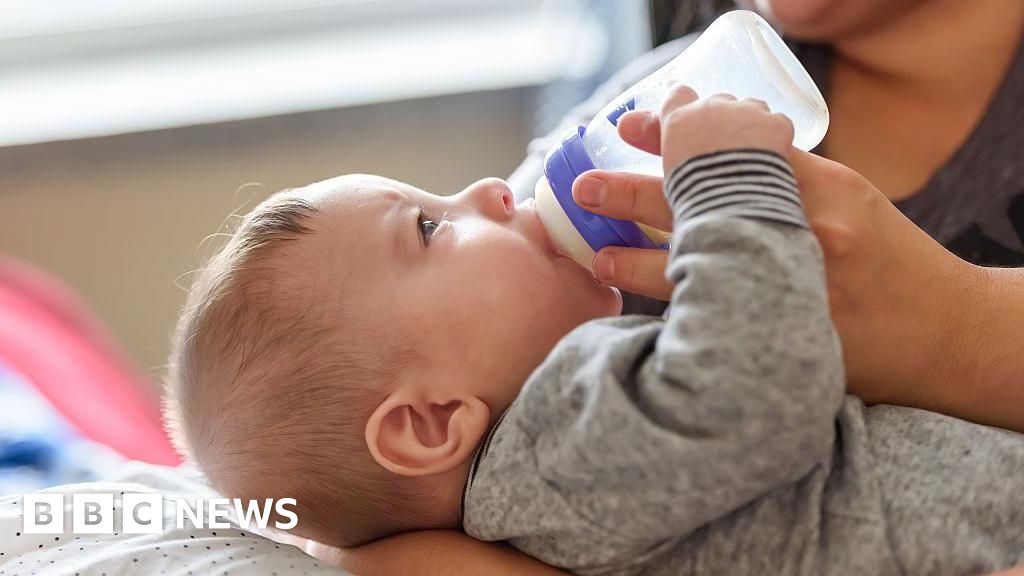
Parents will be able to buy infant formula in supermarkets using loyalty points and vouchers under a government plan to make baby milk more affordable.
The price of infant formula has increased dramatically in recent years, with a standard tin costing between £12 and £15.
The scheme is aimed at giving families confidence to choose cheaper options, which the government and the consumer watchdog estimate could save those who cannot or choose not to breastfeed up to £500 a year.
Charities were concerned that lower income families were watering down formula or struggling to pay for other essentials because it was too expensive.
Under the new measures, parents will be given clearer guidance on the nutritional standards, which need to be met by all formula sold in the UK, and encourage retailers to provide the same.
Some retailers had previously highlighted that rules prohibiting the direct or indirect advertising of infant formula made it impossible for them to discount it, and were unsure if people could use loyalty schemes to buy their milk.
Currently the baby formula market is regulated so that promotions, such as loyalty points or discounts, are banned in the same way they are for tobacco and lottery tickets.
This is to encourage breastfeeding, which the NHS says is healthier for children. But in its interim report in February, the CMA warned it also stopped companies from competing on price, which unintentionally left consumers paying more.
In that report, the CMA also noted the difference in prices between brands was so stark that in some cases families could save about £540 over a year by choosing a cheaper version of a formula.
Just three companies make up about 90% of the infant formula market: Danone, Kendal, and Nestle.
The Competition and Markets Authority (CMA) looked at the sector earlier in the year, and recommended that it should be made much clearer to parents that all products on the shelves meet nutritional standards, so families were not pressured into buying higher cost brands for fear of making sure their baby got the best start.
Announcing the changes in Prime Minister’s Questions on Wednesday, Sir Keir Starmer said parents had for too long “been pushed into spending more on infant formula than needed”.
“We will take action to give parents and carers the confidence to access infant formula at more affordable prices… with clearer guidance for retailers and by helping new parents use loyalty points and vouchers,” he said.
He was later ticked off by speaker Sir Lindsay Hoyle for making a policy announcement at PMQs.
Health Secretary Wes Streeting said it was “not right” that manufacturers had been able to package their products in ways that took advantage of new parents who are concerned about what is best for their baby.
“These new measures mean parents will have confidence in the formula they are buying, no matter the price, and can now make the most of supermarket loyalty schemes too,” he said.
Shereen Fisher, director of the Baby Friendly Initiative at UNICEF, welcomed the move saying infant formula was “a basic necessity”.
“For too long, families have faced inflated prices for this essential product. The CMA has shown that many formulas are vastly overpriced, with many families struggling as a result,” she said.
“Today’s announcement signals the first step to tackle these issues, improve affordability and strengthen infant feeding support.”
Andrea Martinez-Inchausti, assistant director of food at the British Retail Consortium (BRC), said the government’s proposed next steps were sensible.
“We look forward to working through the detail with them to implement the necessary changes.”
Other recommendations from the CMA, which the government has agreed to adopt in principle, include ensuring all infant formula is displayed together, separate from other formula milks, and to clarify what counts as advertising.
The government said further action was needed on other recommendations, including the prohibition of non-verifiable messages on infant and follow-on formula labels, and extending the restriction on advertising for follow-on formula.
A CMA spokesperson said the watchdog was ready to support governments and agencies across the UK in either implementing its recommendations or advising on measures that remained under consideration.
The authorities in all four devolved nations have agreed to the government’s response.
Source link : https://www.bbc.com/news/articles/clyx321ded1o?at_medium=RSS&at_campaign=rss
Author :
Publish date : 2025-12-03 17:11:00
Copyright for syndicated content belongs to the linked Source.