Researchers studied how zebra finches’ eyes work
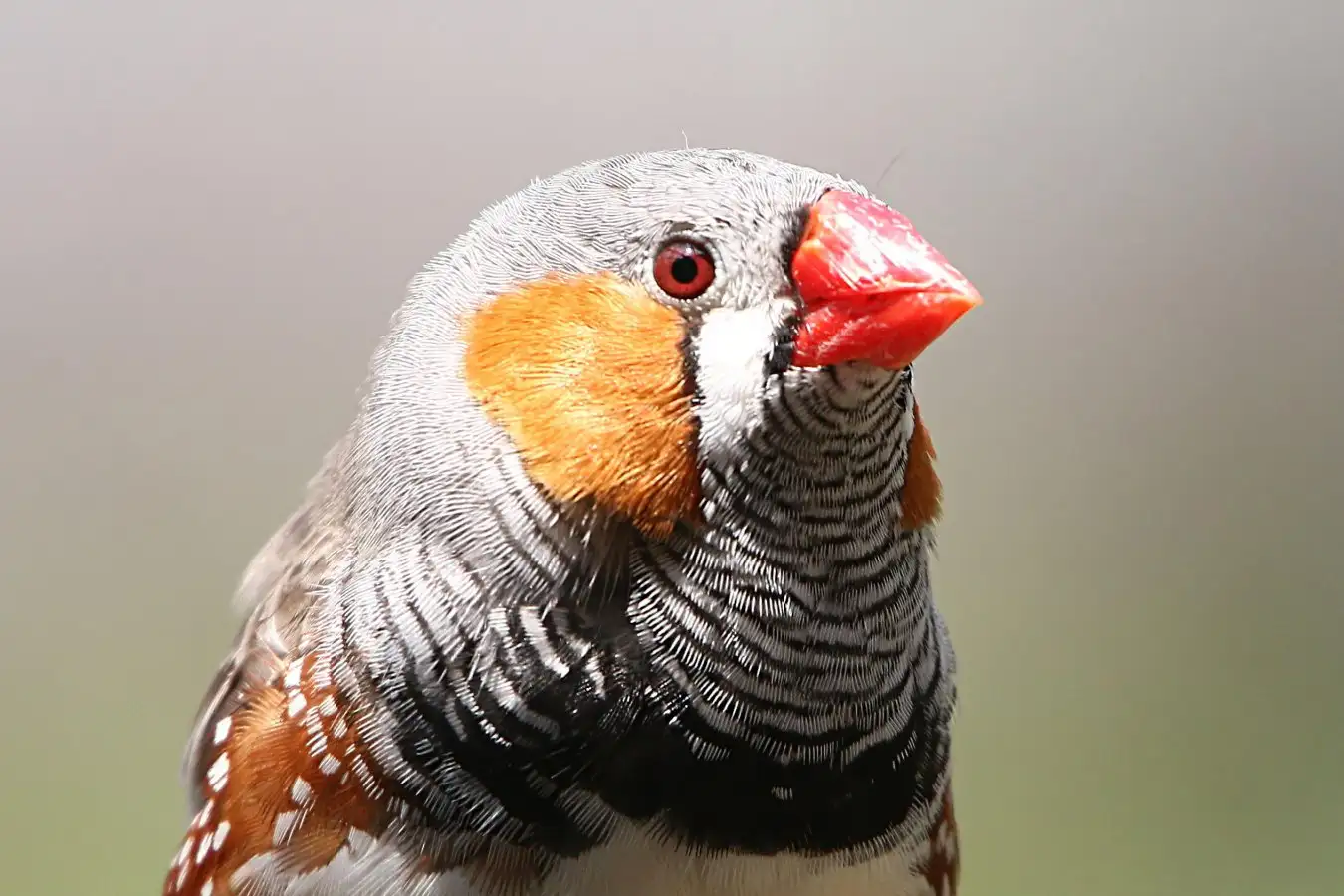
Ger Bosma/Alamy
A crucial part of birds’ eyes is unlike any tissue known in vertebrate animals. Their retina – the light-sensitive layer at the back of the eye – sidesteps the near-universal need for oxygen by vacuuming up heaps of energy-rich sugar instead.
The discovery solves a 400-year-old mystery about the physiology of birds’ eyes. It is also a neurobiological paradigm shift, says Christian Damsgaard at Aarhus University in Denmark.
“We have the first evidence that some neurons can work without any oxygen, and they’re found in the birds that fly around in our gardens,” he says.
Retinas detect light and relay this information as nerve signals to the brain. The tissues require a lot of energy and are sustained by oxygen and nutrients coursing through a mesh of blood vessels. But bird retinas are extremely thick, and no vessels weave into the tissue. It was a mystery how their retinas received enough oxygen to keep the deep stacks of important nerve cells alive.
Damsgaard and his colleagues studied zebra finches (Taeniopygia guttata) in the lab to find an answer. The team put tiny oxygen sensors in the finches’ eyes and found that the inner layers of the retina weren’t getting oxygen at all.
“They get oxygen from the back of the eye, but it cannot diffuse all the way through the retina,” says Damsgaard.
The team measured the activity of metabolic genes in different parts of the retina. This showed that the oxygen-free areas were heavily using glycolysis, a process that can break down sugars without oxygen. However, it is a much less efficient option.
“You need 15 times more glucose to generate the same amount of energy,” says Damsgaard. So, how was the retina getting that much sugar?
Enter the pecten oculi, a rake-shaped collection of blood vessels found in birds’ eyes. The pecten was discovered centuries ago, and researchers had speculated that it piped in oxygen. But the team’s readings ruled that out. Instead, they discovered the pecten was practically soaking the retina in glucose – four times more than what brain cells suck up – to fuel its ravenous glycolysis engine.
Luke Tyrrell at the State University of New York at Plattsburgh is surprised that birds would evolve to rely on such an inefficient process for their vision. “The retina – especially a bird retina – is one of the most energy-needy tissues in all of the animal kingdom,” he says.
The thick, blood vessel-free retinas may have adapted to enhance birds’ visual acuity, making the pecten sugar pump worth the evolutionary hassle. The oxygen-free retina may have also set the stage for some birds to evolve high-altitude migration flights, with their vision unaffected by low oxygen levels.
For Pavel Němec at Charles University in Prague, Czech Republic, the findings are a “clear case that reminds us that evolution brings very counterintuitive solutions” to physical hurdles.
Damsgaard and his team wonder if human cells could eventually be modified to be more tolerant of harmful oxygen-free conditions, such as in the aftermath of a stroke.
Topics:
Source link : https://www.newscientist.com/article/2512692-bird-retinas-work-without-oxygen-and-now-scientists-know-how/?utm_campaign=RSS%7CNSNS&utm_source=NSNS&utm_medium=RSS&utm_content=home
Author :
Publish date : 2026-01-21 16:00:00
Copyright for syndicated content belongs to the linked Source.