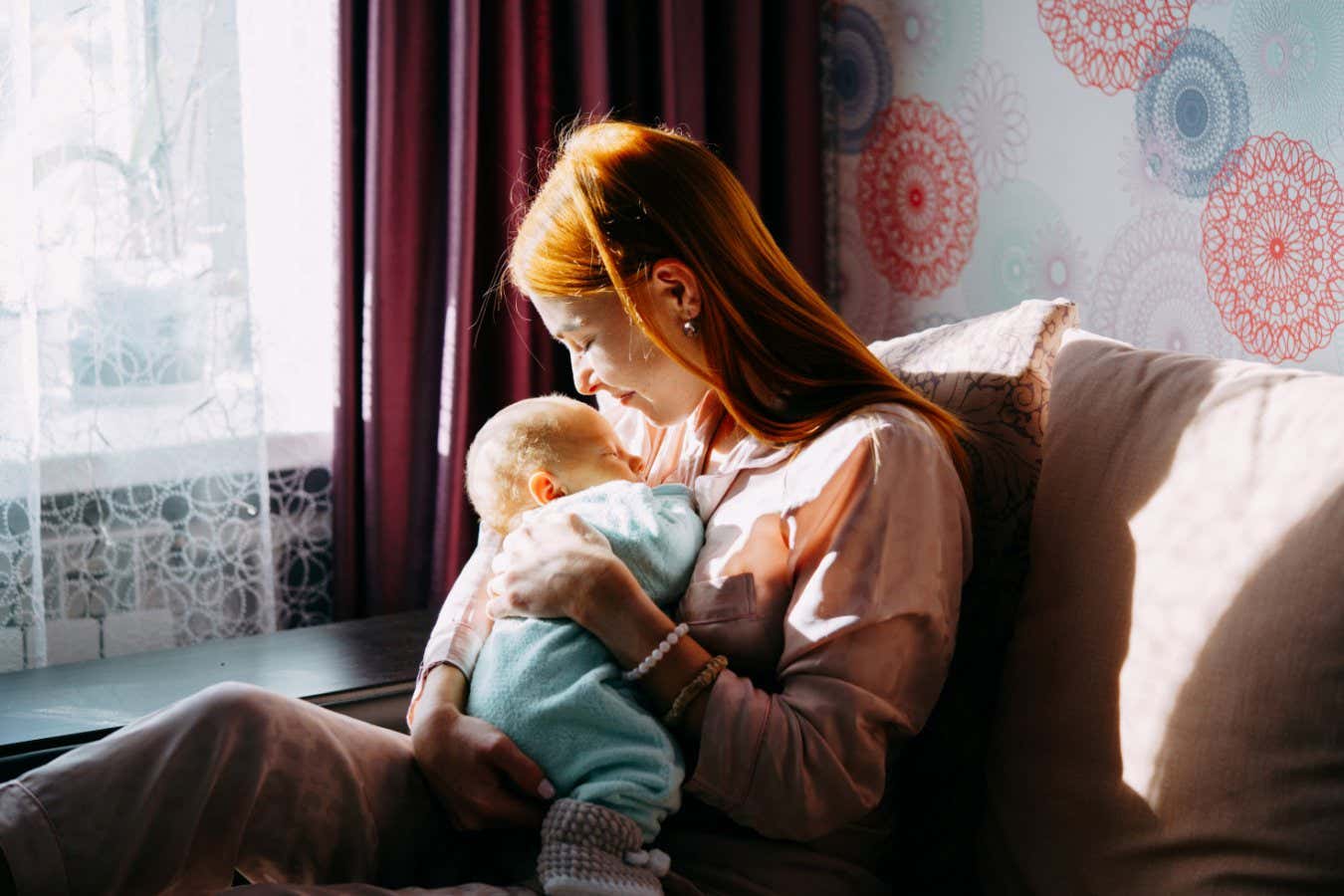
Immune-related changes take place in the breasts after breastfeeding
Svetlana Repnitskaya/Getty Images
Breastfeeding has long been linked to a reduced risk of breast cancer, but how it has this effect isn’t entirely clear. Now, scientists have found that women who have breastfed have more specialised immune cells in their breasts, which may keep malignant ones in check.
Previous research suggests that the risk of breast cancer – the second most common form of cancer in the world – is reduced by 4.3 per cent for every one year of breastfeeding, with the protective effects perhaps particularly benefitting older mothers.
The reasons why aren’t fully understood, but changes to breast tissue and hormonal exposures are thought to be involved. To learn more, Sherene Loi at the Peter MacCullum Cancer Centre in Victoria, Australia, and her colleagues analysed breast tissue from 260 women, aged between 20 and 70, of a diverse range of ethnicities. The women varied in the number of children they had, if any, and if they reported having breastfed, but none had ever been diagnosed with breast cancer.
“We found that women who have breastfed have more specialised immune cells, called CD8+ T cells, that live in the breast tissue for decades after childbirth,” says Loi. “These cells act like local guards, ready to attack abnormal cells that might turn into cancer.” In some cases, these cells stayed in the breasts for up to 50 years.
The team then looked at mice, some of which had completed a full cycle of pregnancy, lactation and mammary recovery during pup weaning. Their breast tissue was analysed 28 days later, when their mammary glands had returned to a pre-pregnancy state. Other mice had their pups removed shortly after birth or had never been pregnant.
The researchers found that completing a full cycle of lactation was linked to a significant increase in specialised T cells accumulating in mammary tissue, which didn’t occur among the other mice. They then implanted triple-negative breast cancer cells, an aggressive form of the condition, into their mammary tissue and found that mice that had experienced a full cycle of lactation had far slower tumour growth. But when the researchers depleted these T cells, the tumours grew very quickly.
Next, the researchers studied clinical data from more than 1000 women who had been diagnosed with triple-negative breast cancer after at least one full-term pregnancy. They found that those who reported having breastfed had tumours with higher CD8+ T cell density. “This suggests there was ongoing immune activation and regulation from the body against their breast cancer,” says Loi.
After adjusting for other risk factors linked to breast cancer-related deaths, such as age, the researchers found that the women who breastfed exhibited significantly longer overall survival. The data was too variable to untangle whether the time spent breastfeeding had an effect.
The researchers think T cells accumulate in the breasts during breastfeeding to prevent infections that may lead to mastitis. There is also a link between pregnancy and breast cancer, but it is more complex, with research suggesting the risk is only reduced if pregnant at a younger age.
“This has important implications for understanding why some women may be more naturally protected against aggressive forms of breast cancer, and also how we might tailor prevention or treatment strategies in the future,” says Loi. But she stresses the decision of whether to breastfeed is an individual’s choice and isn’t always possible, and it may not prevent breast cancer from developing.
Daniel Gray at the Walter and Eliza Hall Institute of Medical Research in Victoria says the analysis of multiple groups of women is one of the study’s strengths. “It lays the foundation for future work that might explain how the CD8+ T cells retain a ‘memory’ of breastfeeding,” he says.
Topics:
Source link : https://www.newscientist.com/article/2500663-breastfeeding-causes-a-surge-in-immune-cells-that-could-prevent-cancer/?utm_campaign=RSS%7CNSNS&utm_source=NSNS&utm_medium=RSS&utm_content=home
Author :
Publish date : 2025-10-20 16:00:00
Copyright for syndicated content belongs to the linked Source.