

[ad_1]

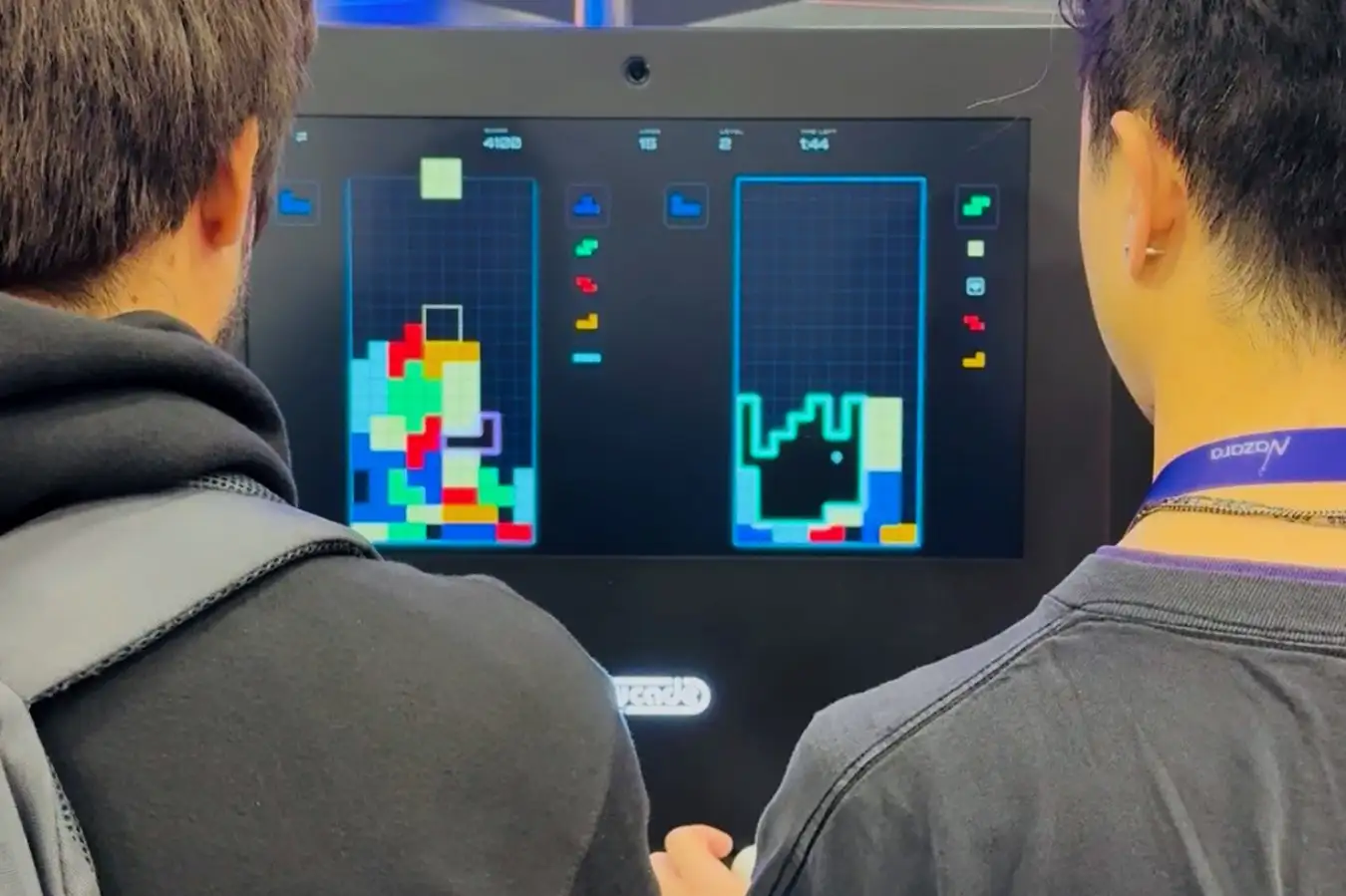
Quantris is a quantum spin on a classic game
Quantum Native
The blocks keep falling. A pale yellow square awkwardly lands on a green block shaped like the letter “z”. Next to them stands a pillar made of smaller turquoise blocks. We’ve all seen Tetris, you can probably picture it. But there is a strange block nearby, its white border seemingly confining only empty space. From the game’s instructions I know this shape is in a quantum state of superposition, an odd mix of existing and not existing in the world on my computer screen. Can this help me? To figure that out, I have to observe it. A tiny black square marked with an eye falls from the video game sky and hits the there-and-not-there block. Having been observed, it blinks into existence, bringing my stack of blocks perilously close to hitting the ceiling. There was an equal chance for the observation to annihilate the block – to find it non-existent after all – but I was unlucky. One more shape lands on the tower and the game is over. I lost at Quantris, the quantum version of Tetris. Even quantum mechanics couldn’t save me from being bad at video games.
I’m new to quantum video games, but they have a long history. While quantum physics and related phenomena were referenced in video games as early as the 1980s, we saw a real jump in the number of games based on the laws of quantum mechanics or made with quantum devices only after quantum computers became accessible through the cloud in 2016. After that, tools like IBM’s quantum software development kit gained traction, says Laura Piispanen at Aalto University in Finland, who researches quantum games. She currently estimates the number of quantum games to be close to 400, many of which were developed during weekend-long Quantum Game Jam events that have been running since 2014.
One of her favorites, called Qubit the Barbarian after the famous sword-and-sorcery film, captures the spirit of early quantum games with a decidedly vintage design. In it, a player traverses a maze made of tiles that correspond to quantum states. The player can leverage the laws of quantum mechanics: measuring the properties of a quantum state changes a tile, either to clear new paths or build new walls in the maze.
There is a robust community of researchers and gamers that believe quantum video games will have a lasting future. I find the mix fascinating: a new and largely untested technology, an often-counterintuitive branch of physics and the deeply human activity of playing games. What could emerge from this brew? What can quantum computers do for games? And can games do anything for quantum computing?
To be clear, we’re largely not talking about games being played directly on quantum computers. Despite advancing at a rapid pace in recent years, they are still mostly experimental devices, only just now getting computationally powerful and reliable enough to stand a chance of solving otherwise intractable scientific problems. But they are neither universal computing machines nor unambiguously useful yet. In fact, even the best quantum computers in the most rose-tinted version of the future are unlikely to be devices that you would use to run just any program. Instead, researchers think they will excel at only a few specific tasks. Running video games in real time has, so far, not proven to be one of those.
Nevertheless, quantum computing hardware has already been used in video-game development. Earlier this year, Moth Quantum released Quantum Backrooms, a horror game with levels generated by an IBM quantum computer during the development process. It’s a creepy excursion through a landscape of rooms within the universe of Backrooms, an internet phenomenon that centres eerie, liminal spaces and was recently adapted into a critically acclaimed film. James Wootton at Moth Quantum told me that because each room corresponds to the quantum state of a different part of the quantum computer, the whole thing feels a little like being stuck inside of the device. As someone who spends a lot of time thinking about the inner workings of quantum computers, this feeling isn’t foreign to me.
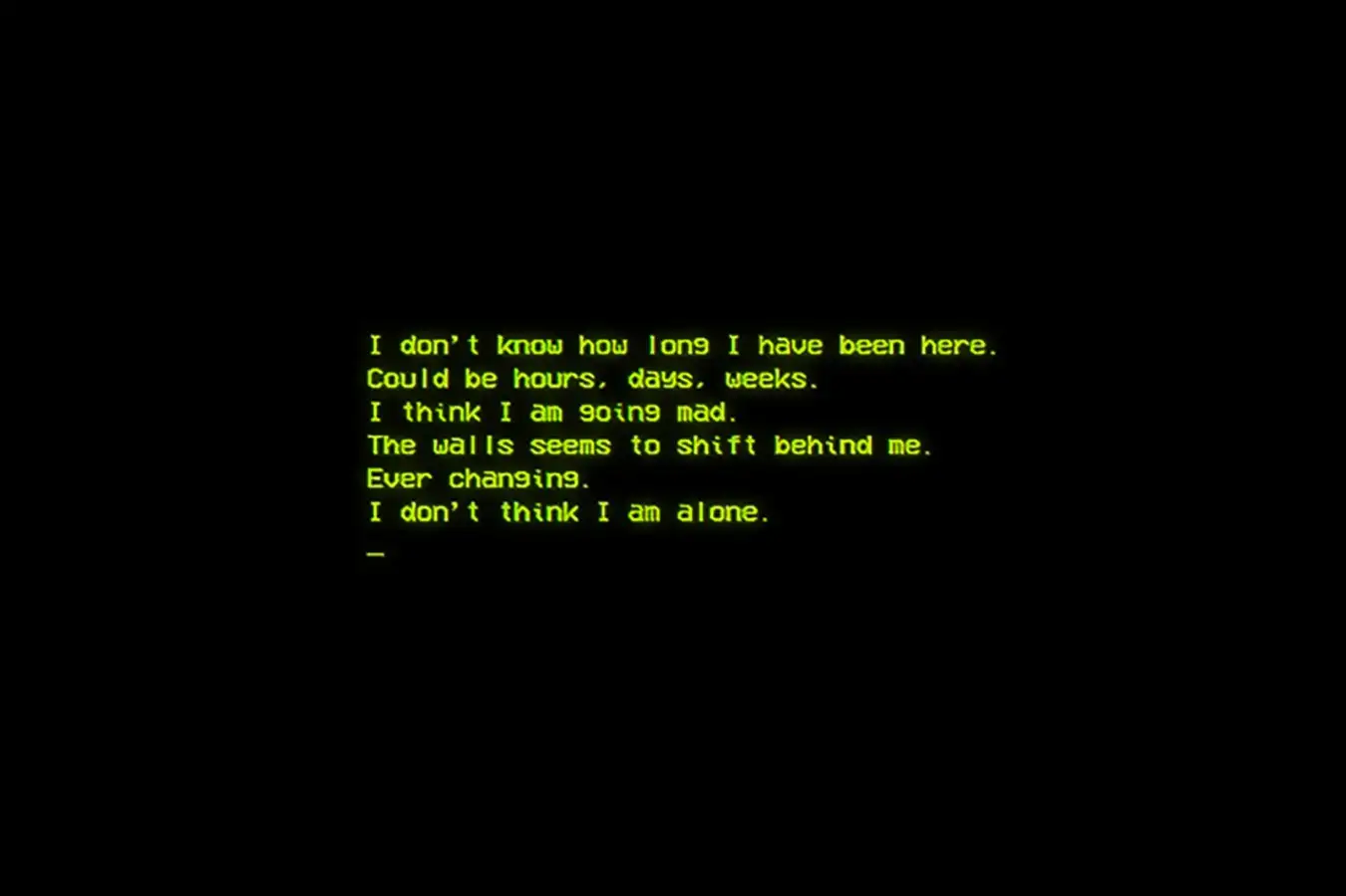
A shot from the video game Quantum Backrooms
Moth
Wondering whether this approach could be more mainstream, I called Julian Togelius at New York University, who studies creativity, video games and artificial intelligence. In some games, he says, the player can interact with the environment locally, without the outcome of their action depending on the rest of the game’s world. Making the world within the game more connected, and realistic, can be challenging, but Togelius says quantum computers could help developers go beyond how that is currently addressed. It boils down to a mathematical problem with many constraints and conditions, which is where quantum computers could potentially be useful. However, Togelius also warned me that this idea is a lot more complex than what has been done in quantum games so far, at least in part because of how imperfect and limited quantum computing hardware still is.
Even in the case of Quantum Backrooms, the use of quantumness is limited to the development of the game. The player encounters quantumness after the quantum computer has been turned off, and a conventional computer has taken over. This doesn’t mean running games directly on quantum computers is impossible – Wootton did so when he coded a quantum version of rock-paper-scissors on one of the earliest IBM quantum computers in 2017 – but for now, many quantum games are actually run on conventional computers that work as simulators of quantum computers.
“Right now, all of my games still run on their own simulators. Hardware is not quite there yet,” says Chris Cantwell at the quantum game company Quantum Native, who developed Quantum Chess and several other games. In 2020, one of Google’s quantum computers ran a few rounds of Quantum Chess, but Cantwell says it required him to completely recode his original program for the game. The key to making a game quantum is to incorporate quantum functions into gameplay, but those ought to be based on the quantumness of hardware. In this way, games may even eventually serve as benchmarks of a quantum computer’s performance says Evert van Nieuwenburg at Leiden University in the Netherlands, who developed Quantum TiqTaqToe, a quantum version of naughts and crosses (or tic-tac-toe if you’re in the US, like me).
Bringing quantum into your living room
Many of these quantum games take hallmarks of quantum physics, such as superposition states and quantum entanglement, and turn them into additional moves a player can make in an otherwise familiar game. A piece in Quantum Chess can be in a superposition of two positions on the chessboard; in TiqTaqToe, a player can entangle pieces. Players don’t need to know the deep meaning of these phenomena to use them, they can simply try them out, says van Nieuwenburg.
Quantum physics is partly counterintuitive to many people when they first encounter it, because their daily lives don’t involve interacting with quantum phenomena. Those are usually reserved for the world of tiny particles and extremely cold objects, but games may be able to change this. “I will never forget this. We went to a science night [at a school] and there was a group of three kids, they were probably six or seven. They were playing TiqTaqToe. I don’t think they really knew exactly what they were doing in the first moment, but then after a minute, one of the kids started yelling, ‘Oh no, you entangled me!’,” van Nieuwenburg recounts with a chuckle. It doesn’t take a whole lot to get kids comfortable with new slang, even if it’s jargon from quantum physics textbooks. “My eight-year-old likes playing Quantum Chess better than chess because he can make more pieces. He doesn’t understand the quantum at all… but his brain is interacting with genuine quantum phenomena,” says Cantwell. On the list of things that games can do for developing quantum technologies, this may be the biggest one – childhood quantum gamers could become quantum-native software developers.


Could quantum chess overtake the popularity of the traditional game?
Shotshop GmbH/Alamy
I thought of my younger brother who has never shown much of an interest in what I was learning in my physics classes but was perennially glued to a gaming console or a computer screen. I bet he could have outdone me in some quantum problem-solving challenge had it only been framed as a way to win in a video game. The opportunities for quantum outreach are fantastic, says Spiros Michalakis at the California Institute of Technology, who worked on Quantris, Quantum Chess and several other games.
Michalakis’s involvement with quantum games started in 2014, when he made a quantum modification for the popular video game Minecraft. This spun out into a whole new area of research. “The thing that I’ve been trying to work on for 12 years plus now is to not just build games that have some quantum backend, but games that somebody wants to play, right? The games that have game mechanics that allow someone to say, ‘Wow, I can make new strategic decisions in the game, with new tools, new weapons, new relationship to enemies’,” he says. This is a much harder problem than generating game levels.
Sometimes you can come up with very clever solutions, such as those that rely on quantum superpositions or entanglement, and the player won’t notice at all, explains Togelius. It’s similar to how if you play a game where the goal is to shoot enemies, it doesn’t matter whether they can recite Shakespeare, he says. The cleverness, quantum or not, must be engaging and useful. “Making a game in itself is kind of easy, but making a game that takes off is super hard,” he says. As of now, he is sceptical about whether quantum computing will be the next big thing in games.
In some sense, this parallels the development of quantum computer programs more generally – the goal is always to leverage uniquely quantum operations to do something that would otherwise be impossible or difficult, while also making sure that you’re doing something of value. This is a daunting task, but with games at least it can also be really fun.
Topics:
[ad_2]
Source link : https://www.newscientist.com/article/2532015-can-video-games-help-us-better-understand-quantum-mechanics/?utm_campaign=RSS%7CNSNS&utm_source=NSNS&utm_medium=RSS&utm_content=home
Author :
Publish date : 2026-06-26 09:00:00
Copyright for syndicated content belongs to the linked Source.