


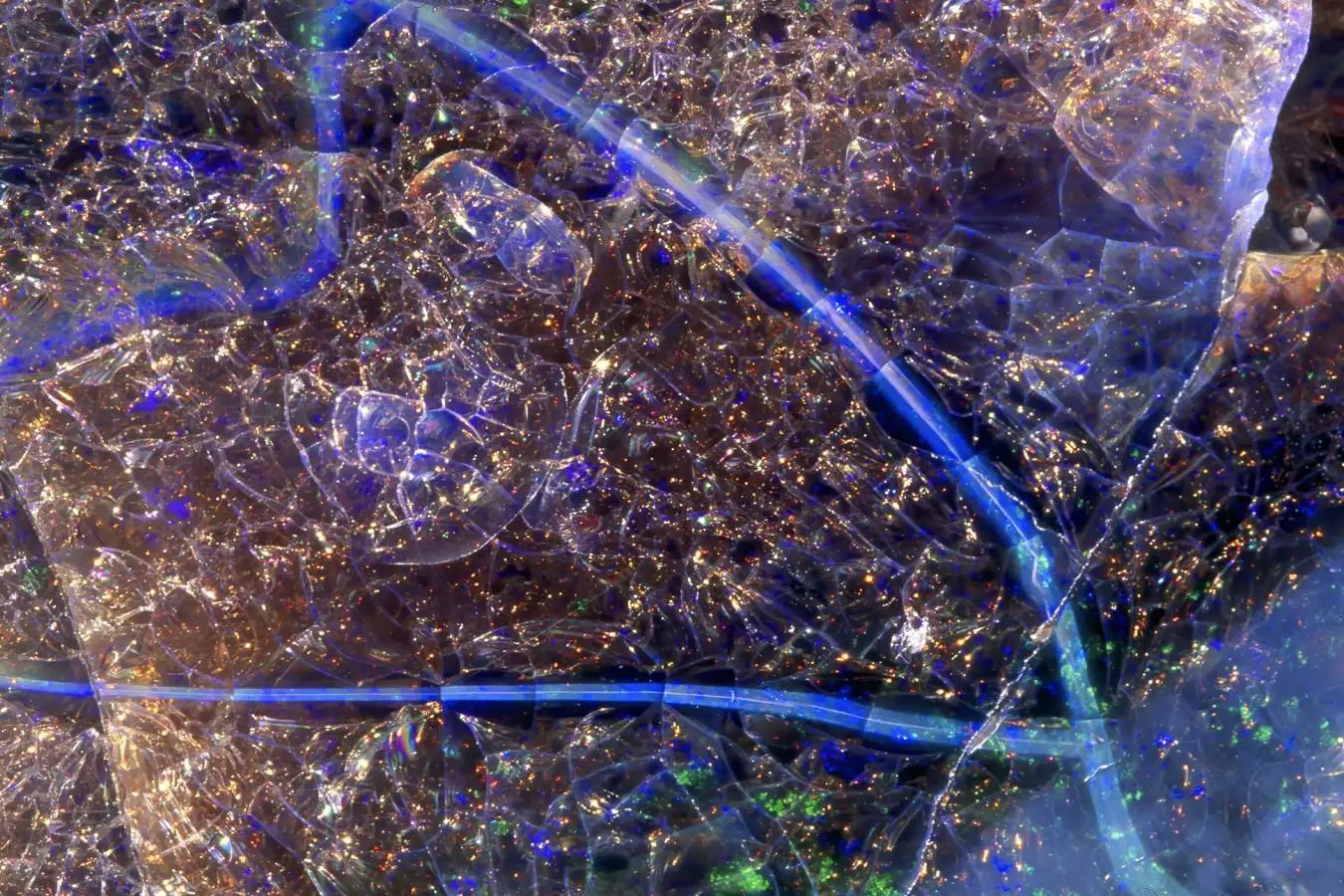
These beautiful, enigmatic images were captured by scientist and photographer Felice Frankel in her everyday life. Before you read further, see if you can tell what they depict – we’ll reveal all below each photograph.
The images appear in Frankel’s new book Phenomenal Moments: Revealing the hidden science around us. Each close-up, many of which were taken on her phone, comes with an explanation of the scientific processes depicted. “It’s like a guessing game,” she writes.

So, to the answers… The main image at the top of this article is a piece of opal – the blue lines are veins in the mineral. Light is diffracted as it passes through the stone, and the diameter of the small spheres of silica that make up its layers, plus the spacing between those spheres, determine which colours we see.
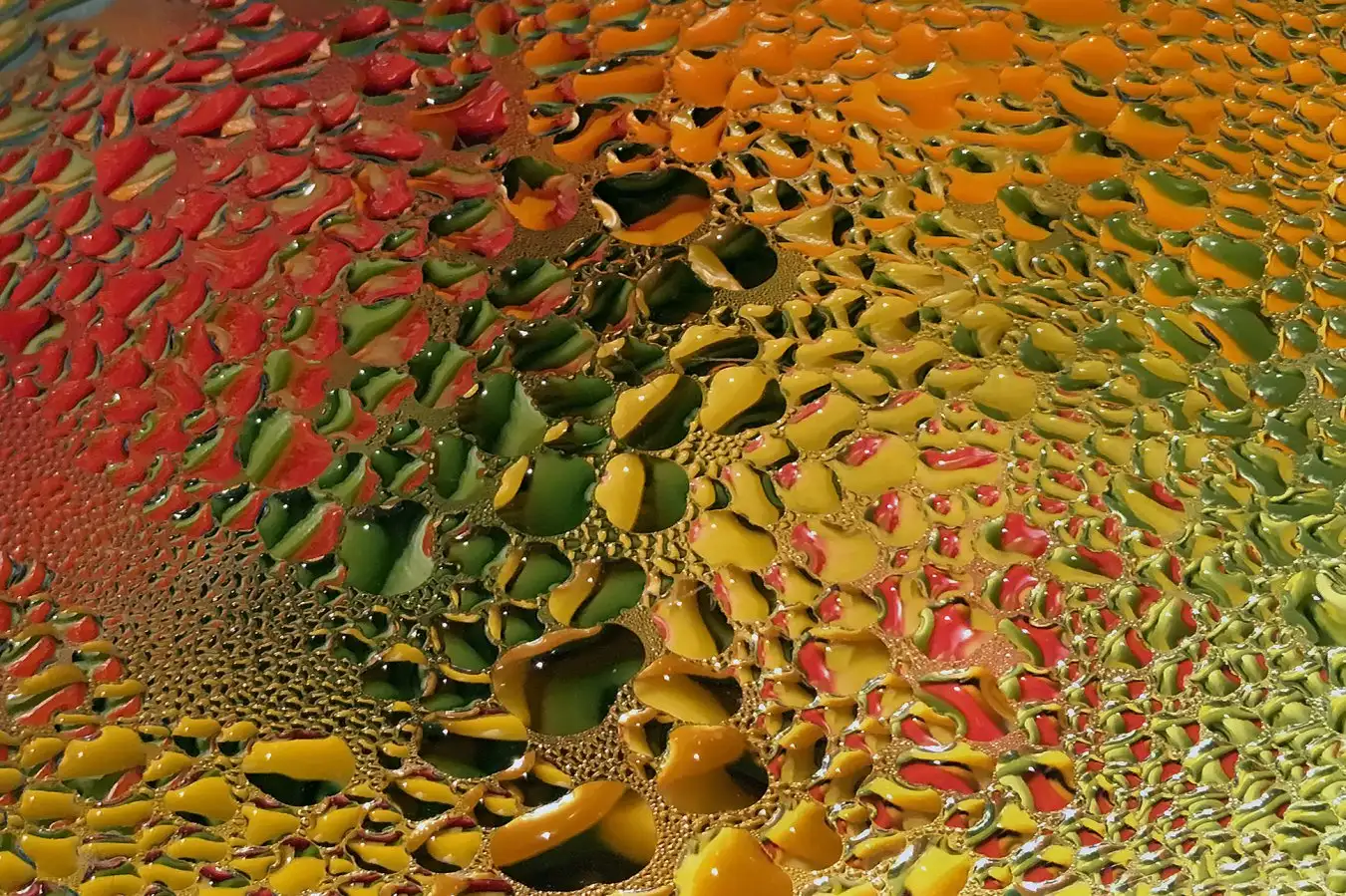
The image just above was taken when Frankel was sautéing peppers, as condensation formed on the pan lid. These tiny droplets acted like lenses and transmitted the colour of the peppers through the lid and into her camera.
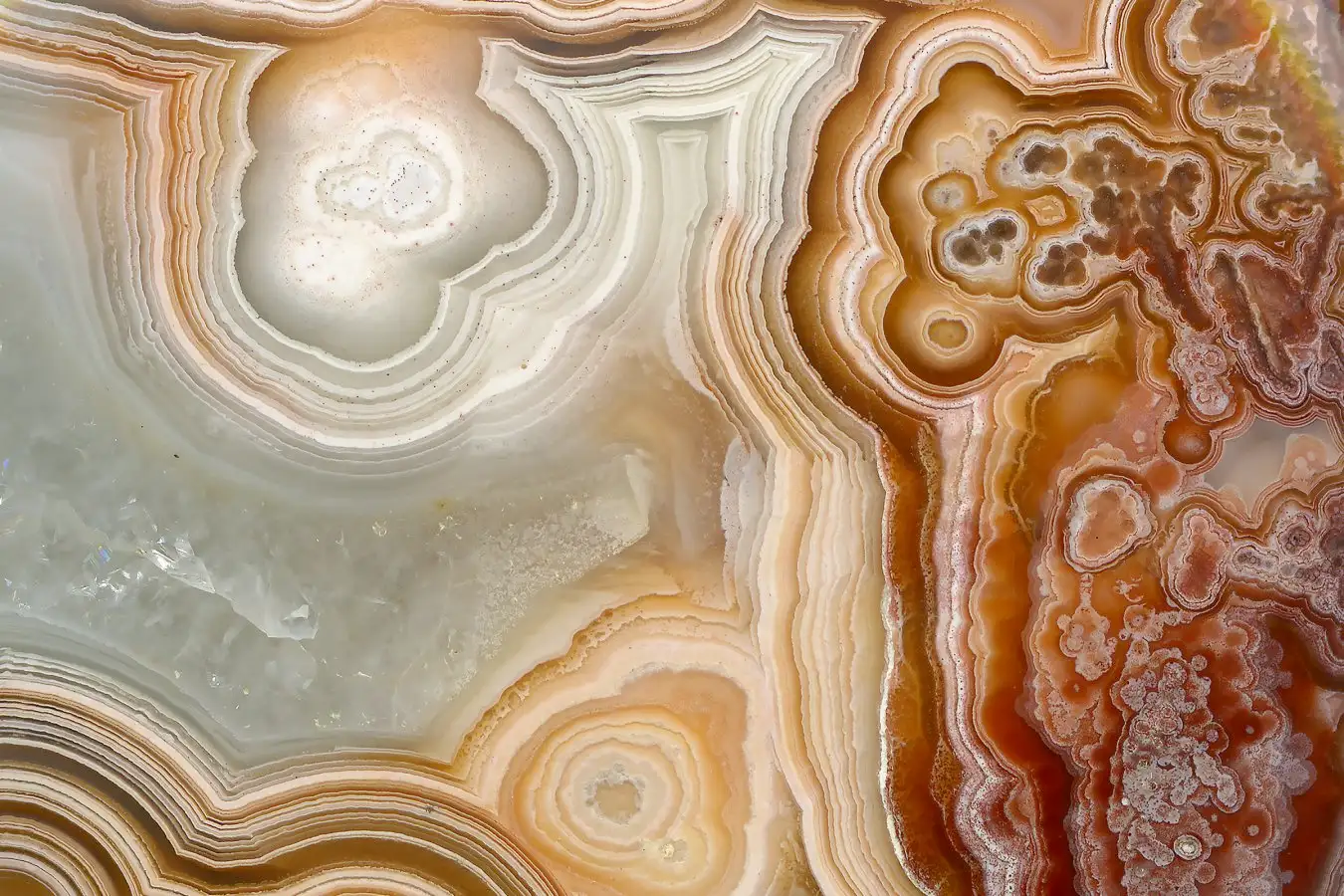
The photo above is a shot of a 5-centimetre sample of the mineral agate. It was imaged at high resolution by a desktop scanner. The patterns are layers of silica.
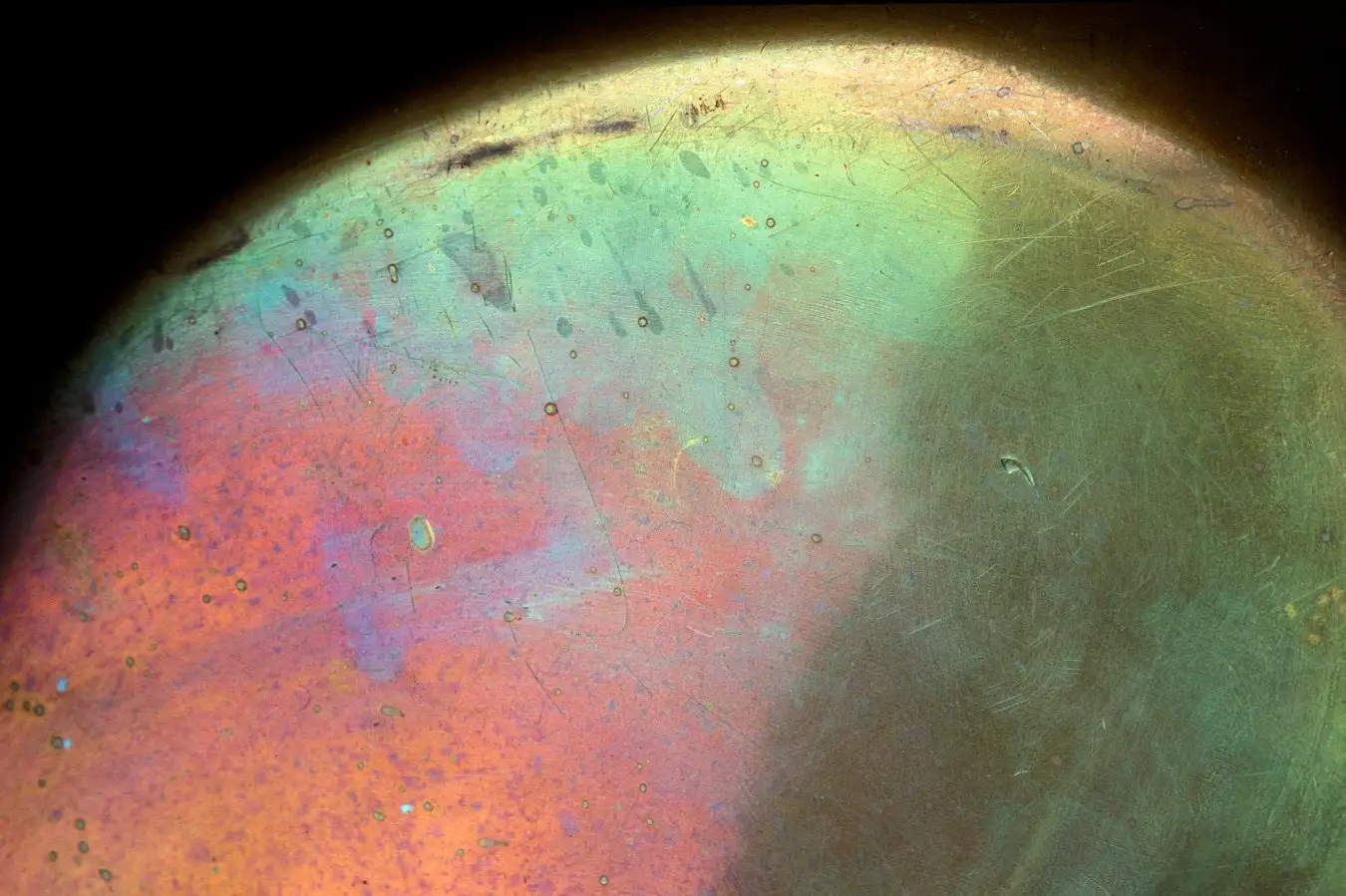
Frankel was drawn to the colours in a copper pan in the image above. When copper is exposed to heat and air, it oxidises and forms copper compounds of striking colours.

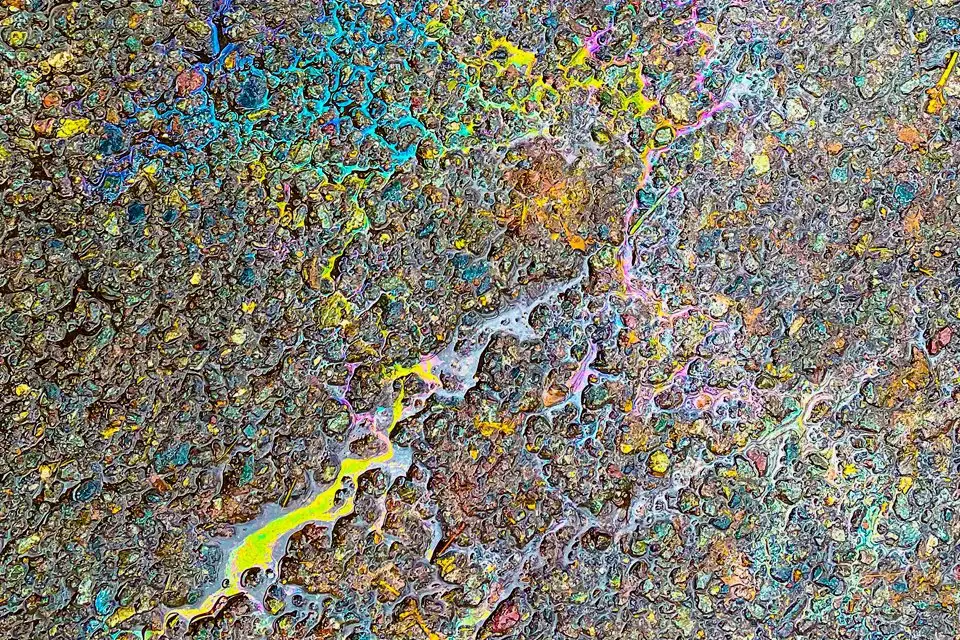
Oil dripping from a car created a thin layer on top of a puddle in the final image, above. Light reflects from the top and bottom of the oil layer, which varies in thickness. These reflections create wavelengths in varied colours.
Source link : https://www.newscientist.com/article/mg26835731-000-can-you-work-out-what-these-enigmatic-close-up-photos-are-of/?utm_campaign=RSS%7CNSNS&utm_source=NSNS&utm_medium=RSS&utm_content=home
Author :
Publish date : 2025-12-10 18:00:00
Copyright for syndicated content belongs to the linked Source.