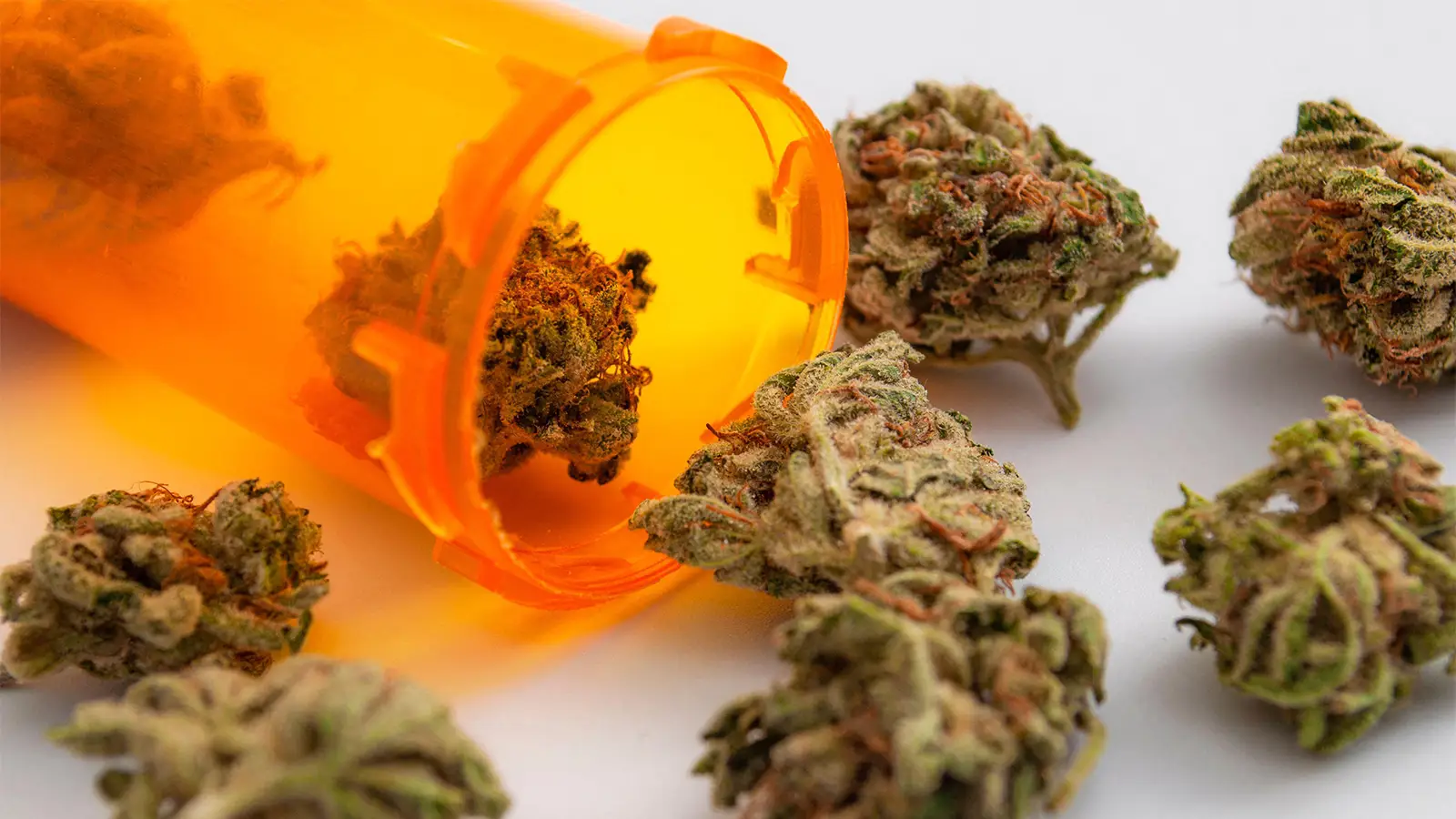
- Cannabinoids may reduce symptoms of some substance use and mental disorders, but the quality of evidence was mostly low in a systematic review and meta-analysis.
- The only finding of benefit with a moderate level of certainty was improved sleep time among those with insomnia.
- The meta-analysis showed higher odds of all-cause adverse events, but not serious events, among those using cannabis versus the control group.
Cannabinoids may reduce symptoms of some substance use and mental disorders, according to a systematic review and meta-analysis, but the quality of evidence was mostly low.
Across 54 randomized controlled trials with more than 2,400 participants, a combination of cannabidiol and delta-9-tetrahydrocannabinol (THC) reduced the following compared with placebo:
- Cannabis withdrawal symptoms (standardized mean difference [SMD] -0.29, 95% CI -0.57 to -0.02) and weekly grams of cannabis use (SMD -1.00, 95% CI -1.69 to -0.30) among those with cannabis use disorder
- Tic severity among those with tic or Tourette syndrome (SMD -0.68, 95% CI -1.03 to -0.34)
- Autistic traits among those with autism spectrum disorder (SMD -0.36, 95% CI -0.66 to -0.07)
The only finding of benefit with a moderate level of certainty was improved sleep time as recorded by an electronic device among those with insomnia (SMD 0.54, 95% CI 0.14-0.95), reported Jack Wilson, PhD, of the Matilda Centre for Research in Mental Health and Substance Use at the University of Sydney, and co-authors in Lancet Psychiatry.
The meta-analysis showed higher odds of all-cause adverse events (OR 1.75, 95% CI 1.25-2.46) among those using cannabis versus the control group, with a number needed to treat to harm of seven, but no higher odds of serious adverse events or study withdrawal.
“Overall, given the scarcity of evidence for efficacy and greater risk of all-cause adverse outcomes, the routine use of these medicines for mental disorders and SUDs [substance use disorders] is rarely justified,” Wilson and team concluded.
Of note, cannabinoids increased cocaine cravings in people with cocaine use disorder versus placebo (SMD 0.69, 95% CI 0.22-1.15).
The researchers said there were no significant effects on outcomes related to anxiety, anorexia nervosa, psychotic disorders, post-traumatic stress disorder (PTSD), and opioid use disorder, and there were “insufficient data to meta-analyze” studies on attention deficit-hyperactivity disorder (ADHD), bipolar disorder, obsessive compulsive disorder (OCD), and tobacco use disorder, as well as a lack of randomized controlled trial evidence for treating depression.
Despite depression, anxiety, and PTSD being among the top reasons cannabis is prescribed in the U.S., Australia, and the U.K., Wilson told MedPage Today that his team found “no evidence from randomized controlled trials to suggest that [cannabinoids] were effective in treating these conditions.”
“The long-term use of medical cannabis products could be causing more harm than good,” he noted, adding that chronic use of high-THC cannabis among young people and the link to cannabis use disorder and worsening mental health problems are concerns.
“Furthermore, the use of these medicines may delay the use of more effective treatments,” Wilson said, including cognitive behavioral therapy.
For this systematic review and meta-analysis, the authors used five major databases to identify peer-reviewed studies focused on the efficacy of cannabinoids in reducing or treating mental health disorders or SUDs from January 1980 to May 2025.
Of the 2,477 participants included, median age was 33.3 years and 69% were male; ethnicity data were not available. Of the 54 trials, 44% had a high risk of bias.
Twelve studies looked at the efficacy of cannabinoids in people with cannabis use disorder; eight focused on psychotic disorders; six on anxiety disorders; five on tic or Tourette syndrome; four on opioid use disorders; four on insomnia; three on cocaine use disorder; three on PTSD; and two each on anorexia nervosa, autism, and OCD. There was one study each for ADHD, bipolar disorder, and tobacco use disorder. Most studies used a parallel group design (n=32) and had a median sample of 31.5 participants. Cannabinoids were most frequently used as the primary treatment.
“To further understand the efficacy and safety of these medicines, we clearly need to conduct more high-quality [randomized trials] with representative samples,” Wilson noted, especially for conditions for which effective treatments are scarce, such as insomnia.
Source link : https://www.medpagetoday.com/psychiatry/generalpsychiatry/120338
Author :
Publish date : 2026-03-17 16:36:00
Copyright for syndicated content belongs to the linked Source.