
[ad_1]
- One health system that implemented HPV self-collection kits saw a 2.2 percentage point increase in screening rates compared with a period before self-collection.
- Earlier studies at the health system saw even higher rates of screening, but there were a number of caveats to this study.
- HPV self-collection testing is becoming more popular in the U.S. as more medical groups endorse it as an option.
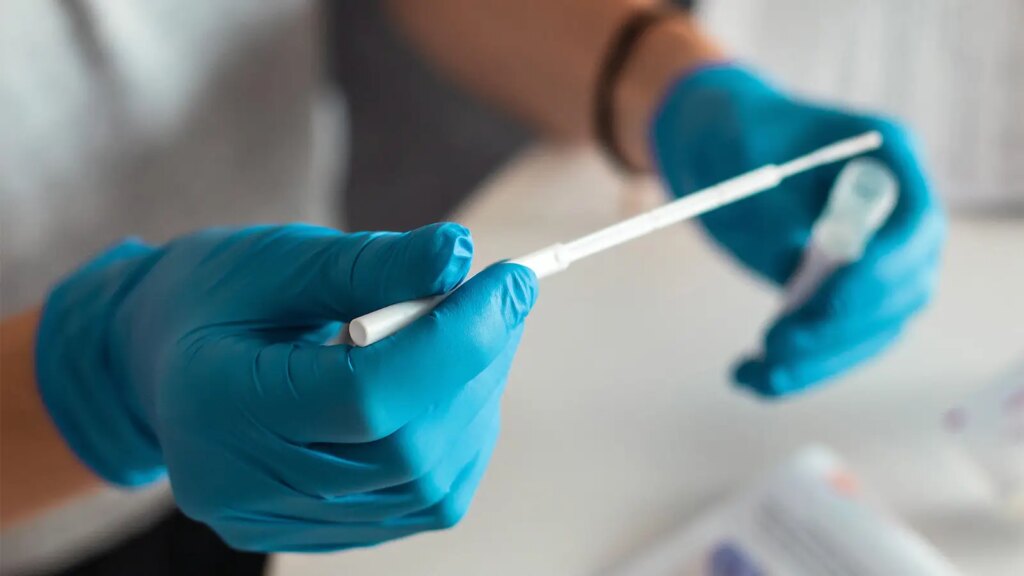
A program that offered self-collected human papillomavirus (HPV) tests — either mailed to patients or offered in clinic — boosted cervical cancer screening rates among those due or overdue for screening, an evaluation of the program found.
There was a significant 2.2 percentage-point increase in cervical cancer screening completion in the period after the self-collect program launched compared to the period before (95% CI 1.74-2.66, P<0.001), reported Beverly Green, MD, MPH, a family physician and senior investigator for Kaiser Permanente Washington (KPWA) Health Research Institute, and colleagues in NEJM Catalyst Innovations in Care Delivery.
“HPV self-collect is easy for patients to do, many prefer it over a pelvic exam, and it is just as accurate as a clinician collected test,” Green told MedPage Today.
Self-collected HPV tests have long been popular in other countries, and are becoming increasingly popular in the U.S. since gaining FDA approval in 2024. Pap smears and cervical cytology require a speculum that many patients dread, so a less invasive swab is often preferable, though ob/gyns told MedPage Today self-collection HPV tests do not entirely replace the utility of Pap tests. Still, major groups like the U.S. Preventive Services Task Force, the American Cancer Society, and the Health Resources and Services Administration have endorsed self-collection as an option for some patients.
Previous randomized trials conducted by the KPWA research group found that directly mailing HPV self-collect kits to patients due for screening increased cervical cancer rates by 14.1 and 16.9 percentage points, respectively, for those overdue.
While this study found a much lower increase, Green told MedPage Today that’s largely because only a portion of patients due or overdue for cervical cancer screening were mailed kits. Only 12.6% of eligible individuals were mailed HPV self-collect kits, and a quarter of them returned and processed the test in the post-launch period; 37.4% of cervical cancer screenings were self-collected during this time period. Moreover, nearly 60% of the self-collect tests were from mail-based distribution while the rest were clinician-ordered during clinic visits.
As a result of the trials, KPWA decided to adopt the mailing program as standard care beginning in June 2023. All relevant clinicians at 25 KPWA primary care medical centers were trained and launched by September 2023.
The study involved a pre-post design comparing July to December 31, 2022 (before the program) with October 2023 to March 2024 (after implementation). Eligible patients were 30 to 64 years old at average risk for cervical cancer, had an intact cervix, and were due or overdue for a screening. Patients were mailed a self-collection kit and instructions in English and Spanish with a QR code for 13 more languages as well as prepaid postage to send it to a lab. They were also sent a message they’d be getting the kit via text, email, and interactive voice recognition phone message.
Additionally, self-collect kits were offered as an alternative to the pelvic exam and opportunistically during any in-person primary care visit.
Lab results positive for HPV 16/18 were routed to the patient’s clinician and a centralized safety-net nurse who explained the results and helped schedule a colposcopy. Patients positive for other HPV strains were given their results digitally (or via mail if they didn’t have access) and recommended to schedule a follow-up Pap test.
In all, 123,729 patients were eligible during the pre-launch period and 121,175 in the post-launch period, and nearly 40% of both groups were due or overdue for screening. Mean patient age was 49.2 in the pre-launch group and 48.8 in the post-launch group. Both groups were about 60% white, 80% non-Hispanic, and 88% English-speaking. Green noted that the increases in screening were equitable across racial and ethnic groups.
Rates of positive tests were higher post-launch but still low overall. Follow-up colposcopy for those positive for HPV 16/18 was 75.8% post-launch compared to 50% pre-launch (P=0.009).
A qualitative evaluation included semi-structured interviews with associate medical directors and site visits to clinics and the lab that processed the samples. Clinicians as a whole found the program acceptable, though some had concerns about whether self-collection was as good as clinician-collection or Pap tests, which authors noted as an opportunity for education.
As for limitations, authors noted the observational design and that not all health systems have the same level of infrastructure as KPWA, which limits generalizability. They also didn’t collect data on people negative on HPV but positive on Pap.
Green said the group is now working on research testing the program at safety-net clinics.
Please enable JavaScript to view the comments powered by Disqus.
[ad_2]
Source link : https://www.medpagetoday.com/obgyn/cervicalcancer/121440
Author :
Publish date : 2026-05-26 21:41:00
Copyright for syndicated content belongs to the linked Source.