
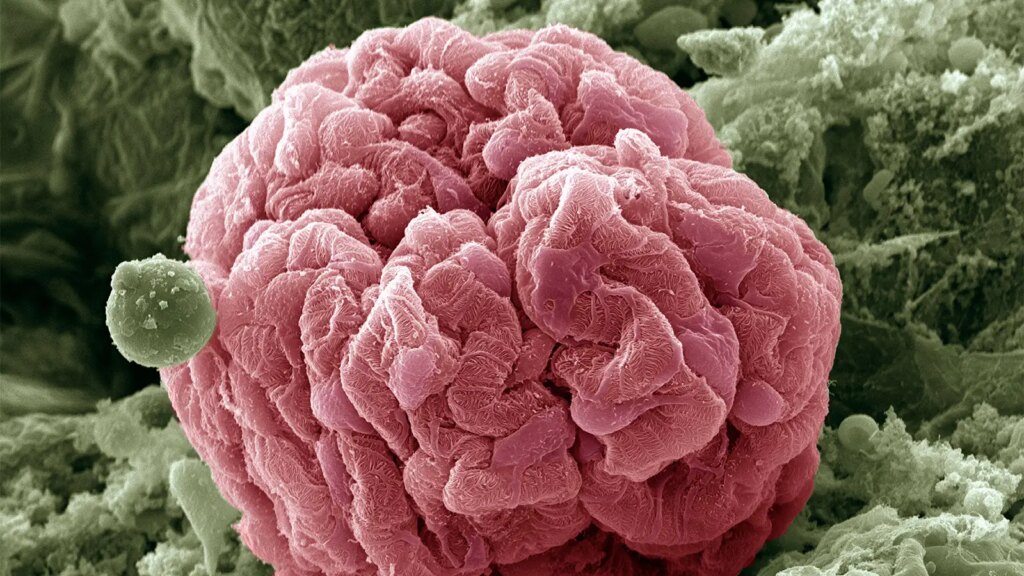
- Iptacopan significantly slowed kidney function decline over 24 months compared with placebo in adults with IgA nephropathy.
- The complement inhibitor was granted accelerated approved in 2024; continued approval was contingent on demonstrating slowed kidney decline.
- Fewer participants in the iptacopan group reached the composite kidney-failure endpoint.
Iptacopan (Fabhalta) slowed kidney function decline in adults with immunoglobulin A (IgA) nephropathy, according to final data from the phase III APPLAUSE-IgAN study.
The study met its primary endpoint, showing an annualized total eGFR slope of -3.10 mL/min/1.73 m2 with iptacopan versus -6.12 mL/min/1.73 m2 with placebo over a 24-month period (adjusted P<0.001), according to Jonathan Barratt, PhD, of the University of Leicester in England, and colleagues.
“The effect … appeared to be consistent across all the prespecified subgroups, a finding that showed that iptacopan can reduce the rate of kidney-function decline in a broad range of patients with IgA nephropathy,” they wrote in the New England Journal of Medicine.
The findings were simultaneously presented at the ISN World Congress of Nephrology in Japan.
A composite kidney-failure endpoint — comprised of a sustained decline in eGFR of ≥30%, a sustained eGFR of <15 mL/min/1.73 m2, initiation of maintenance dialysis, receipt of kidney transplant, or death from kidney failure — also occurred less frequently in the iptacopan group (21.4% vs 33.5%; HR 0.57, 95% CI 0.40-0.81, adjusted P=0.003).
The results build on 9-month interim findings, which supported the first-in-class complement inhibitor’s accelerated approval in 2024. The drug also holds indications for paroxysmal nocturnal hemoglobinuria and complement 3 glomerulopathy.
The interim analysis reported a 38.3% reduction in 24-hour urinary protein-to-creatinine ratio (UPCR) compared with placebo, but continued FDA approval was contingent on demonstrating slowed kidney decline.
IgA nephropathy, also known as Berger’s disease, is caused by IgA buildup in the glomeruli that prevents normal filtering, leading to proteinuria and potential kidney failure in up to 50% of patients within 20 years. It is one of the most common autoimmune kidney diseases.
“Traditionally, treatment has focused on lifestyle modification, blood-pressure control, and antiproteinuric agents aimed at reducing glomerular hyperfiltration,” the researchers wrote. “However, a greater understanding of the pathophysiological features of IgA nephropathy has supported the development of therapies that target the underlying pathobiologic mechanism.”
The therapeutic landscape for IgA nephropathy has expanded rapidly recently, with approvals including the monoclonal antibody sibeprenlimab (Voyxact), the endothelin A receptor antagonist atrasentan (Vanrafia), the endothelin and angiotensin II receptor antagonist sparsentan (Filspari), and the targeted-release corticosteroid budesonide (Tarpeyo).
The APPLAUSE-IgAN trial, which ran from January 2021 to September 2025, included 477 patients — 238 randomized to iptacopan (200 mg) and 239 to placebo twice daily. All had an eGFR ≥30 mL/min/1.73 m2 and a 24-hour UPCR of ≥1 despite a maximum, stable dose of an angiotensin-converting enzyme inhibitor or angiotensin II receptor blocker.
Average age was about 40 years, 53.5% were male, 51.8% were Asian, and 46.3% were white. About 21% of the iptacopan group were on an SGLT2 inhibitor at baseline.
SGLT2 inhibitor users showed a more pronounced treatment effect than those not taking them, but it wasn’t tested for significance. This finding “possibly indicates that combination therapy could offer additional benefits,” Barratt’s team said.
“Given the long-term therapeutic goal of reducing the rate of kidney-function loss to less than 1 mL/min/1.73 m2 per year, future studies will be needed to assess the effects of iptacopan in combination with other disease-modifying therapies,” they suggested.
Proteinuria reduction was maintained throughout 24 months. Fatigue score wasn’t affected, but the researchers said this was possibly because baseline scores were similar to the general healthy population.
Safety was consistent with iptacopan’s known profile. Adverse events were mostly mild or moderate and occurred in 87% in the iptacopan group and 89.1% in the placebo group. Serious adverse events were reported in 12.2% and 11.7%, respectively. Serious infections were more frequent with iptacopan (6.7% vs 2.1%), which included four cases of pneumonia in the iptacopan group.
Discontinuations due to adverse events were below 5% in both groups, and no deaths occurred.
Some important clinical questions still linger, the researchers said, including how iptacopan should be integrated within treatment sequences and which patients would benefit most. Long-term safety data beyond 2 years are also needed.
Please enable JavaScript to view the comments powered by Disqus.
Source link : https://www.medpagetoday.com/nephrology/generalnephrology/120539
Author :
Publish date : 2026-03-29 05:10:00
Copyright for syndicated content belongs to the linked Source.