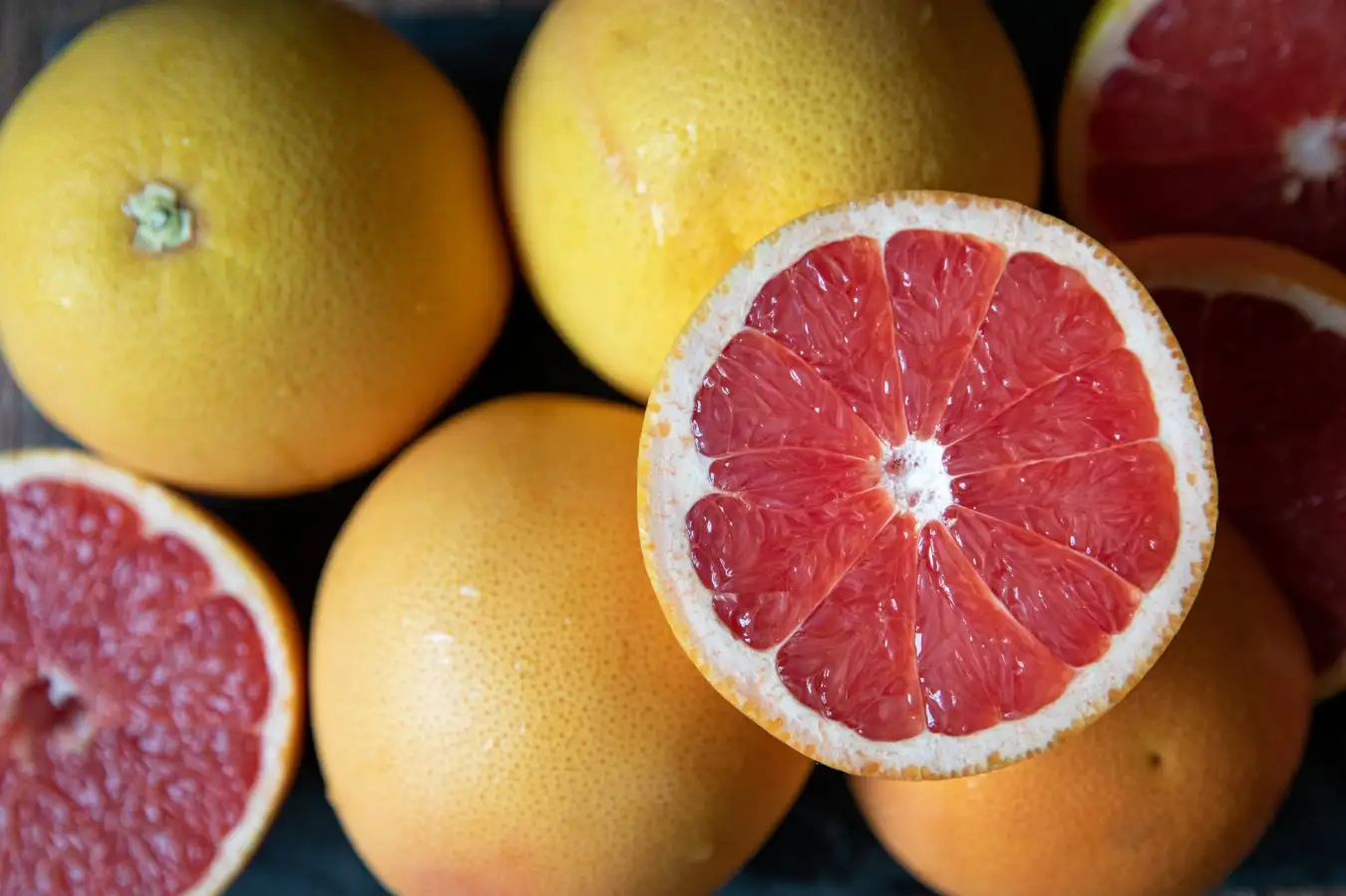
Less bitter grapefruit are now in development
JeyMin/Imazins/Getty Images
If you never eat grapefruit because you find them far too bitter, CRISPR varieties may be more to your taste. It has been shown that disabling one gene via gene editing can greatly reduce the level of the chemicals that make grapefruit so bitter.
“It could expand the market,” says Nir Carmi at the Volcani Center in Rishon LeZion, Israel. “Kids don’t usually like grapefruit because it’s too bitter for them.”
He thinks this approach could even help save the citrus industry. A bacterial disease called citrus greening, also known as huanglongbing, is having a devastating impact on these fruits. The insects that spread the bacteria can’t survive in areas with cold winters, says Carmi, but cold-hardy citrus varieties are so bitter that they are inedible.
The gene-editing approach could allow the creation of edible cold-hardy varieties for the first time, meaning citrus farming could shift from subtropical regions such as Florida to temperate ones like northern Europe.
The sourness of citrus fruits is due to their acidity, with lemons having particular high levels. Their bitterness, however, comes from a range of other compounds. Previous studies have shown that the bitterness of grapefruit is mainly due to a chemical called naringin, with closely related molecules called neohesperidin and poncirin also contributing.
So Carmi’s team has used CRISPR gene editing in one grapefruit variety to deactivate the gene for the enzyme that produces these three chemicals. It takes several years for grapefruit trees to start fruiting, so the researchers haven’t yet been able to taste the fruit. But none of the three chemicals was detectable in the leaves of the CRISPR grapefruit trees, so they are confident they won’t be present in the fruit either.
The edited trees also contain an added “marker gene” that makes it easy for the team to identify which plants were successfully edited. Because of this marker gene, the trees are transgenic, which would make it difficult and expensive to get approval to sell any fruit they bear in most countries. In some nations, including the US and Japan, plants with simple gene edits aren’t regarded as genetically engineered, so getting approval there is cheap and easy.
The team now plans to make the same edit in grapefruit without adding a marker gene. It is achievable, but involves a lot of work, says team member Elena Plesser, also at the Volcani Center. “It’s very tedious.”
Other teams around the world are pursuing similar projects, says Carmi, but he thinks his group’s is the most advanced.
The researchers also plan to disable the same enzyme in a cold-hardy citrus such as the trifoliate orange, the fruit of which is inedible due to its high levels of naringin, neohesperidin and poncirin. The trees will then be crossed with popular varieties of citrus fruits such as oranges to try to create delicious seedless fruits while retaining the cold tolerance of trifoliate oranges. This could take many years to achieve.
This kind of gene editing could significantly alter the palatability of fruits, says Erin Mulvihill at the University of Ottowa in Canada, who has studied naringin.
Another reason why some people don’t eat grapefruit is that it can inhibit the liver enzymes that break down drugs such as statins, leading to dangerously high levels in the blood for those taking them. Naringin is one of the chemicals in grapefruit responsible for this effect, but it isn’t the only one, says Mulivihill. “Many genes would have to be removed to completely eliminate grapefruit-drug interactions.”
Topics:
Source link : https://www.newscientist.com/article/2513798-crispr-grapefruit-without-the-bitterness-are-now-in-development/?utm_campaign=RSS%7CNSNS&utm_source=NSNS&utm_medium=RSS&utm_content=home
Author :
Publish date : 2026-02-02 08:00:00
Copyright for syndicated content belongs to the linked Source.