

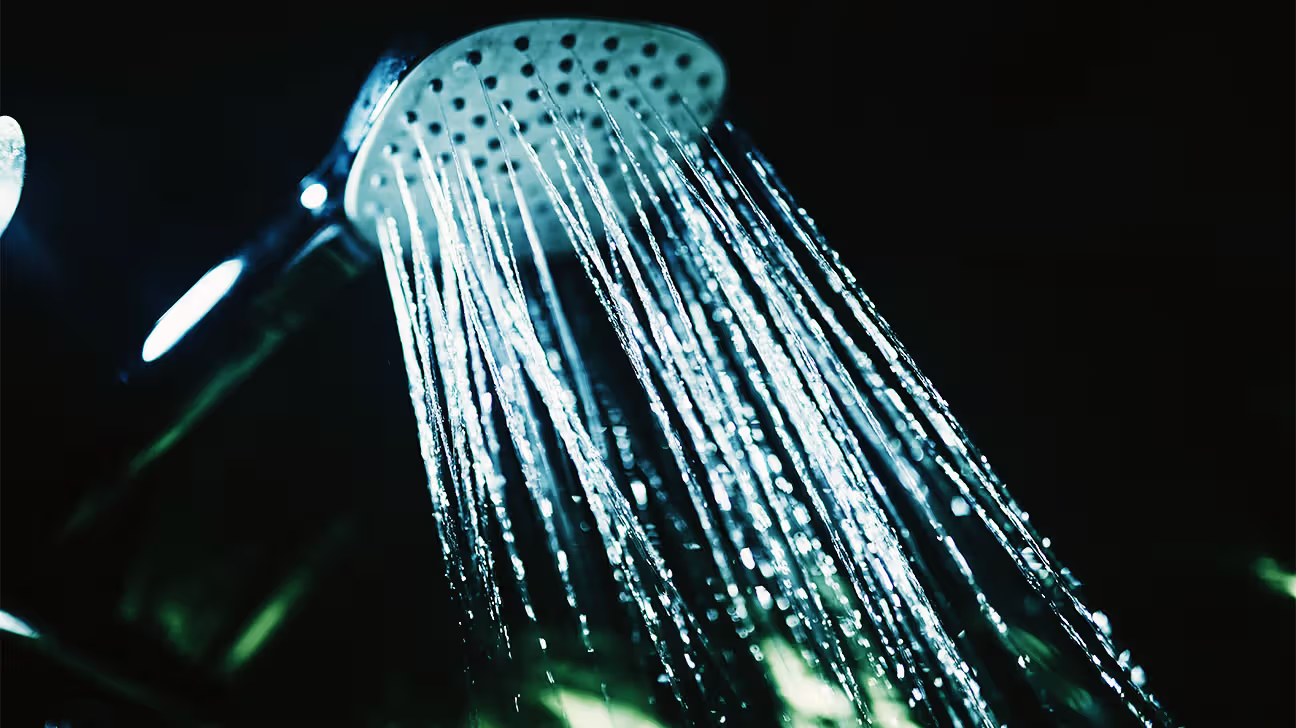
- Dark showering is a new sleep trend that involves showering with the lights dimmed or off completely.
- Advocates say it can help the mind relax, reduce stress, and make it easier to fall asleep.
- Experts suggest the ritual may support melatonin production and temperature regulation.
- Dark showering isn’t a cure-all for sleep problems, but it could be a simple addition to a calming nighttime routine alongside evidence-based strategies.
If you have trouble nodding off, you may have come across an unusual new sleep trend on social media.
Known as “dark showering,” the regimen involves showering with the lights dimmed or switched off completely, often as part of a nighttime wind-down routine.
Advocates across social media platforms claim that dark showering can help calm the mind, reduce stress, and even improve sleep quality.
Unlike a morning shower, which is often used to energize and awaken, a dark shower is about reducing light exposure, regulating body temperature, and facilitating relaxation to prepare the body for sleep.
So, does showering in the dark actually help you fall asleep faster or sleep more deeply, or is it simply a soothing ritual that feels good at the end of a long day? We asked the experts to find out.
Chelsie Rohrscheib, PhD, a neuroscientist, sleep expert, and head of sleep research at Wesper, told Healthline that dark showing may prepare the brain and body for sleep, which improves sleep onset time and overall sleep quality.
“For the brain to initiate sleep, the body must undergo a slight drop in core body temperature (usually by one degree),” Rohrscheib said.
“Taking a warm shower quickly raises body temperature and then rapidly drops core temperature when you exit the shower. This mimics the natural process that occurs in our body before sleep, making it easier for the brain to transition into sleep,” she continued.
Meanwhile, showering in the dark limits light exposure in the evening, which can help support the body’s natural circadian rhythms and signal that it’s time to wind down.
“Melatonin is a circadian rhythm-regulating hormone created in our brains that signals when it’s time to be awake vs. asleep.
“Its production is regulated by light information entering our eyes, where consistent light exposure suppresses melatonin production and lower light levels increase melatonin production,” Rohrscheib said.
“Therefore, showering with the lights off promotes melatonin release, preparing the brain for sleep ahead of time.”
It’s not just improved sleep; dark showering may provide mental health benefits, too.
“It’s a good way to relax and de-stress before bed, moving our nervous system into the parasympathetic state, which is responsible for relaxation and sleepiness,” Rohrscheib noted.
“This has the added benefit of reducing circulating cortisol levels, which are normally very stimulating and wake-promoting.”
“In the dark, we create space for our other senses to take over. We can focus more on the comforting feel of the warm water hitting us, the pleasant smells we chose for our cleansers, and the soothing sounds of the shower water,” she said.
Read added that this can feel similar to being in a state of meditation.
“This atmosphere creates the perfect space to visualize your thoughts and worries being washed away, creating a blank slate for you to welcome sleep and then start your day fresh in the morning,” she added.
The good news is that Rohrscheib believes there aren’t any obvious downsides to dark showering, though she warned that it shouldn’t be used as a quick fix for sleep problems.
“Someone with chronic sleep issues or an underlying sleep disorder may find limited to no success without medical intervention,” she said.
Read added that mindset is key.
“If someone goes into dark showering thinking it’s a magical solution, then chances are they won’t benefit from it. If you rush through your shower with the main purpose of getting your body clean, then you’ll miss the other potential benefits it offers, like stress reduction,” she said.
It’s important not to see dark showering as a chore or simply another item on your to-do list.
“Dark showering before bed could be counterproductive for someone who feels pressure to get it done, hence heaping even more stress on themselves,” Read said.
“If schedules don’t allow for a nighttime, dark shower, then there are still other ways to help yourself get a better night’s sleep,” she added.
So, dark showering aside, what proven practices can help you sleep more soundly?
“Keep a consistent sleep schedule to keep your circadian rhythm well-regulated,” Rohrscheib said.
This means waking and going to bed at approximately the same time every day, including on weekends.
Rohrscheib noted you should also avoid caffeine at least six hours before bed.
Research suggests that caffeine has a half-life of around six hours. This means that even several hours after your last cup of coffee, about half of the stimulant can still be active in your system, potentially interfering with your ability to fall asleep.
You should also consider what you eat. Read suggested avoiding heavy, hard-to-digest meals about three hours before bed.
According to the dark showering trend, light also plays a role in how easily you drift off.
Rohrscheib said that, where possible, you should avoid bright lights before bed, especially from overhead lights and electronic screens.
Her advice is to keep your bedroom dark, cool, quiet, and comfortable. And if you just can’t get to sleep no matter what you try?
“Do not allow yourself to toss and turn in bed for longer than 20 minutes,” Rohrscheib said.
“If you can’t fall asleep, get out of bed, do a calming activity like listening to soft music in dim light for 10-15 minutes, followed by getting back into bed, and trying again.”
While dark showering isn’t a cure-all for sleep issues, it may be a helpful addition to a relaxing bedtime routine, especially for those looking to reduce evening stimulation and create a calmer transition into sleep.
Source link : https://www.healthline.com/health-news/dark-showering-improved-sleep-experts-debunk
Author :
Publish date : 2026-02-07 07:00:00
Copyright for syndicated content belongs to the linked Source.