[ad_1]

Developed in partnership with the Our Partner
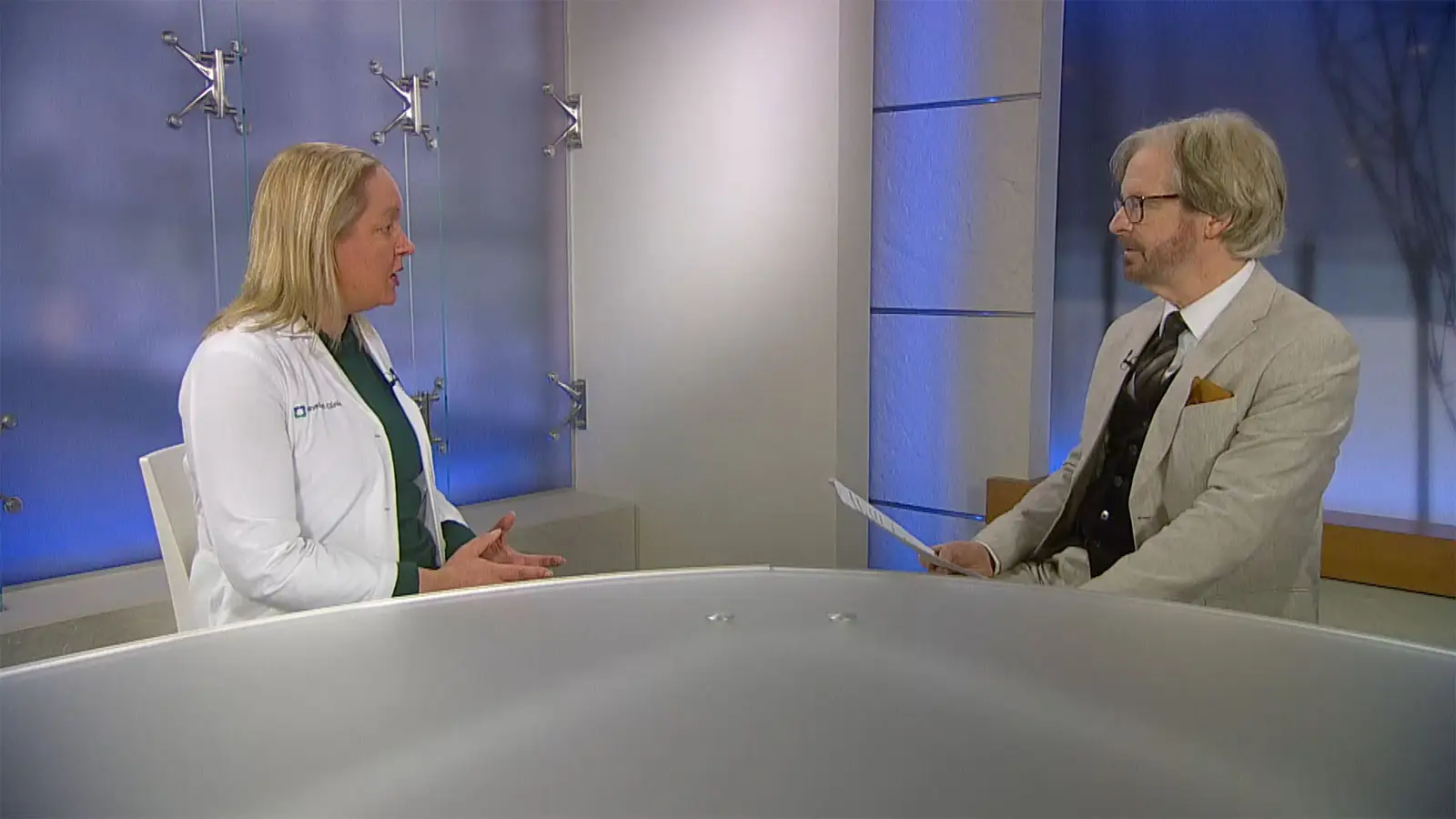
In “Beyond Diagnosis: Multiple Myeloma,” Cleveland Clinic hematologist Sandra Mazzoni, DO, and host John Mangels continue their conversations on communicating effectively and empathetically with patients facing a complex, chronic blood cancer.
Each monthly installment examines an aspect of multiple myeloma care, including delivering the diagnosis, aligning treatment goals, navigating evolving therapies, and supporting patients through an increasingly personalized treatment landscape.
This third of six episodes focuses on discussing emerging cell therapies, explaining transplant decisions, and helping patients weigh complex treatment options in the context of their personal priorities and long-term goals.
The following is a transcript of their remarks:
Mangels: Welcome to “Beyond Diagnosis,” where we talk with doctors about talking with patients. I’m your host, John Mangels. Multiple myeloma is a complex disease with many decision points over the course of treatment. Today, we’ll explore how a hematologist approaches discussions about diagnosis, therapy, prognosis, and patient autonomy. Our guest is Cleveland Clinic hematologist Dr. Sandy Mazzoni. We’ll talk about how she supports multiple myeloma patients during a difficult journey.
Dr. Mazzoni, thanks so much for being here.
Mazzoni: Thank you, John. Happy to be here and looking forward to our conversation today.
Mangels: Treatment for multiple myeloma involves choices that are shaped both by the biology of the disease and by the patient’s priorities. Has the treatment of multiple myeloma changed consequentially during the time that you’ve been practicing?
Mazzoni: It’s changed vastly since I started. So we’ve gone just over the last, goodness, 3, 4 years. We’ve gone from having one CAR- [chimeric antigen receptor] T product approved to two CAR-T products approved, and soon to be three CAR-T products approved. The world of cell therapy is absolutely exploding in this disease.
There’s also going to be a shift in one of the oral options that are out there. So almost every patient of ours gets exposed to a drug class called immune modulators. They target a certain protein that’s on the myeloma cells and multiple pathways within the bone marrow that allow this disease to continue to flourish and it shuts down all these pathways.
This new drug class are called CELMoDs [cereblon E3 ligase modulatory drugs]. It goes out to the same protein and the same pathways that get shut down, but it targets these a little more effectively — hopefully without side effects. These things are all in clinical trials. So that’s coming on top of all the cell therapy that’s exploding.
Mangels: As we’re recording this, we’ve just recently gotten results from the phase III MajesTEC-3 trial. Those results have some clinicians talking about a functional cure for multiple myeloma. Do you share that optimism?
Mazzoni: I do. So there’s a lot of debate amongst myeloma doctors about what order to be using all of our cell therapies. There’s this protein on our myeloma cells called B-cell maturation antigen, or BCMA. I tell my patients, just call it target B, because otherwise the other target that’s out there for cell therapy is called GPRC5D [G protein-coupled receptor class C group 5 member D]. They literally sound like Star Wars characters. And so I call them target B and target G just to keep the conversation very simplistic for my patients because no one’s going to remember all these numbers and letters.
When we have these conversations about MajesTEC-3, we always have thought — and still it’s probably correct — that for CAR-T when you’re talking about target B, BCMA, if you’re going to target that, there’s a lot of debate about which one to use first. And it appears that you’re going to get more run for your money by going after a CAR-T first as opposed to doing a T-cell engaging bispecific and then going into a CAR targeting the same protein down the road.
That always was the controversy, but now that MajesTEC-3 is out, yes, it’s a combination between a standard CD38-targeting drug called daratumumab [Darzalex] plus teclistamab [Tecvayli]. Again, my patients look at me like I have four heads when I use these terms. I have to break it down and so we have short names for all of these drugs.
We call teclistamab “Tec” and we call daratumumab “Dara” or “Fasbro,” since our patients know these drugs by very different names. I think that’s also a point of confusion for patients, thinking, well, when I read this study, I don’t think I’m on this drug. That’s because they know the drug name by a different trade name, not necessarily the generic that’s on the study.
The point of the MajesTEC-3 and why everyone’s so excited is because looking at this data about 3 years out and comparing it with the BCMA CAR-T product called cilta-cel [ciltacabtagene autoleucel], the numbers are very comparable.
So everyone’s wondering, “Well, if I don’t have to worry about all this potential delayed neurotoxicity that I could see with one of the CAR-T products, this may be the better option.” And as far as functional cure, people are looking at, well, what happens if we were to use this at diagnosis upfront? There is a study called MajesTEC-7, which has a similar concept, but we’re adding in lenalidomide, otherwise known as Revlimid.
The study randomizes patients between three different arms: it randomizes between teclistamab plus daratumumab plus lenalidomide [Tec-DR] versus talquetamab [Talvey] in combination with daratumumab and lenalidomide (Tal-DR) — another crazy name …
Mangels: Another Star Wars name.
Mazzoni: Star Wars going after target G, plus the daratumumab plus lenalidomide versus the standard for patients who are not going directly into transplant. We call this being transplant-ineligible or transplant-deferred. “Deferred” meaning you and the patient have talked and that they don’t want to or they don’t have the resources to go directly into transplant. I think that data is probably going to be even more impressive than the MajesTEC-3 data.
Mangels: Really interesting trial. From a patient perspective, what would a functional cure look like if you achieve that?
Mazzoni: Yeah. So, I think when we look at solid tumors and we have curable diseases within many of our solid tumors, they give patients a total timeline of what they call “no evidence of disease” scans for 5 years and then that translates in most other cancers to being equivalent to a cure.
In multiple myeloma, I think we have to create our own definition because right now we have no definition of what we’re going to call a cure or functional cure. Right now we have patients who have gone 3 years, even 5 years, after CAR-T.
And if you remember back, I think it was June 2024 when the European Hematology Association Congress had data presented of the 5-year outcomes for patients who had cilta-cell CAR-T, and a third of them were still in remission, and that’s when all of these headlines came out about that we may have cured myeloma. So I think they are going after this same concept of if patients are 5 years out, still in remission, that may translate into a cure.
Mangels: Are the successes that we’re talking about with these new cell therapies affecting when and even whether you go to CAR-T or to autologous stem cell transplant?
Mazzoni: I think it’s not a matter of if they go into CAR-T. I think we’re really going to question what is the role of autologous stem cell transplant for a lot of these patients.
Mangels: That’s interesting, and if you have to introduce autologous stem cell transplant, that’s got to be a difficult conversation. How do you approach talking about that with patients?
Mazzoni: Well, a lot of patients who have read about this and know their diagnosis even at the beginning I’ve been asked and I’m very surprised at how often I’m asked, am I someone who you would gear up to go into transplant?
Mangels: They know to ask that, just by what they’ve heard.
Mazzoni: Yes. It’s crazy how savvy patients have become. It’s a good thing in my opinion, but sometimes they’ve looked at some of the wrong resources and you have to be very careful to not shame a patient and be very careful with how you handle it because they have done a great job of educating themselves.
And so some of what we have to do is reeducation and making sure that they understand the differences between transplant that occurs in a disease like leukemia where there’s a donor involved versus autologous stem cell transplant, where it’s the high-dose chemotherapy doing the work, and their own stem cells were collected beforehand to rescue from the toxicity of the high dose of chemotherapy.
Mangels: And based on what they’re reading, they might ask, “Well, why aren’t you doing that right now at the outset?”
Mazzoni: Correct, correct. So some patients they really want to have a lot of information upfront because they have a lot going on in their lives. They need to plan accordingly. So for some patients talking upfront about you would be someone I would consider could benefit from autologous stem cell transplant and then explaining why we do it and trying to explain that there’s no pushing out the timeline for overall survival, meaning how long they could live with this.
It’s tough to explain to patients that we’re going to put you through this really potentially toxic treatment, but we’re not going to be able to push out that time over how long you live. We do it because we can push out the timeline for how long the disease remains under good control.
So we want to push it into something called a complete response. People will use the term remission and keep it there for as long as possible using minimal maintenance drugs at the end. Right now there’s a big push towards using two drugs in maintenance, especially for people who are higher risk.
Mangels: And this goes back to our earlier conversation about goal setting and what patients want in terms of the impact on their lifestyle. So knowing that really helps inform, I’m guessing you as a clinician, to help them reach an agreed-upon decision about this.
Mazzoni: Yeah. It also helps with timelining. So when I explain to patients that they want to hear everything that I can give them upfront, they’re feverishly writing things down. I often tell them, “You can write things down, but it’s better to just record this and then you can play it back or get family members on the phone.”
Mangels: Sure.
Mazzoni: Something so that there’s more ears listening to the conversation. I write things down. I learned at the beginning I didn’t used to write things down. Now I write things down.
I have this very kind of rudimentary cartoon-type thing that I draw so that patients kind of understand this timeline of events and when would they be ready for transplant. What goes into that? How much time would they be expected to take off work, for example?
Mangels: We’ve talked about some really exciting new cell therapies, but I’m guessing most of the multiple myeloma patients that we’re talking about are probably in a community setting with a physician who may not be aware of those. How do you make sure that patients and clinicians have access to that knowledge and, more importantly, access to the treatments?
Mazzoni: Yeah, that’s a really, really important point. So right now all of the community oncologists are very aware of kind of looking at their patient and determining who should be referred for CAR-T therapy and who should be referred for autologous stem cell transplant.
With the CAR-T though, traditionally speaking for several years, we didn’t have access to that until they have failed multiple lines of therapy. We now have it approved at first relapse. So I don’t believe that a lot of our oncologists are aware that we can get referrals for CAR-T that early.
The cell therapy is a whole other issue because it involves a period of step-up dosing, and traditionally the step-up dosing has been done at large academic centers. Now we really want to be able to educate and advocate for these community oncology sites to be able to take on from the very beginning some of these cell therapies that are non-CAR T-cell therapies.
Mangels: So what can you do? What can more broadly we do, I guess — “we” being the medical community — to convey to oncologists in the community setting that there are these availabilities that we just talked about?
Mazzoni: Yeah. Education is one part of it, and not only educating on the fact of what these drugs are, when to refer for them, when to use them, but more importantly with the non-CAR T-cell engaging therapies, those are things that are off the shelf, ready to go, that could easily be given in a community setting, but there’s a lot of fear around the potential side effects, especially in the very beginning.
So one of the ways this could be done is it could be a partnership between an academic site and a community site to have the patient come and start the drug at an academic site. But that’s an involved process because it requires temporarily relocating for anywhere from 5 to 9 days, depending on the drug. You need to have a caregiver there, and that conversation can become a little tricky to navigate.
The caregiver is there in case of a rare instance of a change with the patient’s neurologic status. The treatment can rile up the immune system in the majority of cases. So, those are the things the community oncologists are afraid of, whereas long term, the real issue is infection prevention.
So, I think that there’s a long way to go in order to get community practices to be able to deliver this drug safely and confidently, but they need the support of the myeloma experts.
Mangels: Thanks so much for your insights, Dr. Mazzoni.
And thank you for joining us on “Beyond Diagnosis,” where we explore not just what physicians know, but how to effectively and compassionately share that knowledge with patients. See you next time.
[ad_2]
Source link : https://www.medpagetoday.com/beyond-diagnosis/multiple-myeloma/121531
Author :
Publish date : 2026-06-01 19:01:00
Copyright for syndicated content belongs to the linked Source.