
Developed in partnership with the Our Partner
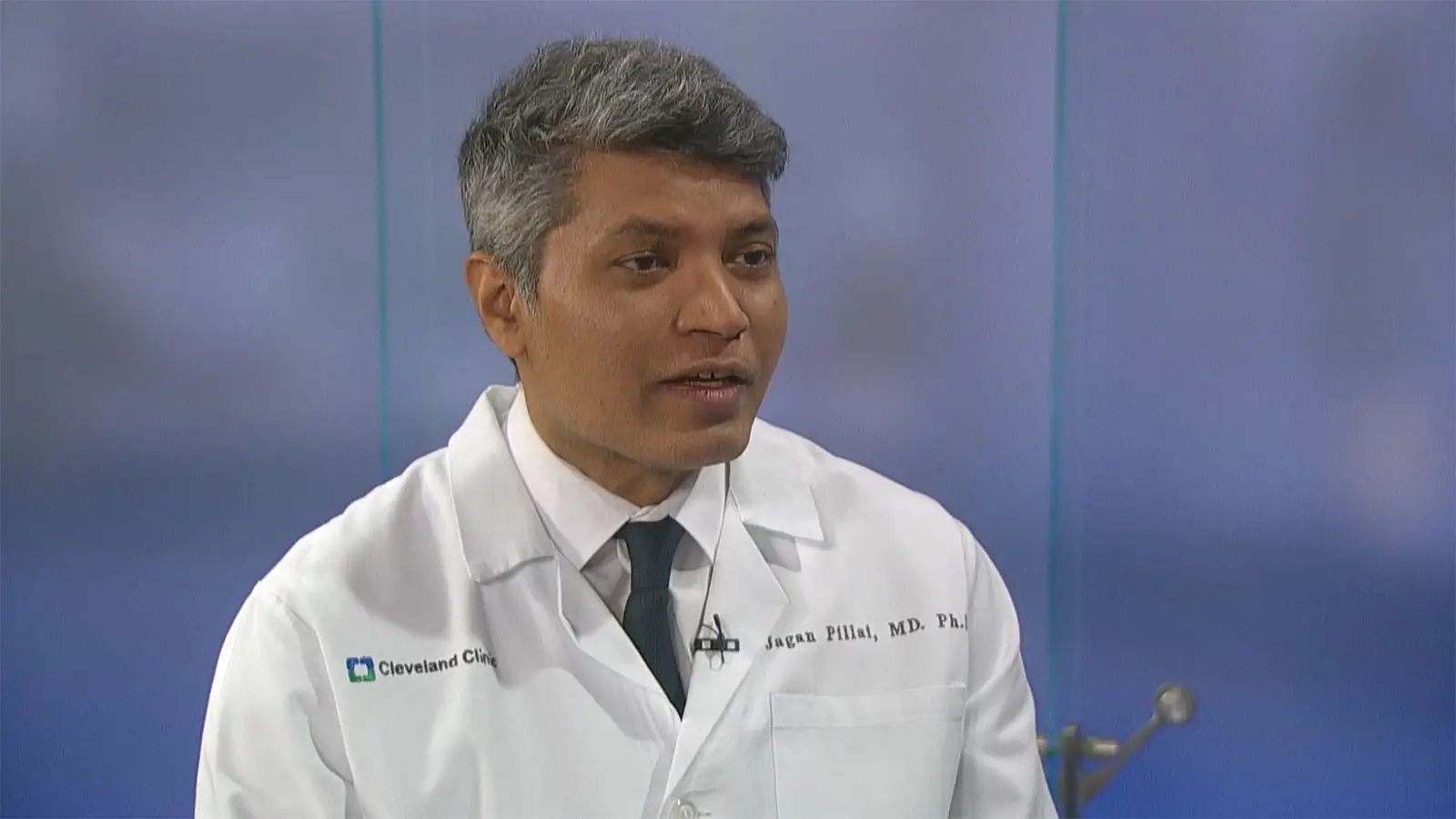
In “Beyond Diagnosis: Alzheimer’s Disease,” Cleveland Clinic behavioral neurologist Jagan Pillai, MD, PhD, and host Glenn Campbell continue their discussion on communicating effectively with patients and families facing a progressive neurodegenerative illness.
Each monthly installment examines an aspect of Alzheimer’s disease care, including diagnosis, shared decision-making, and ongoing support for patients and caregivers.
This second of six episodes focuses on how clinicians discuss prognosis, balance realism with hope, and incorporate patient values and goals into care planning.
The following is a transcript of their remarks:
Campbell: Welcome to “Beyond Diagnosis,” where we talk with doctors about talking with patients. I’m your host, Glenn Campbell. Alzheimer’s disease is a relentless, incurable, and eventually fatal illness that poses profound challenges for patients, families, and clinicians.
Today, we’ll explore how a behavioral neurologist approaches diagnosis, therapy, prognosis, and management of Alzheimer’s many complexities. Our guest is Dr. Jagan Pillai, who directs Cleveland Clinic’s Center for Brain Health. Dr. Pillai, thanks so much for being here.
Pillai: Thank you, Glenn, for having me.
Campbell: A diagnosis of Alzheimer’s is upsetting and life altering. In view of that, how do you convey the results to patients and families in a compassionate way? In your experience, how do patients and families tend to react to a diagnosis of this disease?
Pillai: Yeah, that is something we wrestle with as physicians, how best to share this diagnosis. And as a physician, you’re really looking at where the patient is coming from. Each person’s different. They have a different context. Sometimes they have a family history. Sometimes they have an anchoring story in their mind about what this disease means and what it could mean for them. Sometimes they are very proactive; they want to do everything that’s possible. Sometimes they are not comfortable with the medical institution. They want to withdraw from care in specific ways. So we tend to take all these things into account during the process of the interview or the clinical history-taking and get a judge of where they’re coming from and what they want before formulating how best to share this diagnosis.
We talked about the fact that Alzheimer’s disease is not something you wake up abruptly with like a stroke, but it’s going on in the background for 10, 15 years. So giving them insight that their life didn’t change in the last year, but this is something that has been evolving within them and this is not abruptly happening. So we should not be expecting anything abrupt to happen in their life going forward. And trying to figure out ways where we can intervene is going to be a key part of sharing the diagnosis so that this anxiety about it is relieved.
And the most important thing I try to convey is that each person’s story is different. They might have heard a story about what Alzheimer’s disease means, but you don’t know until your story is written what you are experiencing and how this could be meaningful or not for you and your family. So they still have that control to make that narrative happen. And people tend to see that as a window into looking at their future differently.
Campbell: I imagine the question of prognosis looms large in these discussions. What do you tell patients and families about disease progression and prognosis?
Pillai: Yeah, that’s also something that’s front and center. Usually after the diagnosis is shared or when we are thinking about the next steps, the first step is that there are things that they have a lot of control over and there are some things we don’t have control over. And making a clear distinction from the physician about what are the things that they can focus on that they have control over gives them a lot more confidence that they can face the future. So that would be my first part. In terms of what I think they can have control over is a few things about having a clear set of goals of where they need to be in the next year, 2 years, 5 years, 8 years gives them some sort of framework and a structure to think about their life forward.
The second would be to make sure that they have a plan in terms of a daily structure and routine that they believe in and that’s moving towards that goal.
We build these two things and use these two things to build on other healthy lifestyle that can help maintain their independence. Once people have a sense of that, we can talk about what happens if things don’t go well. I mean, they’re much more open to seeing that as a possibility that they need to work against than an inevitable course that they are forced to follow.
Campbell: In these kinds of conversations, how do you balance the need for candor with the desire for hope?
Pillai: I understand. I think when we say hope, we are saying we would like to have something in your life, recognizing things that setting goals and where you need to be and how you’re going to structure towards that is actually towards building hope in a realistic way, in a way that’s meaningful for them. So I think it’s not a false sense of hope. It’s using your hope to have a clear, actionable plan. And I think families go away and have given feedback that has helped them navigate the next year or so very well.
Campbell: What role do the patient’s values and priorities play in your discussions about these matters?
Pillai: Patient is the center of the story. It’s really about them. It’s understanding where they’re coming from, what their stories have been, what they’ve experienced, and then formulating a plan for their specific instance.
So, some people, as I mentioned earlier, are very proactive. They want to do everything possible to maintain their independence in a certain lifestyle they have in mind. And they’re comfortable with medical procedures, medical tests, medication, therapeutics, clinical trials. Whereas others have built a comfortable way of life and a way of looking at theirselves and that feels complete, and they might see the medical establishment as more invasive into their goals. So recognizing where they’re coming from, what they want, how they see themselves is important before forming a therapeutic plan. So yeah, absolutely, that’s part of the conversation.
Campbell: So what would you say you most want patients and families to ultimately take away from these discussions about prognosis?
Pillai: I think the most important piece that is sometimes conveyed directly through words, but sometimes carried through in conversations, is the fact that all of us have limited lifespans and we have a choice and a chance to build a narrative and a story that’s meaningful for us. The fact that an Alzheimer’s disease diagnosis has happened does not take away that aspect of humanity inside each person. They can still make their plans that are meaningful and we can help them achieve those things.
Campbell: I know that you have done research showing that an Alzheimer’s patient’s initial clinical phenotype is predictive for the likelihood of future behavioral or psychological symptoms. Can you explain more about those findings?
Pillai: Yeah, that’s actually a good way to think about the fact that when people think about Alzheimer’s disease, they think about this as sometimes a unitary entity. Everybody with Alzheimer’s disease have a certain kind of symptoms, and they may have memory loss and they might have difficulty in managing their finances maybe or something like that. But in fact, the Alzheimer’s disease or other degenerative diseases have slightly different symptoms depending on what part of the brain they affect.
So each region of the brain has predominant skillsets to handle different aspects of thought and functioning. For example, there are specific regions of the brain related to language skills. There are other parts of the brain related to visual information processing or judging spatial abilities. Another one is related to attention or judgment. So depending on what part of the brain is affected, you might have somebody with Alzheimer’s disease with primarily visual symptoms. They really are not seeing things clearly. They bump into things, but their memory is great or their personality is great. Whereas another person, you might have a problem affecting the language area where they struggle to express themselves, but they’re still able to function in the daily routine and remember things pretty normally.
Recognizing that different parts of the brain brings in different kinds of clinical symptoms is the first part of the story. Within that, what we have recognized that people with language disorders, which primarily involves the left side of the brain, oftentimes have pretty good insight into what’s going on and they’re able to modulate their emotions better. Whereas if you have changes in the right side in the same regions, you might have a lot more behavioral changes like delusions or might have a sense of unreality of where you are or getting lost.
So recognizing which part of the brain is affected, what the nature of the symptoms they’re presenting with, the clinician is actually able to inform the family and the patients that these are some things that could be expected and how we work around that to help them using therapies or education or rearranging some of the aspects of their daily life.
Campbell: How might some of these differences in patients’ symptom profiles impact the way you manage care and the treatments you might consider?
Pillai: Well, as I mentioned, people with predominant language changes in Alzheimer’s disease are less likely to have behavioral changes like aspects of agitation or delusions. So, we can actually tell a family that even though they are very frustrated by their language difficulties, it actually has given them a lot more room to still maintain the independence and manage their interpersonal affairs very well. Whereas someone with primarily changes in behavior in terms of specific aspects of delusions, we might have to let them know that this is coming in from specific damage in regions of the brain that needs a medication option in some situations. Or in other situations just informing and educating the family that it’s not something that we need to react, but maybe give more space around the person. So if they’re not as empathetic as before, do not take it personally as not as somebody who is not being with them, but giving them a lot more room to understand where they’re coming from, why this is failing for this specific person. That kind of helps them build common ground for both the family and the patient to figure out what they need to do next.
Campbell: Thanks for your insights, Dr. Pillai, and thank you for joining us on “Beyond Diagnosis,” where we explore not just what physicians know, but how to effectively and compassionately share that knowledge with patients. See you next time.
Source link : https://www.medpagetoday.com/beyond-diagnosis/alzheimers-disease/120614
Author :
Publish date : 2026-04-02 17:07:00
Copyright for syndicated content belongs to the linked Source.