
\r\nHe has published in several medical journals, including recent research on use disparities in telehealth visits & effective community outreach interventions to encourage COVID vaccination. His weekly MedPage Today column, \u201cBuilding the Patient-Centered Medical Home,\u201d focuses on improving patient care.<\/p>“,”affiliation”:””,”credential”:”MD”,”url_identifier”:”fp4223″,”avatar_url”:”https:\/\/assets.medpagetoday.net\/media\/images\/author\/Pelzman_330px.png”,”avatar_alt_text”:”Fred Pelzman”,”twitter”:””,”links”:null,”has_author_page”:1,”byline”:”Contributing Writer, MedPage Today”,”full_name”:”Fred Pelzman”,”title”:”Contributing Writer, MedPage Today, “,”url”:”https:\/\/www.medpagetoday.com\/people\/fp4223\/fred-pelzman”,”bluesky”:””}]”/>
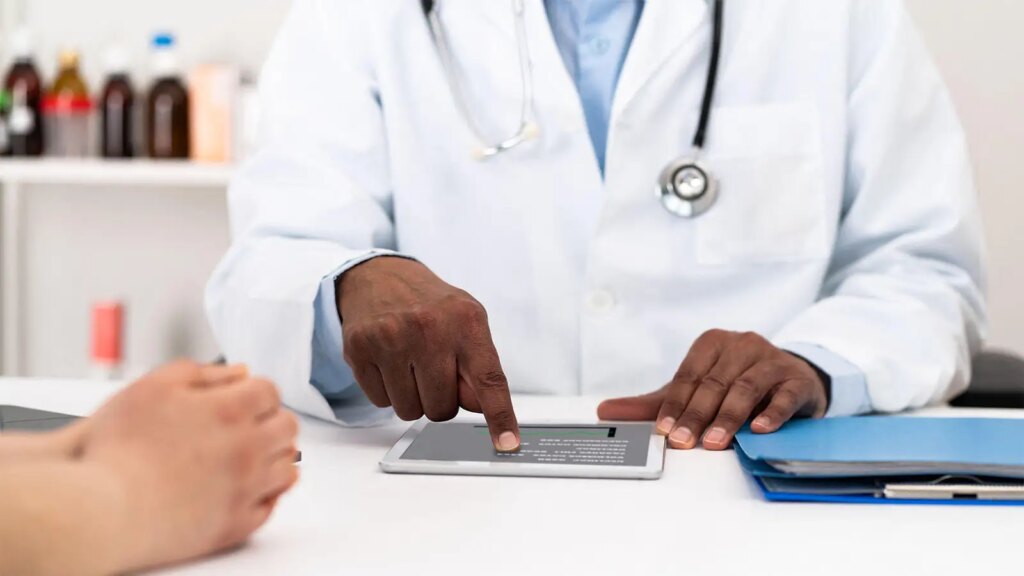
“So, what brings you here today?”
This is almost always how our visits start, either on the inpatient services or in the outpatient practices. I still remember the time I went with the senior resident to see my first patient as a third-year medical student, starting out all green on the wards, a patient who was quite ill and lying in a hospital bed, depending on all of us to get it right, and I was supposed to take the history.
As we walked into the room, the resident turned to me and said, “This is your first patient; have at it.”
Suddenly, everything I had learned about taking a history flushed out of my brain. I remember stumbling, feeling my heart rate accelerate and my palms and forehead get sweaty, trying to come up with some cogent questions that would help me figure out what the heck was going on with this patient and what I needed to do to help the team take care of them.
Setting the Agenda
After watching me stammering and being flustered over a few failed attempts to glean something, anything, this wise resident repeated those six sage words to me, sotto voce: “So, what brings you here today?”
Now, after practicing for nearly 30 years, this is still how I mostly start things off. It helps me get to and set the agenda, find out what’s going on, and can often help guide the visit and help us accomplish everything the patient wants to do and what we need to do, and moves things along efficiently.
Sometimes, on the schedule in our electronic medical record, under the “Notes” section for the appointment, there may be something about what’s bringing the patient in today. “Emergency department follow-up, ongoing abdominal pain and diarrhea” or “Pre-op for cataract surgery next week” or “Wants to be tested for COVID-19” or simply “Dizziness”. Sometimes this can help narrow your focus, sometimes there’s a whole world of other stuff going on.
When we pre-chart on a patient, we usually start by reading our last note, refreshing our memory on what happened during that day’s visit, what the plan had been, what results have come back of the labs and other tests we’d ordered, as well as any healthcare maintenance items that the patient was supposed to take care of in the interim.
Then we skim forward to review visits with other providers and specialists and possibly emergency room visits or surgeries that have taken place since we saw them last.
All this helps us get a picture about what’s been happening in their lives as reflected in our local record, and sometimes gives us some clues as to what we may be dealing with and addressing today.
Could AI Help?
One potential upgrade I hope for is that we can start to have some of this heavy lifting done up front for us, not by us or another person, but potentially by some sort of agentic artificial intelligence (AI) churning through the medical record, collecting data from outside sources, even querying the patient to find out what’s going on, to help better set the agenda for the day, for the brief 20 minutes (if that) that we have together.
Nowadays, when our patients arrive in the practice, they often tell us they saw some doctor at some other clinic at some point since they saw us last, and that doctor did a bunch of tests, but they don’t know what they were for or what tests were done, and they don’t have the results but the doctor promised they’d send them to us. Did we ever get them? More often than not there’s nothing there, no faxes, nothing in the shared electronic medical record. Instead, everything there is just a big empty space — waiting for us to answer it, to fill in the blanks.
Wouldn’t it be great if some system was smart enough to see other visits on other electronic medical records, collect and synthesize the information and results, provide a synopsis of the notes, and generate a cohesive summary of what happened out there? All of the claims data for our patient could be used to scrub, search, investigate, and synthesize everything that happened to them since we saw them last.
And for that information that’s contained within our shared electronic medical record, perhaps AI could turn it into a brief cohesive summary of what the doctors who had seen them in the interim were thinking, what they planned, and what they expected us to do for the patient. And then maybe it could help set up the appropriate services.
One Typical Example
Take, for instance, a patient who saw an outside surgeon, and the surgeon advised the patient to get his gallbladder removed, and to see his primary care doctor for preoperative medical clearance.
Claims data, check.
Office note, check.
Orders needed today, check.
This could all be teed up with a brief summary of the surgeon’s findings, their recommendations, and what testing they wanted us to do. These orders could be automatically entered into our electronic health record, associated with the appropriate diagnostic codes, and pended within the lab awaiting our approval. That might include a CBC, complete metabolic profile, PT/PTT, urinalysis, EKG and chest x-ray, associated with the diagnosis code for chronic cholecystitis, and the results would automatically set up to be routed to the surgeon along with our office note.
Or if this smart AI system noted that a claim for a mammogram or a colonoscopy had been filed, it could reach out to the provider that had done the procedure, upload a copy of the mammogram or colonoscopy report, file this against the patient’s health maintenance item of breast or colon cancer screening, and even appropriately update the next due date based on the findings.
Long ago, I remember speaking with doctors who had a medical assistant who would take care of all this. The assistant would find out what had happened to the patient since they had been in last, what they were coming in for, and what they needed that day, and all of this was queued up for the visit. But in the challenging economics of today’s healthcare landscape, that solution is just not viable, because it’s too expensive.
I bet that building an AI system like this can be complex, and the connections to all the systems needed to do this would be a challenge. But think of the added value, how smooth and efficient this could be, how much waste and duplicative care we could avoid, all while making sure our patients get exactly the care they need when they need it, so that nothing gets missed.
Please enable JavaScript to view the comments powered by Disqus.
Source link : https://www.medpagetoday.com/opinion/patientcenteredmedicalhome/120441
Author :
Publish date : 2026-03-23 18:34:00
Copyright for syndicated content belongs to the linked Source.