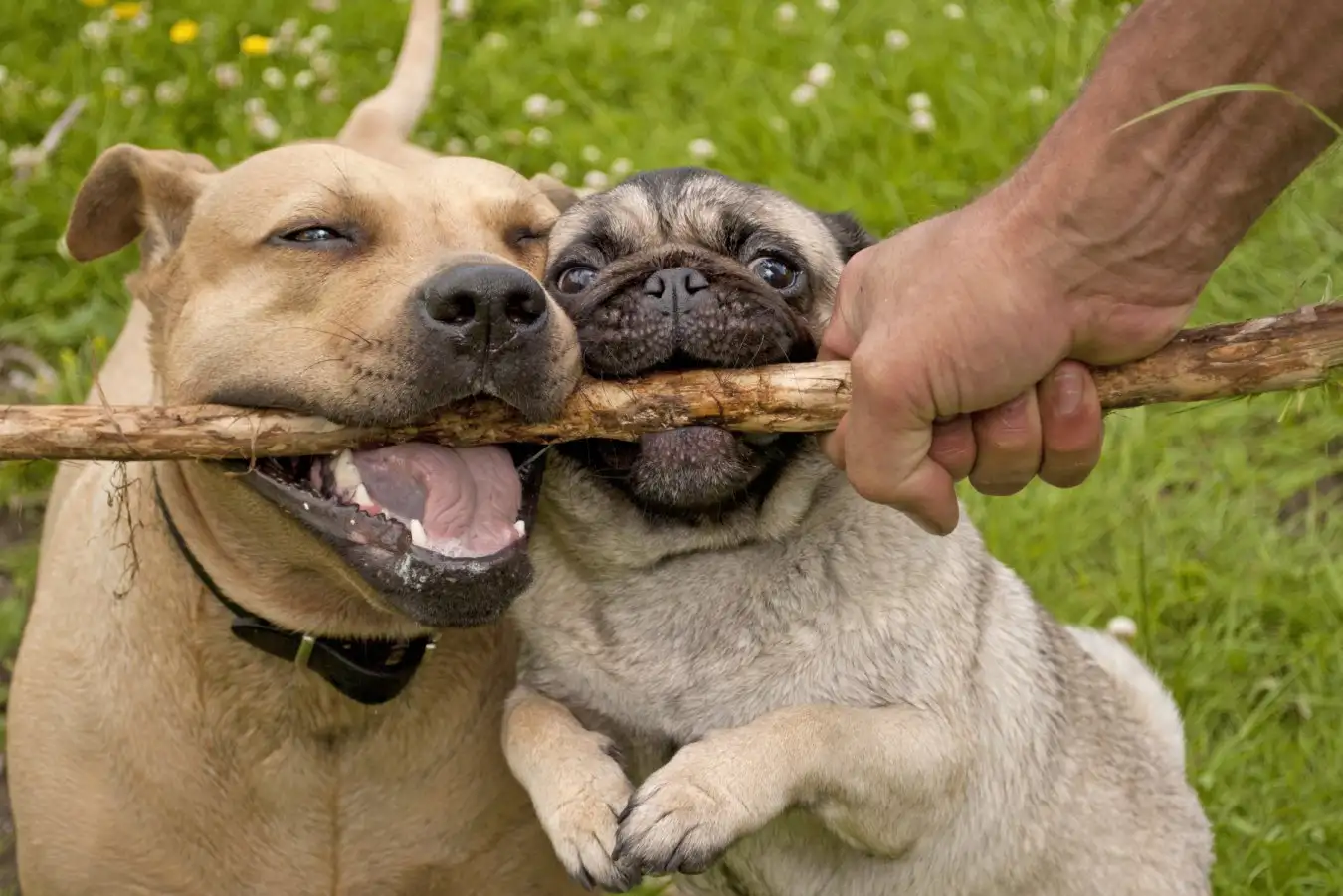
Fetch! Dogs may make us happy in more ways than one
Monica Click/Shutterstock
Dogs may be man’s best friend, but what if they boost our well-being not just by being our furry companions, but by altering our microbiome? A series of experiments in mice suggests that dog owners have a unique makeup of bacterial species that encourage empathetic and social behaviours.
We know that pets improve our life satisfaction and play a role in shaping our gut microbiome. Research also increasingly suggests that this microbiome influences our mental health and even helps mould our personalities. With dogs typically topping popular pet lists, Takefumi Kikusui at Azabu University in Japan wanted to understand whether the animals change our microbiome in a way that prompts good well-being.
To explore this, the researchers analysed surveys where the caregivers of 343 adolescents – aged 12 to 14, who lived in Tokyo – reported on various aspects of their social behaviour, such as how often they felt lonely, were cruel to others or struggled to get on with their peers. The surveys also revealed that about a third of the adolescents had a pet dog.
The researchers found that those with dogs ranked as less socially withdrawn and behaved less aggressively than the non-dog-owners, on average. The team accounted for other factors that may influence such behaviours, such as sex and household income.
Saliva samples also revealed that several species of Streptococcus bacteria were more abundant in the adolescents with dogs, which has been linked to reduced depressive symptoms.
“If you’re playing with a dog a lot, you’re going to have a lot of exposures to the microbes the dog has, from licks [and] them jumping up on you,” says Gerard Clarke at University College Cork in Dublin, Ireland. These bacteria can travel down to the gastrointestinal tract, where they may produce anti-inflammatory chemicals, such as short-chain fatty acids, which improve mental health, he says.
In a critical part of the study, the team transplanted oral microbes from three dog owners and three non-dog-owners into the stomachs of germ-free mice. Based on stool samples, they could tell that the microbes had reached the mice’s guts.
Over the next few weeks, the team had the animals carry out a series of behavioural tests. In one, the mice were placed in a cage with another mouse that was trapped in a tube. The researchers observed that the mice that received transplants from dog owners chewed the tube and poked their nose through holes in it significantly more often than those that received transplants from non-dog-owners.
This suggests that the former mice had more empathy and were trying to help, says Kikusui. We’ve recently learned more about care-giving among mice, with studies finding that they assist their pregnant companions with giving birth, and even give a form of first aid.
In another test, the dog-owner transplant recipients sniffed at an unfamiliar mouse in their cage more often than the other group, which suggests they were more social, says Clarke. “These social behaviours are relevant across species, including humans,” he says. “Social networks are a positive thing for mental health – if you have low exposure to social networks, or if your social network is small, then that probably isn’t a good thing.”
Learning more about these microbial changes could one day benefit people without dogs, for instance, if we can develop probiotics that mimic them, says Clarke. But studies in other geographical locations, where microbial exposures may vary, are needed, he says.
Topics:
Source link : https://www.newscientist.com/article/2506898-dogs-may-make-us-more-caring-and-sociable-by-changing-our-microbiome/?utm_campaign=RSS%7CNSNS&utm_source=NSNS&utm_medium=RSS&utm_content=home
Author :
Publish date : 2025-12-03 16:00:00
Copyright for syndicated content belongs to the linked Source.