[ad_1]
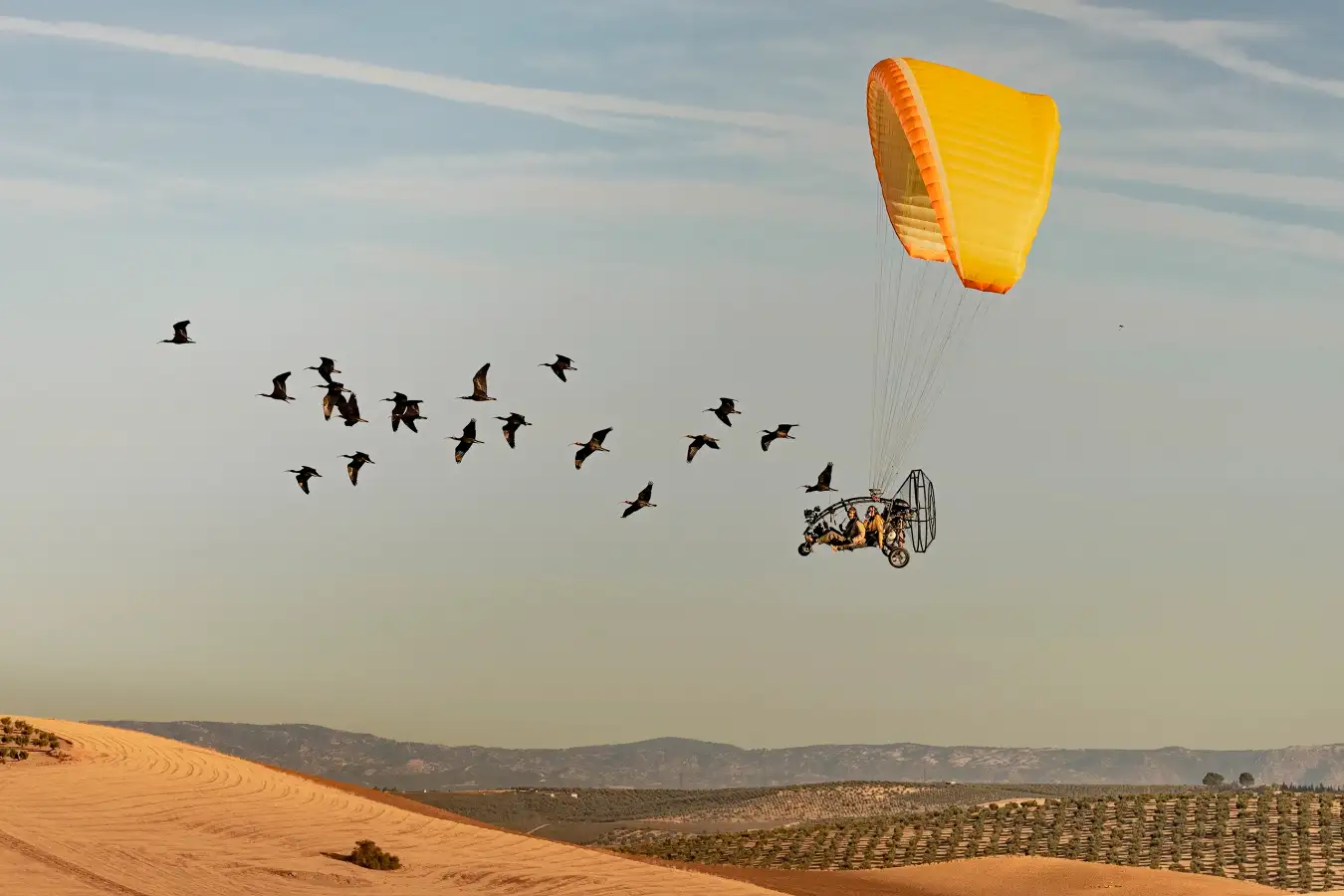
Gunnar Hartmann’s winning image from Nature‘s Scientist at Work photo competition 2026
Gunnar Hartmann
Poaching and a changing climate forced the northern bald ibis (Geronticus eremita) out of the northern foothills of the Alps around 400 years ago. But now they are on their way back.
This photograph shows Helena Wehner flying in the passenger seat of an ultralight aircraft, singing a German song through a megaphone to guide the birds on their way to their new winter homes. Wehner, behind pilot Johannes Fritz, is part of an Austrian conservation group known as Waldrappteam – named after the ibis’s local name – which is trying to establish a healthy European population once more.
The birds are hand-raised by human carers and form bonds, which means they are happy to follow even the people riding in the aircraft. Since its inception in 2004, the migration project has amassed numerous followers and fans from local communities along the birds’ route. The 50-day journey covers 2800 kilometres from south-east Germany to south-west Spain.
The stunning shot of the formation flying over the olive groves of Jaén in the south of Spain was taken by student Gunnar Hartmann and won him the overall top spot in Nature’s 2026 Scientist at Work photography competition. Hartmann joined the conservation team as a volunteer in 2024 while a science undergraduate at the University of Koblenz in Germany. In an announcement about the awards, Hartmann said the image brought up “so many emotions” for him. “I can smell the air from this day and imagine the sounds,” he added.
Other winning photographs in the Scientist At Work competition include this image from deep in the Red Sea off the Saudi Arabian coast, below, taken by marine biologist Uli Kunz. It shows scientists installing an incubation chamber over a coral reef ecosystem. The project aims to understand how different corals – Acropora here – react to rising water temperatures caused by climate change by measuring their oxygen output.
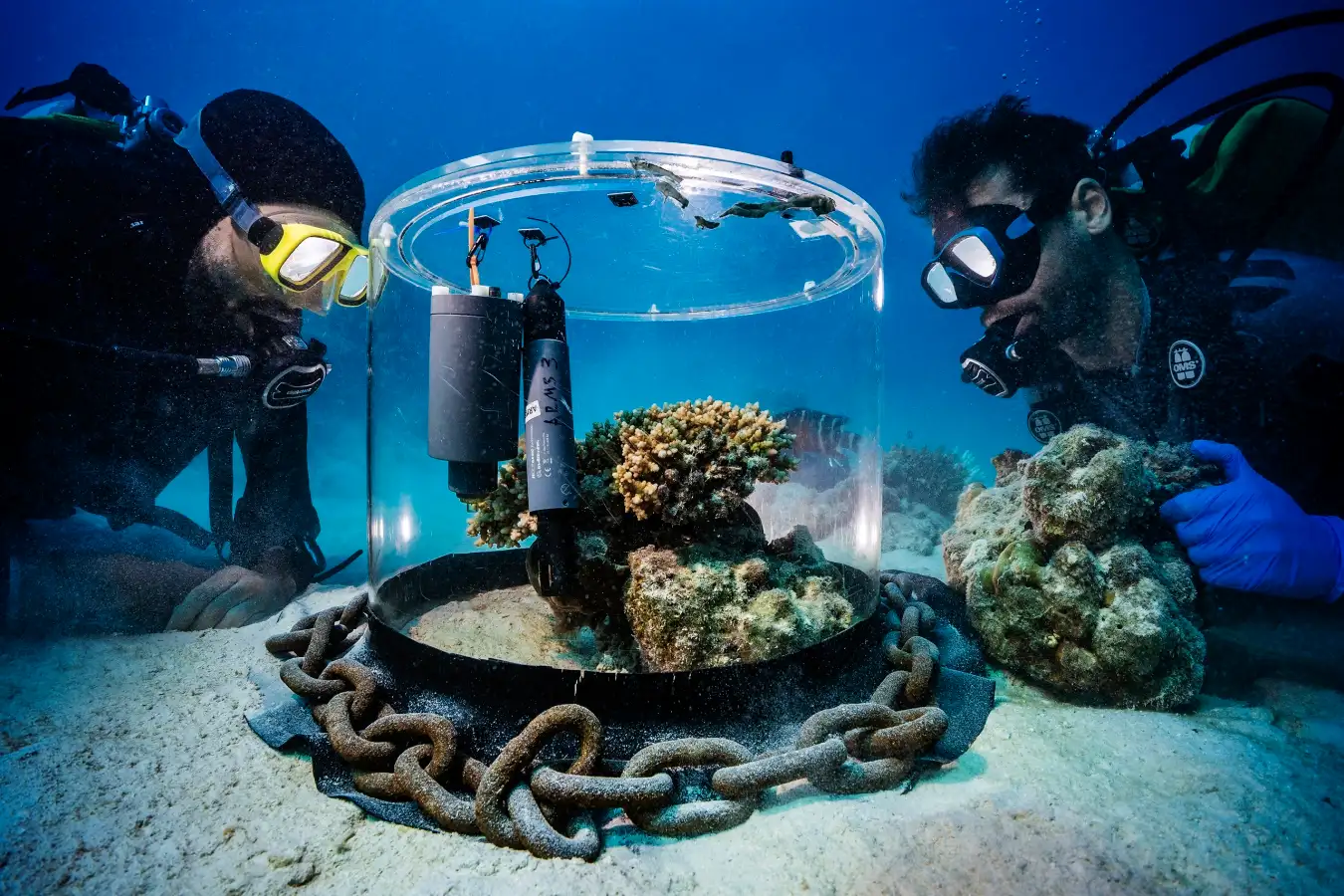
An incubation chamber is installed over a coral-reef ecosystem in Uli Kunz’s winning shot
Uli Kunz
The winning image below, taken by Robert Harcourt, shows biologist Michael Doane holding his breath and diving down to carefully skim the skin of a whale shark (Rhincodon typus) with a syringe at Ningaloo Reef off the coast of Western Australia, collecting a sample of the microorganisms that dwell there.
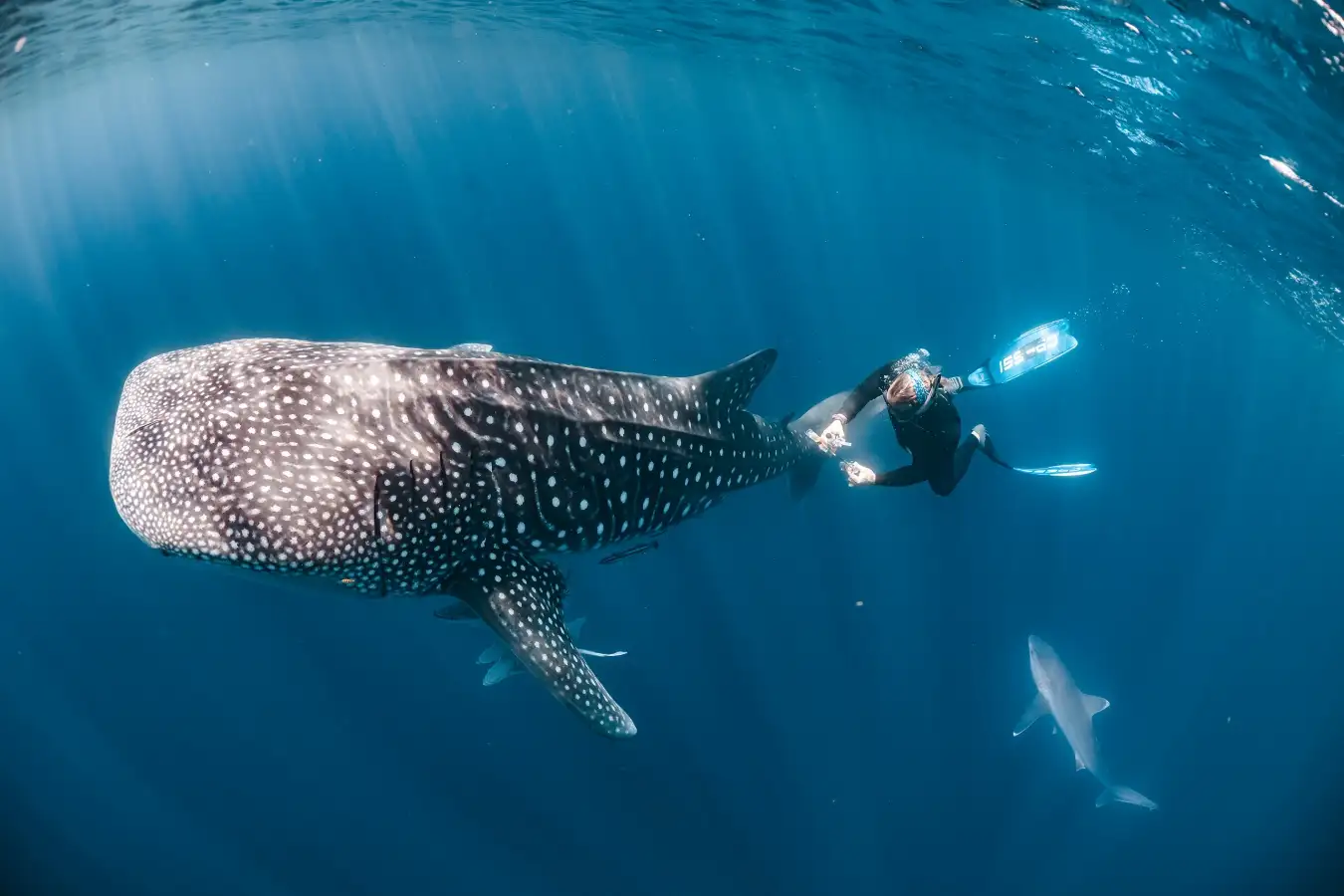
Marine biologist Michael Doane gets up close and personal with a whale shark in Robert Harcourt’s winning shot
Robert Harcourt
Another winning aquatic image, this time shot from above, shows algal blooms on Dog Lake in Ontario, Canada. The Microcystis aeruginosa and Dolichospermum flos-aquae create a “toxic, vile-smelling layer of rot” on the lake each summer, according to photographer Haolun (Allen) Tian, a PhD student at Queen’s University in Kingston, Canada. The thick green bloom kills fish and clogs water supplies. The boat in the image, shown below, contains scientists taking water samples for environmental DNA analysis.
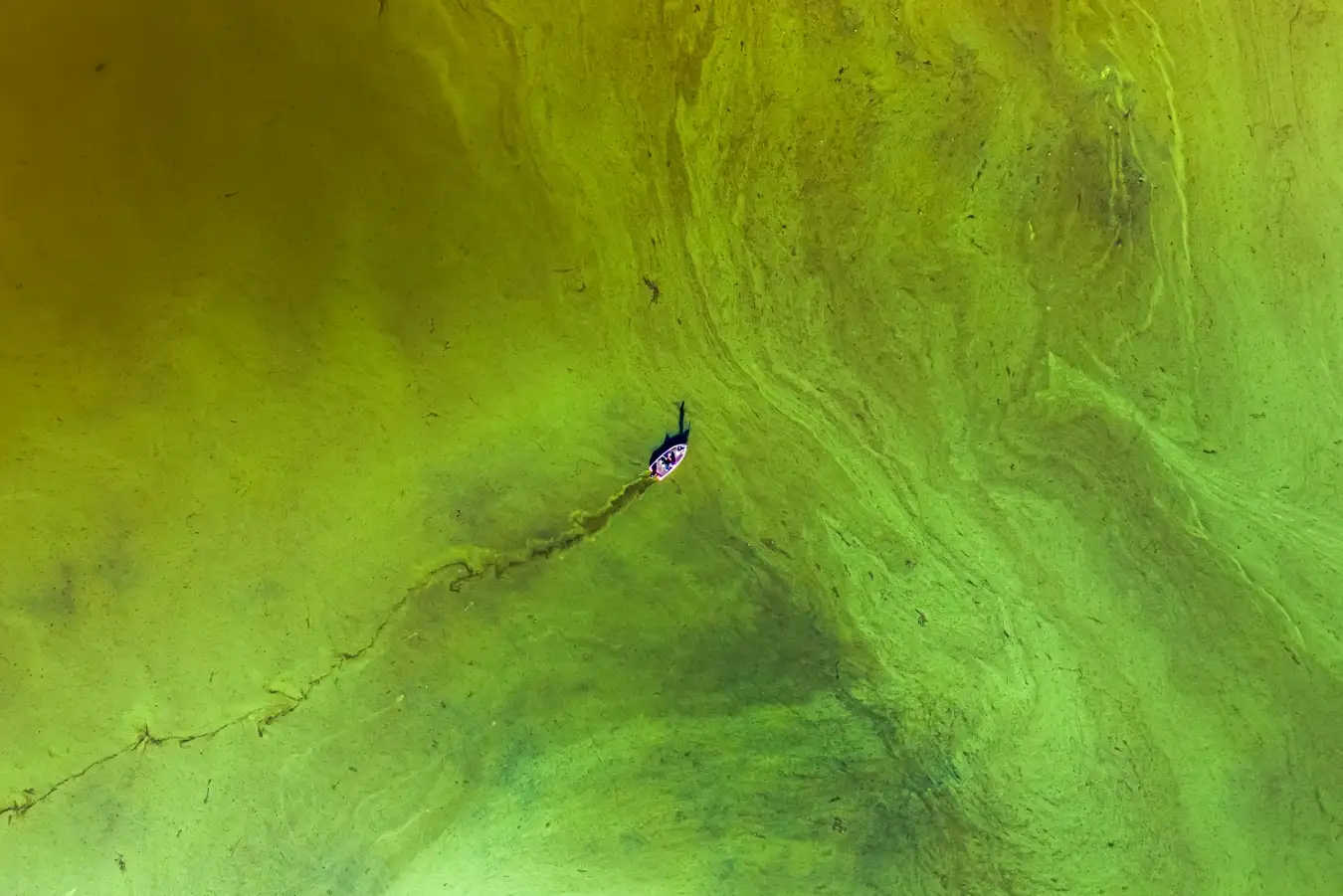
Algal blooms on Dog Lake in Ontario, Canada, were snapped by Haolun (Allen) Tian
Haolun (Allen) Tian
Finally, photographer Shayanta Chowdhury captures an entomologist at the University of Notre Dame in Indiana observing a yellow fever mosquito (Aedes aegypti) under a microscope, below. Scientists are studying how the drug nitisinone can be used to kill blood-feeding insects, and the mosquito has been fed a sugar mixture spiked with both the drug and a fluorescent dye.
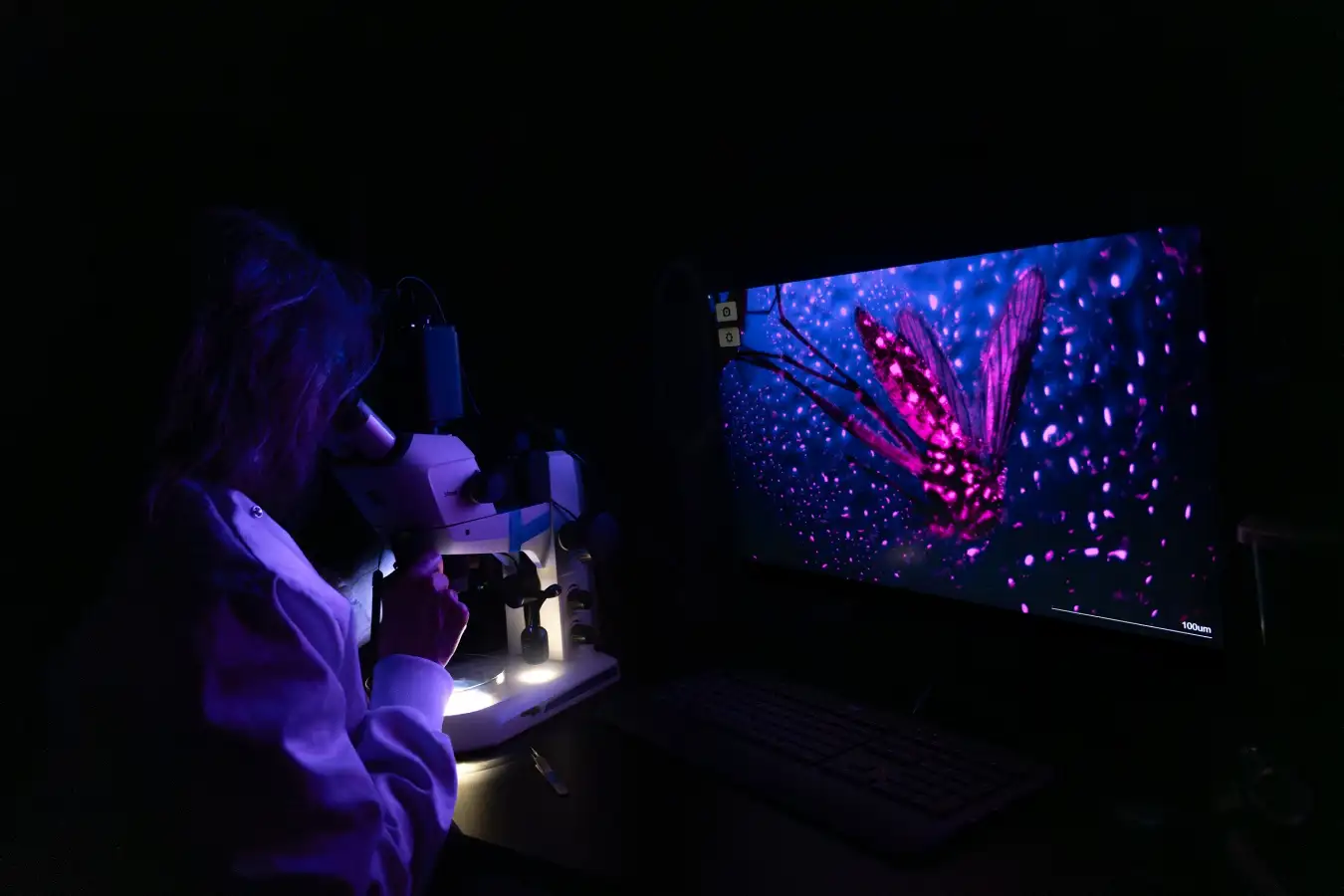
Shayanta Chowdhury’s winning photograph of an entomologist observing a yellow fever mosquito
Shayanta Chowdhury
Topics:
[ad_2]
Source link : https://www.newscientist.com/article/2529871-dramatic-photo-of-ibis-being-guided-to-their-winter-homes-wins-award/?utm_campaign=RSS%7CNSNS&utm_source=NSNS&utm_medium=RSS&utm_content=home
Author :
Publish date : 2026-06-11 12:00:00
Copyright for syndicated content belongs to the linked Source.