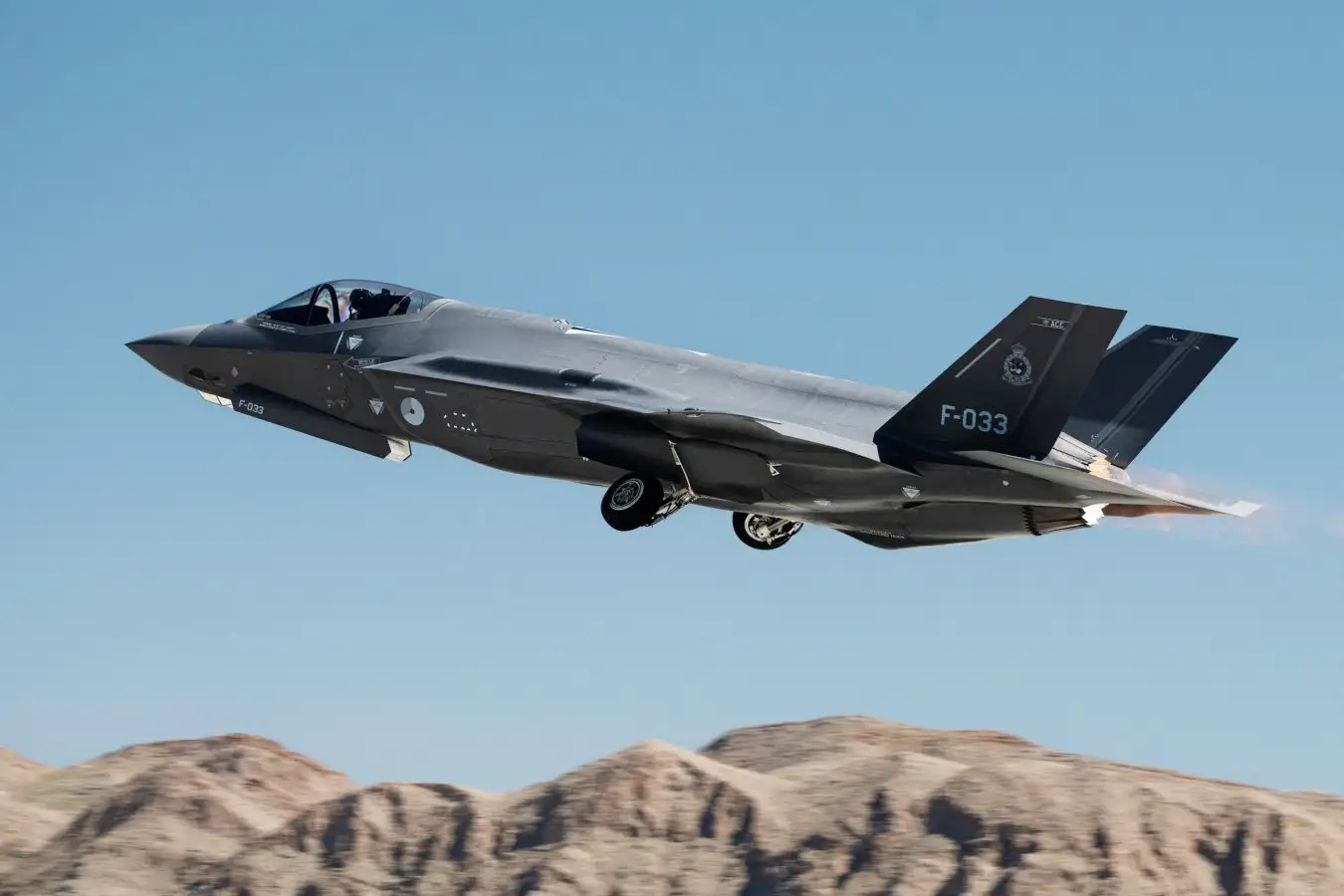
Royal Netherlands Air Force pilots tested brain-reading technology in a simulator
Alireza Boeini/Alamy
Fighter pilots in training are having their brainwaves read by AI as they fly in virtual reality to measure how difficult they find tasks and ramp up the complexity if needed. Experiments show that trainee fighter pilots prefer this adaptive system to a rigid, pre-programmed alternative, but that it doesn’t necessarily improve their skills.
Training pilots in simulators and virtual reality is cheaper and safer than real flights, but these teaching scenarios need to be adjusted in real time so tasks sit in the sweet spot between comfort and overload.
Evy van Weelden at the Royal Netherlands Aerospace Centre, Amsterdam, and her colleagues used a brain-computer interface to read student pilots’ brainwaves via electrodes attached to the scalp. An AI model analysed that data to determine how difficult the pilots were finding the task.
“We are continuously working on improving [pilot] training, and what that looks like can be very different,” says van Weelden. “If you’re not in the field, it sounds very sci-fi, I guess. But, for me, it’s really normal because I just see data.”
Fifteen Royal Netherlands Air Force pilots went through training while the system switched between five different levels of difficulty – accomplished by increasing or decreasing the visibility within the simulation – depending on how hard the AI model determined they were finding missions.
In later interviews, none of the pilots reported noticing that the system was altering the difficulty in real time, but 10 of the 15 pilots said they preferred the changing tests to a pre-programmed exercise where difficulty ramped up incrementally in regular steps.
But crucially, none of the pilots showed any improvement in terms of how well they accomplished tasks within the adaptive simulation compared with a rigid one. In short, pilots liked the mind-reading set-up, but it didn’t make them better pilots.
The problem could be the unique nature of people’s brains, says van Weelden. The AI model was trained on data from another group of novice pilots, then tested on the 15 study participants. But it is notoriously hard to get AI models that analyse brainwaves to work on the whole population. Six of the pilots in the test showed little change in difficulty level readings, indicating that the AI system may not have correctly interpreted their brain data.
James Blundell at Cranfield University, UK, says similar technology is being studied for use in real aircraft to ensure pilots are in control. “They’ve looked at whether we can detect startle – like being in a bit of a panic – and what the aircraft might then do to calm you and then reorientate you,” says Blundell. “So you’re upside down, [and the aircraft might say] you really need to look at the attitudes, you need to look at the information that’s down here, that’s going to bring you back to straight and level.”
These systems have shown promise in isolated scenarios, but it remains to be seen whether brain-reading technology can be used to improve safety in aeroplanes. “There’s a long way to go [in order to achieve that],” says Blundell.
Topics:
Source link : https://www.newscientist.com/article/2510975-dutch-air-force-reads-pilots-brainwaves-to-make-training-harder/?utm_campaign=RSS%7CNSNS&utm_source=NSNS&utm_medium=RSS&utm_content=home
Author :
Publish date : 2026-02-03 18:00:00
Copyright for syndicated content belongs to the linked Source.