[ad_1]
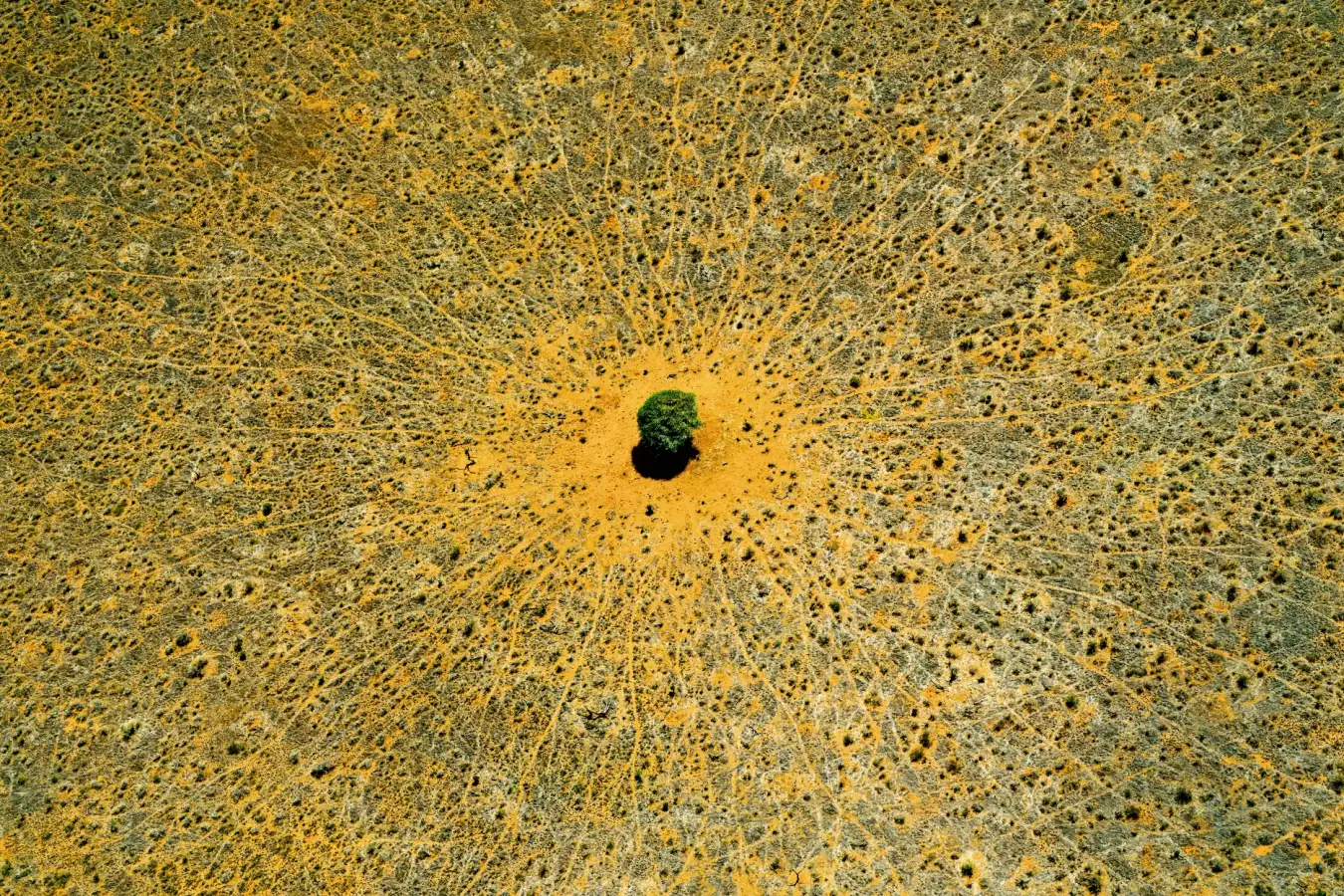
The famous Tree of Life in Tsavo East National Park, Kenya
© Yann Arthus-Bertrand
In the parched terrain of Kenya’s Tsavo East National Park, the spiderweb of animal tracks that splay out from an ancient acacia, known as the Tree of Life, are reminiscent of roots. The scene is a reminder of the fragility of life’s connection to water.
Animals come from far and wide to shelter under the shade of this solitary tree. The most marvellous thing about water is the infinite ways that life responds to it – a tree sends down roots, a canopy grows, animals converge, a landscape is marked.
This image was captured by Yann Arthus-Bertrand, author of the bestselling photo book The Earth from Above, published in 1999. It is included in his new book, Freshwater (out 11 June), a look at the world through the lens of its freshwater systems, co-written with biologist Bill François.
François says the tree shot is an “iconic picture from Yann’s work”. “A tree can spread 400 litres of fresh water a day in the surroundings by leaves’ transpiration,” he says. “And in its shade, temperature drops by 5°C. The tree is helping underground water reach the surface of the Earth and nurture life, acting as a living water well.”
Freshwater explores the scarcity of perhaps our most precious resource, which can sometimes seem plentiful and limitless. We may think that we live in a water world, but, as the authors point out and the images in the book demonstrate, water – especially fresh water – is actually the thinnest skin on what would otherwise be a barren, dry and lifeless planet.
“Let’s imagine for a moment that all the water on our planet was gathered into a single drop,” they write. This drop would be 1385 kilometres in diameter, representing over a million cubic kilometres of water. “At first glance, this seems enormous, beyond what we can imagine,” they write – yet this is less than the distance from Paris to Rome.
In reality, the sight of this drop of water, illustrated in Freshwater next to the scale of Earth, is sobering. Even more dramatic is the minuscule, full-stop’s worth of fresh surface water – this drop would be a mere 56 kilometres in diameter.
“If Earth were the size of a hot-air balloon, this fresh surface water would fit inside a wineglass. Tropical forests, civilizations, and living beings—from earthworms to giant sturgeons—depend on this small drop, representing less than a thousandth of the total water on Earth,” the authors write.
Below is another shot from Freshwater, of white pelicans in the Djoudj National Bird Sanctuary, Senegal.
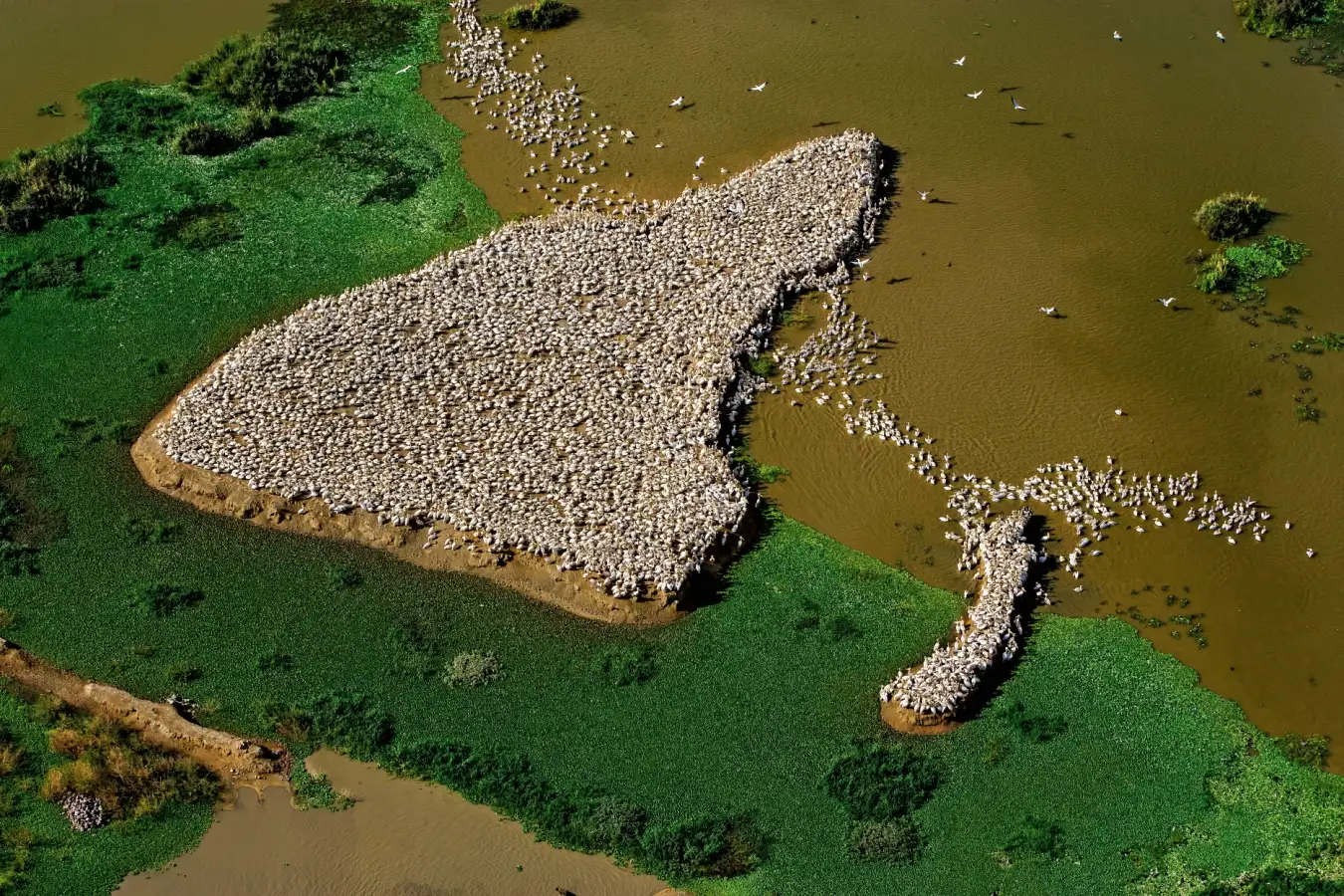
White pelicans in the Senegal river delta
Yann Arthus-Bertrand
“This park is a mangrove ecosystem, so a very important place for many species, at the interface between salt water and fresh water. It plays a particularly vital role for juvenile saltwater fish. Two thirds of fish caught in the world’s marine fisheries have grown in an estuary,” says François.
“Like many other places, this estuary is threatened by the human activities impacts on the river,” he says. “In this case, damming of the river and draining of nearby plains for agriculture led to an overgrowth of water plants that clogged the ecosystem and created a mosquito and water snails invasion.”
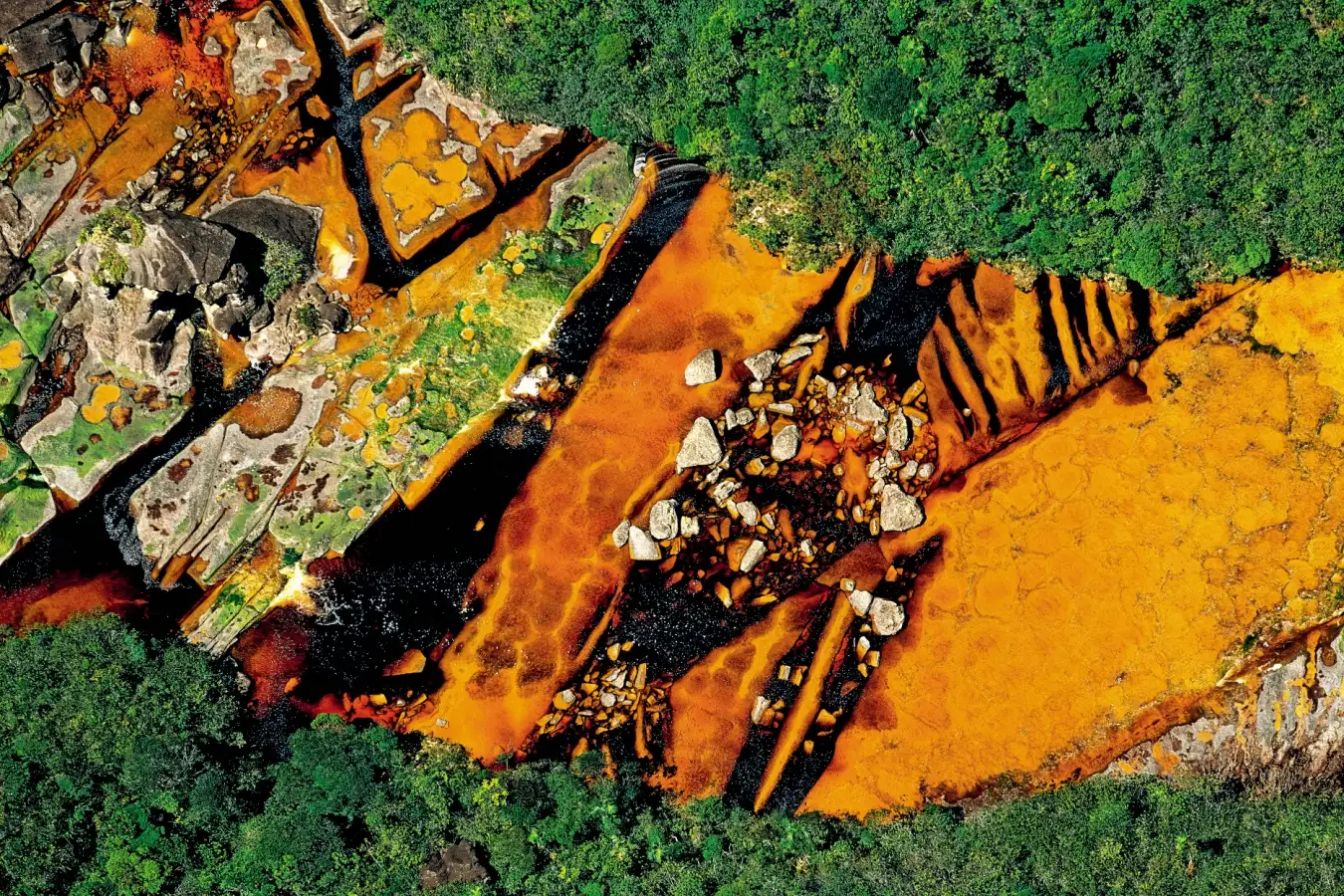
A river on the Auyán tepui in Venezuela
© Yann Arthus-Bertrand
Above is another river snapped by Arthus-Bertrand, this time on the Auyán tepui in the Gran Sabana region of Venezuela. Below is his photograph of a waterfall on Bråsvellbreen glacier on Nordaustlandet Island, Norway.
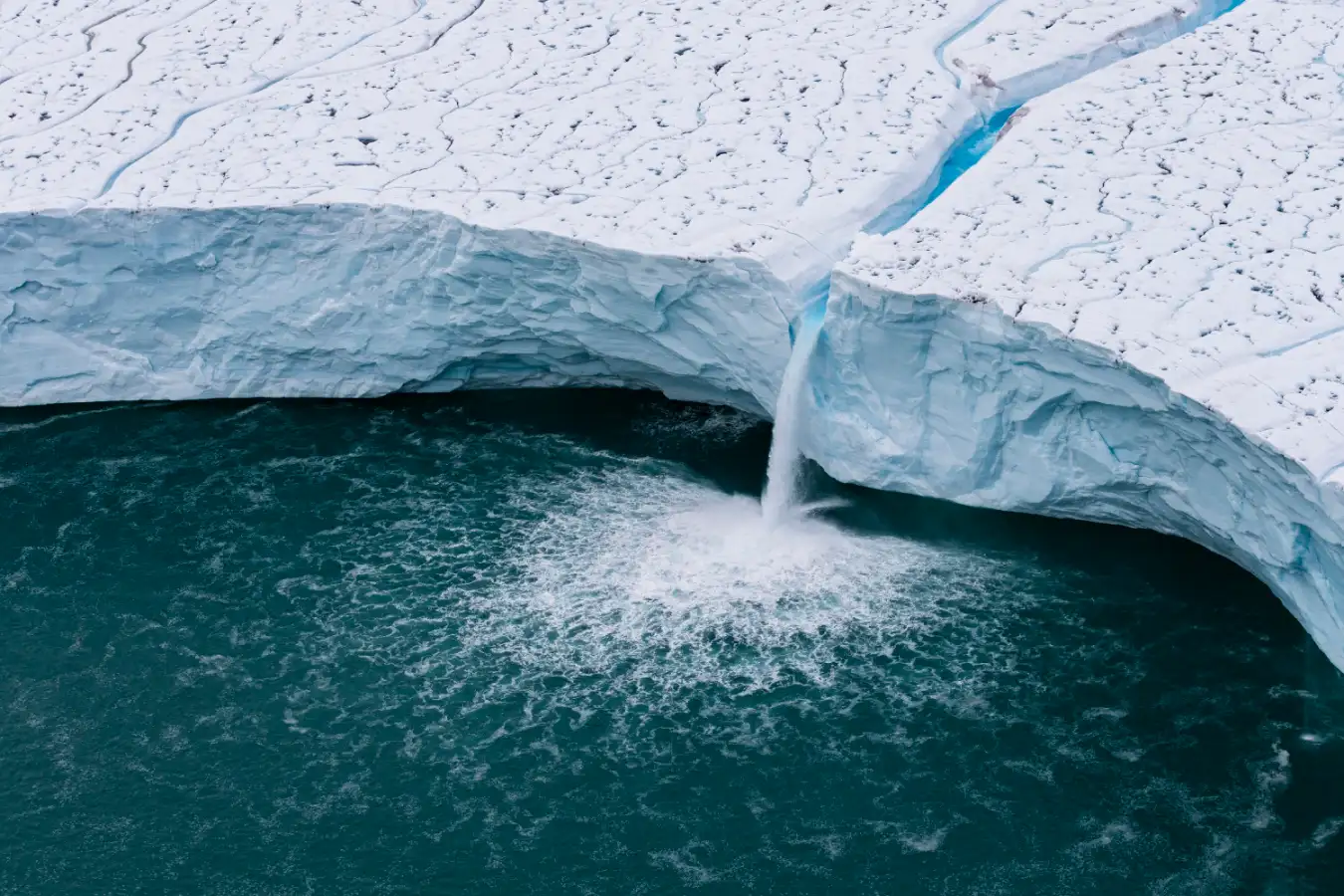
A waterfall on Bråsvellbreen glacier in Svalbard, Norway
© Yann Arthus-Bertrand
The beauty of fresh water comes from the complex interplay of its molecules’ physics and chemistry. Salt and air dissolve in it; animals can swim in it; ice floats when other frozen substances sink; and it forms a solid, a liquid and a gas. All three of these phases – running rivers, vast and exquisite lakes, glaciers, polar ice caps, storm clouds and fog – have been the playthings of poets and artists for thousands of years.
Like many beautiful things, however, fresh water can also be transient, altering the appearance of a landscape in scales that span seconds as well as millennia. “A drop of water remains in the atmosphere for a short period, about ten days, compared to several thousand years in the ocean,” the authors write. “Therefore, it is quite rare for a drop to have the chance to end up in the sky; this happens on average every 2,737 years.”
Topics:
[ad_2]
Source link : https://www.newscientist.com/article/2527163-earth-from-above-author-returns-with-astonishing-freshwater-images/?utm_campaign=RSS%7CNSNS&utm_source=NSNS&utm_medium=RSS&utm_content=home
Author :
Publish date : 2026-05-27 18:00:00
Copyright for syndicated content belongs to the linked Source.