
[ad_1]
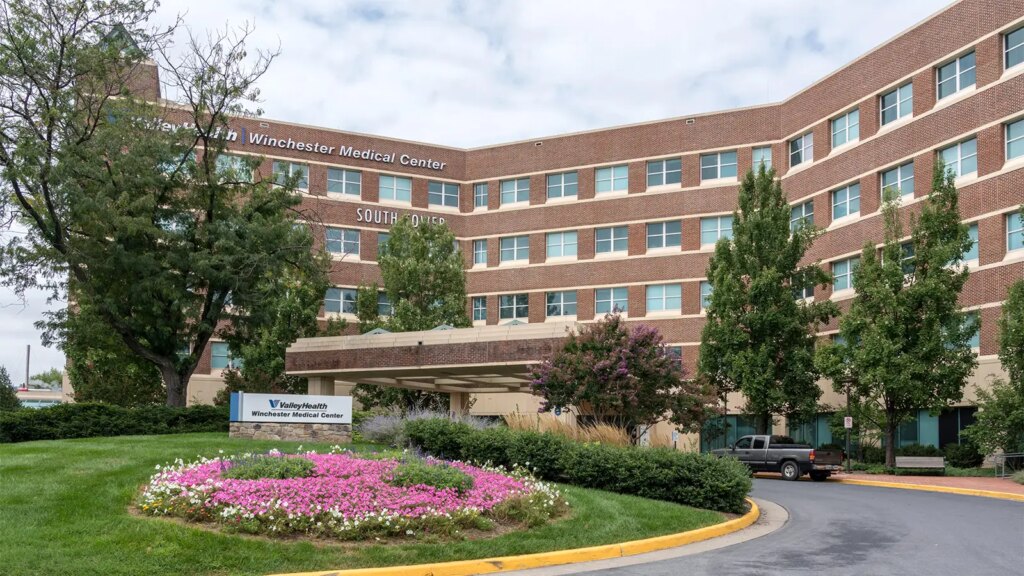
Emergency medicine physicians under contract with Valley Health in Winchester, Virginia, said they were blindsided by the news that the health system planned to end their contract and partner with a private-equity owned practice management company instead.
“You’re always taught as a young kid, you got to stand up for your rights,” said Ronak Shah, MD, vice president of Emergency Medicine of Blue Ridge (EMBR), an independent, physician-led company. Those ideals, however, crashed headlong into harsh realities — from the cost of litigation to the lack of strong legal protections for independent practice physicians in Virginia.
EMBR has 45 full-time physicians, 18 advanced practice providers, and around 35 per diem physicians working across six Valley Health hospitals in Virginia and West Virginia.
‘Blindsided’ by Valley Health’s Decision
On the morning of April 2, when EMBR President David Watts, MD, was called into an emergency meeting with Valley Health’s leadership, the group was halfway through a 5-year contract, according to Shah.
Watts was told that EMBR’s contract had a 6-month “termination-without-cause” clause and received notice that the group would be terminated at that point. Valley would instead partner with SCP Health, an Atlanta-based practice management company owned by the Canadian private equity firm Onex, Shah said.
Roughly an hour later, staff were told the news during a hospital-wide Zoom meeting.
The emergency medicine group went through “all the stages of grief — shock, bewilderment, disappointment, anger,” Shah said. Then they began asking, “Do we fight this?”
Valley Health’s President and CEO Mark Nantz said the changes were “not a reflection of the quality of care” their physician partners provided, according to the Winchester Star. He blamed the changes on cuts to Medicaid reimbursement under the “One Big Beautiful Bill Act.”
Valley also announced it was terminating its hospitalist partners, Sound Physicians, beginning in 2027, the Star reported.
When he heard about the emergency meeting on April 2, emergency physician Chris Turnbull, MD, had just completed a presentation on performance improvement to a committee run by the president of the medical staff and senior leadership.
“We were totally blindsided … having what we thought was a very strong relationship with the administration,” Turnbull said. After having met or surpassed performance metrics for the past several years, not being included in the request for proposals was a “kick in the teeth,” he added.
Turnbull has lived and worked in Winchester for 24 years and said he was drawn to EMBR because it was a democratic, independent group. EMBR was formed about 2 years ago, but the six preceding companies that consolidated to form EMBR at Valley’s request have a history of about 25 years, according to Shah.
EMBR staff were given packets outlining the basic terms of their contracts and the number to call to accept a job offer. Physicians at Winchester Medical Center would see a pay cut, while those at Valley’s federally qualified health centers would get a pay bump, Shah said. Turnbull said the base rate he was offered was arguably lower than the regional standard.
Physicians would also become 1099 employees, meaning they would no longer receive health insurance or retirement benefits, Shah said. There can be tax advantages to 1099 employment, but there’s a “learning curve” to that process, he noted.
Notably, SCP Health announced plans to cut the hospital’s physician staffing from 90 hours per day to 70, and increase advanced practice provider coverage from 30 to 60 hours. At least for some period, Turnbull predicts locum tenens will replace staff, working several days, staying in a hotel, and then leaving at the end of each week.
Watts reached out to Robert McNamara, MD, chief medical officer of the American Academy of Emergency Medicine (AAEM) and a chair of the Department of Emergency Medicine at Temple University in Philadelphia. (Watts completed his residency under McNamara.)
McNamara recently helped a group of emergency physicians contracted with Peace Health in Eugene, Oregon, to stave off a similar attempt at displacement by a corporate staffing firm.
When to Fight, When to Walk Away
AAEM sent a “letter of support” to Valley Health’s board raising concerns for how the change to the emergency department staffing would impact patients. It cited a 2025 Annals of Internal Medicine study finding that private equity involvement typically leads to cuts in emergency department staffing reductions and is associated with increased mortality rates in patients who visit the ED.
While many of the EMBR physicians initially wanted to push back, Shah said, some felt the change was inevitable. Members also weren’t sure they could sustain a costly, drawn-out legal battle. McNamara told MedPage Today that even relatively brief legal actions, like that in Oregon, can cost hundreds of thousands of dollars.
For younger physicians, the calculus is especially tricky. The average emergency medicine resident graduates with $250,000 in debt, he said. “If you fight this and then you lose, you don’t have a job,” McNamara said.
In addition, there’s the matter of state law. Only 10 or so of the EMBR physicians worked at Valley Health facilities in West Virginia, where corporate practice of medicine protections are stronger than those in Virginia. While Virginia has had a few attorney general opinions favorable to independent physicians, “there’s no clear statute like we had in Oregon,” McNamara told MedPage Today. Oregon enacted a law in June 2025 prohibiting non-clinician ownership of medical practices.
AAEM’s lawyers said a lawsuit would be “a very significant uphill battle,” and the physician group now feels “we don’t really have much of a leg to stand on,” Shah said.
In the 2 months since the announcement, ED staff have taken other jobs and put houses on the market. Shah estimates only 20% to 25% of EMBR staff plan to stay. Even if they won back their contract tomorrow, EMBR would be unlikely to fulfill it, he said.
He and several partners have met with state senators and with members of the Virginia House of Delegates to advocate for legislation to protect independent physicians.
“There isn’t much that we see as a way to preserve the company, but our demise of our company can still have something good come out of it,” Shah said.
Please enable JavaScript to view the comments powered by Disqus.
[ad_2]
Source link : https://www.medpagetoday.com/special-reports/features/121757
Author :
Publish date : 2026-06-15 17:16:00
Copyright for syndicated content belongs to the linked Source.