
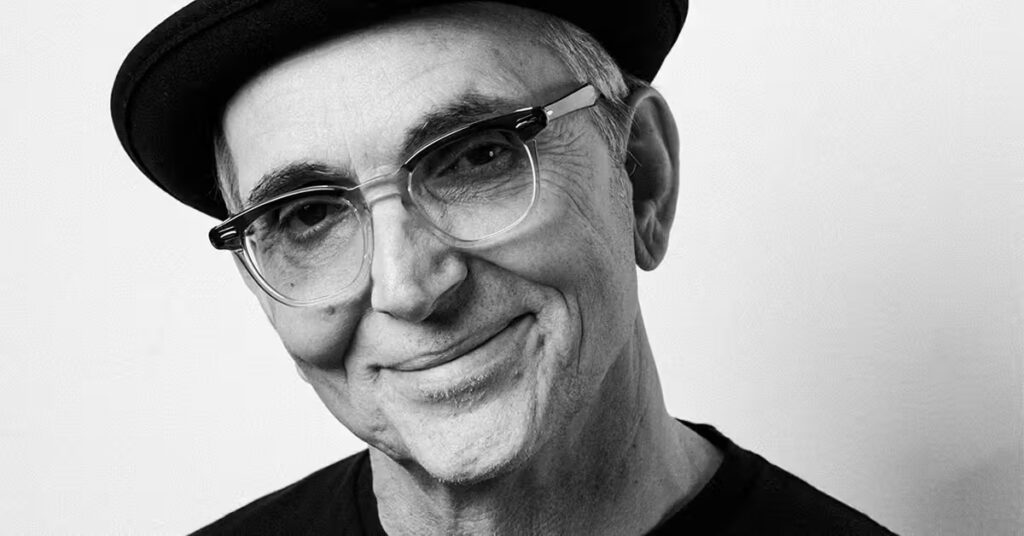

- Everclear frontman Art Alexakis is sharing his decade-long journey with Multiple Sclerosis.
- He was diagnosed with relapsing MS in 2016.
- He discusses his most recent treatment and other ways he cares for himself.
Art Alexakis, singer and frontman of the Grammy-nominated rock band Everclear, wrapped up a 43-show tour celebrating the 30th anniversary of the band’s album, Sparkle and Fade.
The anniversary was extra special for the 63-year-old rock star as he has been living with relapsing Multiple Sclerosis (MS) for 10 years.
“I’m grateful for aging. I’m grateful for the MS. It makes me try harder. I get to play so many shows a year, and having to go through airports is hard, but doing that, keeping moving and keeping working at it is one of the things that has really helped me with my gratitude and with my mental outlook,” he told Healthline.
“If you try to do something and you accomplish it, it feels good. And even though it gets harder, I can still do it right now. I’m feeling pretty good.”
Alexakis was diagnosed with MS following a car accident in 2016. A few weeks after the accident, he began experiencing a tweak in his neck. His doctor suggested he get an MRI.
“So, I go get the MRI, I show up in his examination room, and there were six guys in there. They went on to tell me that two of them were neurologists, and that the pathologist who read the MRI had seen lesions on my spine and my brain, and they were pretty certain that they were MS,” he said.
Once Alexakis received the diagnosis at 54 years old, he realized he had been experiencing symptoms since his 20s, including balance and walking issues, fatigue, and skin sensations.
“They thought that I had it for over 25 years just by the look of the lesions. In my 20s, I would have pretty severe vertigo. Rage is a thing. As I got older, these things became more pronounced, especially the balance and just skin feeling weird, and sometimes my arm not working well out of nowhere,” he said. “It was a blessing to me to get that diagnosis because a lot of people go through life and never get diagnosed correctly.”
Alexakis’ neurologist Regina Berkovich, MD, PhD, said a misconception about MS is that it can only occur between the ages of 18 and 40.
“However, we can see it in childhood and as late as senior age,” she told Healthline. “The lesson is that MS doesn’t follow any rules and that’s why it’s so fascinating to deal with the condition on a professional level, and at times, it can get challenging on the level of individual patients.”
Berkovich has helped Alexakis find a treatment that works for him: Tysabri, a monoclonal antibody administered as an intravenous infusion.
“An important learning experience I take for myself from Art’s story is that not every medication works the same for different people or even for the same person during different periods of life,” said Berkovich. “Tysabri was not his first medication, but it was definitely the one that really made the difference.”
Within the last few decades, she said, treatment has evolved from focusing on symptoms or relapse treatment to a disease-modifying therapy era.
“Since the 1990s, we started having disease-modifying therapies, and those therapies, if applied properly and for the right person, may show true modification of the long-term outlook, meaning improvement as compared to someone not being treated,” Berkovich said.
She hopes Alexakis’ story inspires others to seek out treatment that works for them.
“A lot of patients don’t feel empowered to ask questions and advocate for themselves to try different therapies, so it’s important that Art is showing the example of having these open discussions and setting up his personal goals around treatments,” said Berkovich.
“As an MS specialist, you constantly learn so much from every person you get to treat, and I’ve learned tremendously from Art. His resilience, positive thinking, and trust are truly inspiring, and I feel empowered by him.”
Healthline spoke with Alexakis to learn more about his MS journey, the early symptoms he missed, and what’s next for Everclear.
This interview has been edited and condensed for clarity and length.
Alexakis: I can’t run like I used to, so I swim. I do physical therapy three times a week. I try to stay away from inflammatory foods, for the most part. And I do my treatment, my medication, and it works for me. I have to work harder, and I’m okay with that.
I follow the world champion Seahawks and the world champion L.A. Dodgers, and both my teams in different cities won it all this year, so that helps me.
Other than cooking and doing things with my family around the house, I don’t really have a lot of hobbies. I don’t go to clubs anymore because that’s where I work.
I [listen to] a lot of podcasts, specifically Seahawks podcasts or Dodger podcasts, and I enjoy it. You get older, you find things you like, you find things you don’t like. Stick to the things you like, especially when they’re not bad for you.
Alexakis: I don’t want to say I like to use my attention to do this and this. I just want to be of service to people. It’s part of the program. I have learned through my relationship with my higher power to be a force of good in this world.
I’m 36, almost 37, years sober. I feel pretty confident about it because of where my head’s at and [I have] gratitude, and being of service to people is huge for me and a huge part of my program that I work every day.
I am not religious at all, but I’m very spiritual, and thanks to my program and my fellowship of guys that I work with that are sober guys like me. I’m blessed.
My family is like, you’re the best person when you’re working your program. I went through some periods of being sober but not working my program, and in the program, we call Dry Drunk, I went through fame. There were times when I wasn’t doing [the program].
Source link : https://www.healthline.com/health-news/everclear-frontman-art-alexakis-ms
Author :
Publish date : 2026-03-06 13:23:11
Copyright for syndicated content belongs to the linked Source.