
[ad_1]
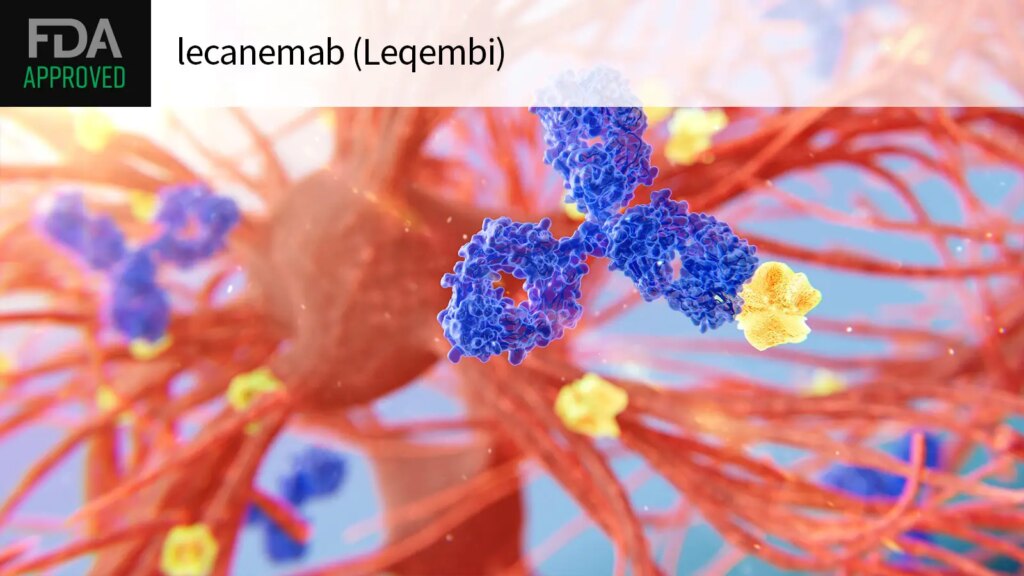
The FDA approved a new starting dosage regimen for the subcutaneous formulation of lecanemab (Leqembi Iqlik) to treat adults with Alzheimer’s disease, the agency said Monday.
Lecanemab is an anti-amyloid monoclonal antibody approved in 2023 to treat adults with mild dementia or mild cognitive impairment due to Alzheimer’s disease. “Previously approved only as an intravenous starting dosage, with the option for transitioning to intravenous or subcutaneous maintenance dosage after 18 months of treatment, this approval marks the first time patients can begin treatment with home administration by themselves or their caregiver,” the FDA stated.
The drug’s effectiveness was tested in the phase III CLARITY AD trial, which showed that intravenous (IV) lecanemab led to less decline on cognitive and functional measures in early Alzheimer’s disease but was associated with adverse events.
Adverse events in CLARITY AD included amyloid-related imaging abnormalities (ARIA) with edema or effusions (ARIA-E), which occurred in 13% of people who received lecanemab. ARIA with hemosiderin deposition (ARIA-H), which includes cerebral hemorrhage and superficial siderosis, occurred in 17%. Three subgroups appeared to have a higher risk of adverse events: APOE4 homozygotes, people with underlying cerebral amyloid angiopathy, and people who require concomitant treatment with anticoagulant agents.
A boxed warning is included in the lecanemab prescribing information to alert patients and caregivers to the potential risks associated with ARIA. The prescribing information states that testing for APOE4 status should be performed before starting treatment to inform patients of ARIA risk and recommends caution for patients taking anticoagulants or those who have other risk factors for intracerebral hemorrhage.
The subcutaneous formulation of lecanemab was not tested separately in large clinical outcome trials, the FDA said. Instead, its effectiveness was supported by the IV formulation’s performance in clinical trials and evidence that subcutaneous lecanemab produced equivalent results.
The rate of exposure-related adverse events like ARIA-E with subcutaneous lecanemab is expected to be comparable to IV administration, drugmakers Eisai and Biogen said. The overall safety profile of subcutaneous administration was generally similar to the IV drug.
The FDA approved a subcutaneous maintenance dosing regimen for lecanemab in 2025.
Besides ARIA, lecanemab can cause headaches, the agency said. The subcutaneous formulation is associated with injection-related reactions, mostly localized, that can include redness, swelling, rash, pain, or bruising.
The drug is contraindicated in patients with serious hypersensitivity to lecanemab or to any of its inactive ingredients. Adverse reactions may include angioedema and anaphylaxis.
Please enable JavaScript to view the comments powered by Disqus.
[ad_2]
Source link : https://www.medpagetoday.com/neurology/alzheimersdisease/122171
Author :
Publish date : 2026-07-14 12:34:00
Copyright for syndicated content belongs to the linked Source.